I am not one for young adult reading, and this book treads the line on that genre. Received as part of the Once Upon a Book Club February 2020 box, I complied with the club rules and read diligently stopping only on the designated pages to open the gifts that coincided with the story. The pestle is wonderful, I might add! While I braced myself for an insightful glimpse into history, this story dances around historical events while slowly succumbing to the world of fantasy. I was not prepared for the slow introduction of white magic and supernatural gifts, but it did not deter me from finishing. (Perhaps the gifts were an incentive to finish, though I choose to believe the plot also captured my attention.) This is a book I would recommend to a select few, and if you are tight on time and don’t enjoy fantasy – a hard pass.
Most recently, I attended the online Trauma Skills Summit hosted by SoundsTrue. It featured ten days of amazing skills, practices, and guides for those that have experienced or support those with trauma. There was one lecture that stood out to me and I wanted to share the information with my friends here at Crutchprints.
Elizabeth Stanley, PhD (creator of Mindfulness-Based Mind Fitness Training, professor at Georgetown University, and certified practitioner of Somatic Experiencing) lectured about trauma and mindfulness in a very impactful way. If you have a trauma background, you may find mindful breathing practices to be difficult or overwhelming. Especially if there is a history of physical or breathing constraint.
Stanley offered understanding for this in her lecture and explained the importance of recognizing our own bodily reactions to the exercises of mindfulness. While mindfulness is a wonderful aid during the healing process and embodiment phase for trauma survivors, it can be adjusted to your needs. Approaching your own situation with self compassion and resilience is within your power. You don’t have to give up or stop mindfulness altogether if you are uncomfortable with certain aspects within the practices.
Stanley offered a few tips for those with backgrounds of trauma in regards to mindfulness practices, I’ve expanded on them below:
1. Find a place with your back against the wall. This allows the reptilian brain to feel safe (without looking over its shoulder for threats).
2. Once in position, take time to slowly turn your head a full 180 degrees to the right and left. This impactful exercise allows the reptilian brain to register the environment, assess threats, and permit centering.
3. If you have an adverse reaction to the breathing focus, know that is ok. Focus on another part of the body that is safe. Perhaps focus on the place where your feet meet the floor beneath you. If you do not ‘feel’, press your feet lightly into the ground until you feel a sensation, or try an outdoors practice where you can safely be barefoot in the grass. Another suggestion is to take your hands and rub them lightly on the top of your thighs, focusing on that movement rather than your breathing.
4. If you aren’t comfortable closing your eyes (often due to sense of safety), let them rest softly open instead. Either focus vaguely on an object before you or allow your eyes to be open while focusing on a part of the body just as if your eyes were closed.
Science continues to discover ways that mindfulness assists all of us on our journey, whether or not we are in post-traumatic growth. It is important to know that even today, you are in control, you have a voice, and and you get to decide how to approach your journey. Finding things that work for each of us will empower us right where we are while encouraging self-compassion, resilience and delivering the enrichment of mindfulness.
(Sources: Elizabeth, S., PhD. (2020, August 26). Trauma and Mindfulness. Lecture presented at Trauma Skills Summit in Soundstrue.com.)
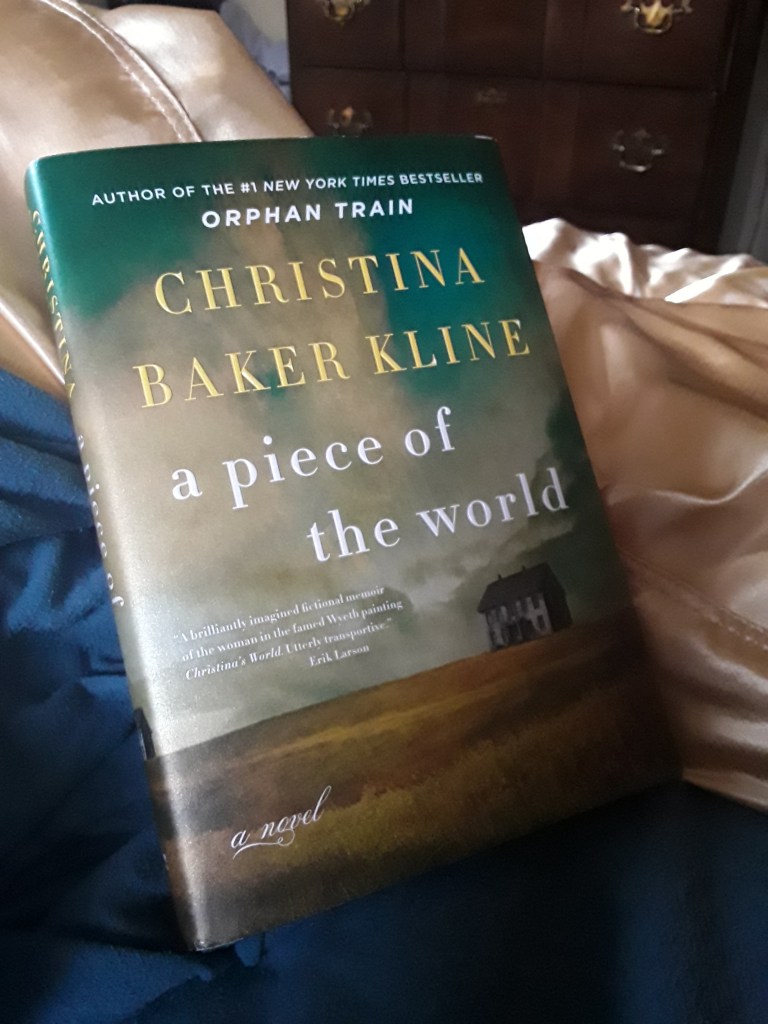
This story is based on Andrew Wyeth’s painting “Christina’s World”. Christina was a real-life woman that became Andrew Wyeth’s thirty year muse as he visited her again and studied her world. In this fictionalized memoir in Christina’s perspective, her disability (true) and family history of descendants from the Salem witch trials ensures her world will not develop much past the bounds of her home. This was a very difficult read for me, a disabled woman. Seeing the opportunities that were not there during this time and seeing the feelings and thoughts I have put into black and white on pages for all to see brought more than a few tears to my eyes. I felt raw and exposed as I became influenced to adapt Christina’s quote, “you showed me what no one else could see,” as my own. Featured in the Once Upon a Book Club 2019 Advent box, I noticed other purchasers found this book exceedingly dull, slow moving, and some were unmotivated to finish. Because this is based on a real life person (though fictionalized), and the painting is one you are bound to see again, I recommend seeing this through. Take the opportunity to see the limited life of one disabled woman and gain insight into the lives that many others live even today.
A feature of the Once Upon a Book Club February 2020 box, this book is guaranteed to leave all readers in a flux of emotion as we laugh and cry all at the same time. Truly heartwarming and uplifting, this story is one you will want to pass on to your dearest of friends as I did. In this novel, Katherine finds herself a widow mired in grief. She is persuaded by an Uncle to come for a visit in his town. He arranges lodging in a seaside cottage, former home of Juliet. A spitfire flying girl in WWII, Juliet leaves remnants of her story all about her cottage and as Katherine explores she finds Juliet’s memoirs written in the form of letters. We journey with Juliet through the good and bad times of WWII as an orphan, and with Katherine as she strives to find the will to start living again. Without hesitation, find a yellow scarf (provided with the book in the Once Upon a Book Club box, but any yellow scarf will do!) and curl up with this extremely enjoyable fiction.
“Hi, Turkey Babies,” I yell in my high pitched call as I make my way around the house towards the chicken coop. Immediately, a charade of clucking and gobbling greets me like a gathering of friends. I make some weird tongue noise that I imagine resembles the gobble of other turkeys, and my turkey friend clucks out her own response eagerly. From the corner of my eye I catch my husband, standing with his turkey caller in hand, and staring with disgust in my direction.
“The turkey won’t respond to the turkey caller, but she will respond to your turkey talk – that sounds nothing like a turkey!” He shakes his head laughing as I shrug him off, slightly irritated that he so bluntly insults my own turkey talk. Who’s he to say I don’t sound like a turkey?
Just like every other weather-permitting evening, I open the gate and tell my turkey friend and two miniature bantee chickens (one hen and one rooster) that it is time for our walk. When we adopted the turkey, the bantees were part of a package deal. They were all young, and the two chickens were convinced the turkey was their mother, and vice versa. The three have been inseparable since day one. Unlatching the gate the three follow me out of the pen. Today, we will walk down along the cornfield to the woods where I know the blackberries are ripening. This will be a light snack for me and a bedtime snack for my friends. Their bedtime is much too early for my own taste, but then I’m not up at the crack of dawn, either.
“Come on, Turkey Babies, this way,” I call as I work my way down the back yard, taking in the heady scent of summer evenings in Lancaster County. Consisting of corn fields, manure, fresh earth, and smells of cut grass swirling about, evening is my favorite time of the day. The light sound of buzzing comes from the myriad of bugs and pollinators at work in the hedgerows,, birds flutter and sing around the feeders and in the trees, a mourning dove calls out for his lover, and somewhere in the distance a woodpecker is still hard at work.
As we approach the woods I hear the scattering of squirrels and rabbits. My little black 4.5 lb chihuahua, Coco, blazes ahead of our parade in demonstrable bravery and with a mission to protect. I follow, the turkey follows me, the bantee rooster and then the hen follows her, Rick meanders behind, and finally the caboose, our dog Carrie, brings up the rear. Carrie is 15 this year and while at one time she would have enjoyed those bantees like a kid with chicken nuggets, she has retired her hunting badge and thus resigned herself to trophy bird-watcher. The whole scene seems directly plucked from a children’s story.
Arriving at the edge of the woods, I realize the blackberries are a bit odd this year, not quite as big as other years where their plump and juicy berries will guarantee steep competition with wild birds. This year are a bit dry, hard, and even bitter. I take a few in my mouth and pucker my lips in a sour face. “These aren’t the best, but enjoy,” bending over the edge of the woods I toss some over my shoulder and peek back as my comrades lunge forward like children scatting for candy at the county parade.
After awhile I stretch and turn, “Alright, Turkey Babies, it’s time.” Slowly, I work my way in the general direction of the chicken coop. No one follows at first, but when Rick takes a few steps forward the turkey suddenly panics, bringing her head straight up and turning it in severe angles to utilize her side vision to find me. I make some turkey talk to help her find me, and she takes off running towards me with her head and neck swinging wildly to balance her like some sort of primitive ‘osaurus. Within seconds the chickens make their own dash across the yard to regain status in the procession. We make our way back up the hill to the gate of the pen where I lift a crutch to guide them gently inside and I leave them with more turkey talk which clearly communicates promises of future walks.
Rick shakes his head in disbelief at this scene, plucked almost directly out of a cartoon. “You know, taking the turkey for a walk isn’t the best thing for producing tender meat,” he explains. I listen to him, but my minds drifts back to another turkey story from the past…
My dad was always keen on making sure that us four girls experienced the fullness of life in the country, life on a farm, and life full of adventure. He brought a turkey home one summer afternoon, and put it in the smaller horse barn christening it, The Turkey Pen until Thanksgiving. He gave us some food, “Take care of her, feed and water her, and we’ll have a good Thanksgiving dinner. Just like colonial times.” It sounded so fun!
We were compliant, and as the months bore on the turkey got larger. At about 10 and 6 years old (I was the eldest), my sister and I watched as the little turkey morphed into what seemed like an ostrich-sized giant. We did our duties, throwing feed into the trough and racing out as quickly as we could, pushing each other and swearing it was every man for himself. In my own case, it was more a skip and a hop, my fake leg lagging behind and sometimes getting shut in the door before being yanked out like a tail.
Gradually, this turkey got so big that when she would hear us coming she would throw her fist-sized head up over the railing in greeting, scaring us half to death, and becoming our greatest enemy this side of the Mississippi. We began introducing the neighbor kids to the barn of horror, bribing them to do our chores for us, it never worked. Eventually fear overpowered novelty and we worked up the courage to protest caring for her altogether. Mom had a little one in the house, and I see now her refusal to help was her own version of pleading the fifth (the right to not self-incriminate). So Dad picked up the slack, as Dad’s do on so many of their children’s adventures.
The night before Thanksgiving, a traditional meal of meager pickings and leftovers to ensure refrigerator space for the next day’s feast, Dad informed us that it was time. It was dark, and we headed out to the barn on his heels afraid of the boogie monster. When he flicked the light on the monstrous head came up over the railing as we yelped and chatteringly appealed to his authority, “SEE! This is what she does to us! She wants to eat us!” Dad guffawed, and led us into the pen with him. He had his axe, a board, and gloves in hand. Not having any sons, I was the eldest daughter and thus obligated to step in on all occasions that a boy would typically serve. I watched as he placed the turkey’s gigantic softball-head on the board, held her body still between his legs and stretched her neck across it saying, “Hold this.”
Not one for noncompliance, I obeyed. I wrapped my small hand around her neck at the base of her head. Her bald turkey-eyes half closed and half open, the red of her neck and the muscles and veins strained and stretched before me, I closed my eyes unsure of what to expect. It was about the exact time that Dad had the axe in the air ready to come down that I realized something: I already have one leg, and he is swinging an axe in the direction of my hand. Self preservation won over compliance, and I let go a second too soon.
The turkey, injured but not killed, flew up from between Dad’s legs with a screech and began desperately circling the pen to get out with flapping wings, white feathers flying everywhere, and hops and jumps with her enormous turkey claws. Without hesitation, my sister and I took off. We ran out of the barn into the dark night, no longer concerned for the boogie man. We stopped only to peer back through the window for a moment at the carnage. There we saw the turkey running around the barn, Dad chasing it with both arms desperately flailing and grasping amid the chaos, white feathers, dust, and screeches in a merciful attempt to finish the job as painlessly as possible. My sister and I looked at each other and knew we were probably in big trouble. Even though she didn’t really do anything wrong, abandonment was the worst of crimes in my family. We silently agreed any punishment was worth the crime, and headed to the house like true criminals. Dad was left to handle the aftermath of killing, plucking, and prepping the main dish of Thanksgiving himself. We must not have received criminal sentencing, as I do not remember more than being teased for leaving the old man to fend for himself. The turkey itself ended up being over 30 lbs. It was so large that it did not fit in the oven, to which Dad cured innovatively by using a chainsaw to cut it in half. Thanksgiving dinner, always at 1pm, wasn’t until 8pm that year, when the half-sawed massacre came out of the oven. Eyes wide as saucers, it was the only Thanksgiving that my sister and I remember eating so many of the delicious side dishes we were just too full to eat any turkey.
Staring at Rick after the tender-meat comment twenty five years later, I come to the stark realization that my pet will be Thanksgiving dinner. I flinch. I made it clear when we agreed to adopt the turkey that I would not be a part of the killing process this time around, but it seemed so distant at the time, so far removed. Now, I’d inadvertently enjoyed this turkey, appreciated its intelligence, sharp hearing, and good eyesight. I have laughed at its anxiety and shared in many months of turkey talk with her. It’s been a joy and delight, and if I’m honest I’ve probably gained some soothing salve for memories of [clears throat] turkeys past. The breed of turkey we have is bred for meat, and she will soon get too heavy for her legs, and they will break. I know we will have to slaughter her soon. Correction: She will have to be slaughtered soon, no I or we about it.
In resigned submission, I’ve taken a new approach to turkey stuffing. One that I like to call inverse stuffing. I now take out a little bread each day and hand feed her. It is much more pleasant than the traditional stuffing process, I tell myself. But soon, very soon, Rick will call my Dad and he will bring my nephew (nearly 10) and my niece (six) to come and experience the full adventure of farming and country living themselves.This will be the second Thanksgiving where I become so full on delicious side dishes that I will just have no room for turkey.
This romantic tragedy (once a banned book) tells a story in the third person via housemaid. The story of love and loss, cruelty, revenge, and returning to love we are taken on an unpredictable winding path of dissonance. Human behavior shines under the pressure of absurdity and depravity so unbelievable that we are forced to believe it. At the end I am left with conflicted thoughts and emotions, amazement, and bewilderment. I received in a Once Upon a Book Club box a spoon ladle with the first part of this book printed on it in the 2019 Advent box. Curiosity piqued, I made reading this a priority and in essence it did not disappoint. There is a reason that this is a classic, and in my own opinion it is far superior to many other romantic tragedies more commonly known.
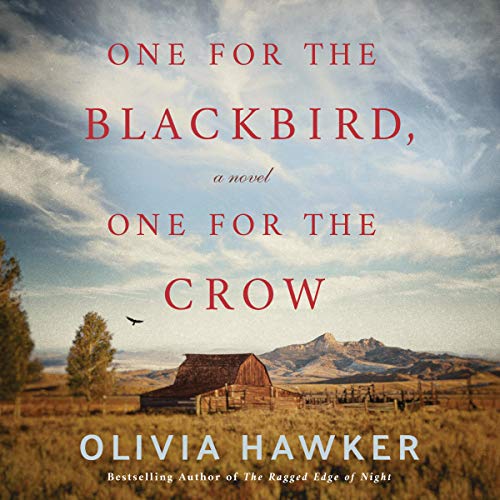
In 1876 on the Dakota prairie, two women are forced to combine households in order to survive when one husband is killed and the other jailed. Only one major obstacle exists between them: Nettie Mae’s husband was killed by Cara’s husband when stumbling upon an adulterous affair between the man and his Cara. Told by Beulah, Cara’s daughter, a great story of blooming love, hatred and grudges, humility and reality is woven through these pages. “There are some seeds that refuse to grow until they’ve been tempered.” Life on the prairie was hard, and circumstances and survival must take precedence over personal grudges in this book. Finding this story a bit hard to believe will place all of our attitudes into check when we learn the basis of this story lays in the genealogical history of the author.
This book was included as part of the Advent Box presented by Once Upon a Book Club in 2019. Set in 1962, Ernest Young splits his narrative between the present and 1902 he was brought to Seattle as a young boy. Coming from China during a time of famine, completely alone and eventually auctioned to a brothel, Ernest recounts the story of his life. Persistence, a refusal to compromise his values, and a loyalty surpassing any he was ever shown, Ernest appropriately pieces together for us the idea that, “the present is merely the past reassembled.” This was an enlightening piece of historical fiction that rented my heart and soul for the duration of this book. Come prepared to be shocked, informed, and enraged by a little known part of American history.
“Jesus, if this is my time, I’m ready. You’ve blessed me with years beyond cancer and expected death. You’ve given me family that loves me, friends that care about me, and experiences of travel that have been so dear to my heart. I do not have regrets, and I feel that I have done the best I could with the hand you’ve dealt me. Just please remember to tell Rick my favorite hymn is In The Garden #425.“
This was my prayer at exactly 4:22 a.m. on July 8, 2020. It was shortly after this prayer that I texted my husband telling him that I loved him and that I wasn’t sure I was going to make it through to see daylight. Obviously I did make it, or else you wouldn’t be reading this. But it was later that morning my fears were confirmed and the doctors in the hospital informed me that I was fighting severe sepsis and the good news was that my body was responding to the intravenous medications, but that I wasn’t yet in the clear. My sense of organ failure that night was very accurate, even without knowing what was happening, and in the midst of that time I was forced to ask myself some of the questions that I was challenged with in Kendall Keeler’s book Your Last 24.
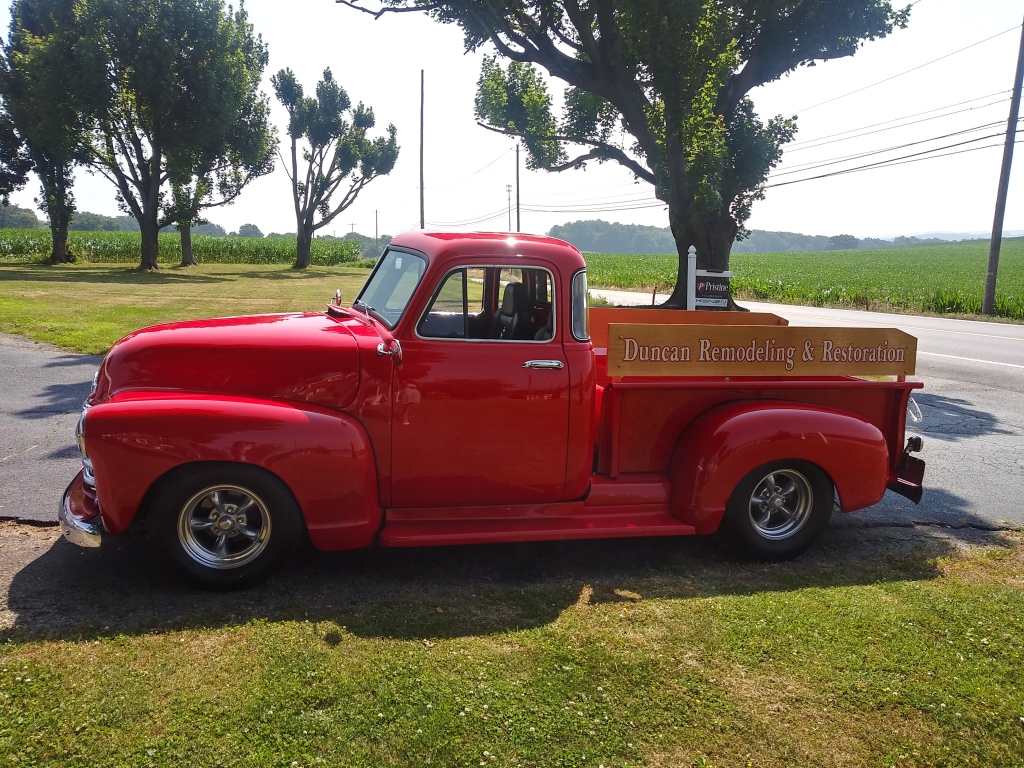
My parent’s classic truck
The whole situation was such a shock and disappointment to me, how did I end up here? On July 5th I woke up to celebrate 31 cancer free years. My father showed up with his classic truck to take me a ride, and from there my family spent the afternoon at my sister’s pool. When I got out of the pool, I laid down, became violently ill, and was barely conscious as I burst through the front door and made it as far as the couch. The next day I remained sick and Tuesday my mother marched through the door and told my husband, “If SHE says she should go to the hospital, get her there, NOW.” Less than 24 hours later I wasn’t sure I was going to see the light of another day.
Back when I went into the hospital for cancer 31 years ago, my parents had just gutted the kitchen in their home to begin extensive remodeling. I underwent cancer treatments and my parents juggled caring for me and my sister, work, and the remodeling of the kitchen all at once. 31 years later, I was admitted to the hospital on the day my parents gutted the same kitchen in the same house a second time for remodeling. What was happening? DejaVu, anyone? All I could muster up from the hospital on the phone to Mom was a simple, “No more kitchens.” On the plus side, she informed me that they found my silver bracelet, lost when I was 3 years old and my Dad’s wedding ring.
I can confidently say that my mind was not filled with regrets. I didn’t consider negative things that I have gotten through. Instead, I thought of the wonderful memories and the beautiful moments that have enriched my life. I thought of the way that I was so near death at 4 years old and yet I gained a bonus of 31 years to live on top of that. I know that I am not perfect and I have many sins in my short life, but thanks to grace, I did not feel shame.
Celebrating 31 Years Cancer-Free
The hospital was lonely since the pandemic restricted visitors to only my husband. I was there five days with no shower or bath, only a wet cloth, dry shampoo, and my insistence to dunk my head in the sink for a quick one-IV-free-armed swish of shampoo (utilizing my husband to protect the IV equipment and electronics flowing into my arm and after the forbidding nurses would leave the room). Yet as gross and awful as it was, I did discover a few things about myself in those five days.
Bible school songs never leave you.
Thinking that I was about to die, as I truly was, my mind considered the possibility of an afterlife. I did not once consider that my transition into paradise would be a disappointment. There was a peace and knowing in my heart and I was increasingly confident that Jesus would meet me on the other side when it was my time. I remembered an experience I had in the hospital as a child when I felt I encountered Jesus, and the memory flooded my mind anew with hope. Ironically, and surprisingly, children’s bible songs, parables, and hymns seemed to play on a reel in my head during this time, ministering to me. I kept hearing The Wise Man Built His House Upon the Rock, and I’m In the Lord’s Army like I was teaching Sunday school!
Prioritizing people is key.
I didn’t think about the people I have had fallings out with over the years in a regretful way. I rested confidently that I handled those relationships the best that I could given the capacity and circumstances of those times. The things I’ve done wrong I left in the hands of Jesus. I thought about this blog – was I ok with the fact that the last article published here may be my final word with you all? All of my busyness with school, volunteer work, etc. faded into the background and I wondered if it was worth the price I paid: Being too busy to connect with loved ones. I thought of family meals we’ve shared over the years, the last conversations I’ve had with each of my loved ones, and the things I wouldn’t mind doing one more time if I get out.
Mindful moments matter.
I longed to smell these beauties one last time!
Taking a psychology course at the beginning of the year reviewed studies that showed with overwhelming results that experiences make people happy and material items do not. There is real science and some reasons to explore behind this theory. These include: Experiences are not permanent, so more satisfying; Experiences do not have the opportunity to “grow old” or “normal” to us like material items do; We anticipate experiences more than material things; and more. Regardless of the study or the outcomes, experiences are very important to me. Reading, learning, growing, traveling, making adventures even right in my own backyard, all brought nostalgia and hygge feelings to my heart. My husband’s kindness when pushing me in a wheelchair, my grandmother teaching me how to can peaches, my mom faithfully calling me almost daily for as long as I can remember, my sister lighting a candle for me at a Relay for Life event, my aunt sending a surprise package in the mail just for me, my dad taking me on vacation with him, and teaching my niece/nephew piano, wheezing laughter with a cousin, and all the fun we’ve had together. It was these things that I experienced, remembered, and treasured the most.
It ain’t over ‘till it’s over.
While I’ve been feeling a bit as if I am floundering the past few years (see my post Smidgen of Hope), I have a renewed sense of belonging. My aunt summed it up best for me saying, “I know two people that survived sepsis lady, and you are one. You survived cancer, amputation, and now this. God is not done with you yet.” The truth in her words resonated deeply with what I felt and still feel. I do not know what my purpose yet is, or where I am called to be, but I do know that God has a plan.
Life’s too short to save good tea.
The first thing that I savored when I was placed in the car to go home was the sun hitting and warming my skin. I don’t know what it is about the sun, but it heals and warms me from the inside out in a way that reminds me of love. The second was my ability and strength – I couldn’t walk from the car to my house without taking breaks after being so weak in the hospital and not using crutches for a week. I appreciated and savored the gift of strength and movement, longing to see my body regain those things. Third, I got in the shower and just bawled as the fresh water poured over me, my bruises, and needle pricks from head to toe. The smell of shampoo and the feeling of squeaky clean skin were savored in a new light.
A few weeks after being released, my mom and I drove to the beach and I stuck all 5 toes straight in the sandy surf!
After my shower I remembered that I had been saving a gifted tin of really good Darjeeling tea. I pulled that baby out after my shower and decided life was too short to save good tea. In fact, life is too short to save anything that is meant to be savored and enjoyed. Other little things that I wanted was a cheese-steak, the feeling of my 5 toes in the sand, and an opportunity to play piano for people even if it sounds terrible. I wanted to taste real ginger ale (no more hospital diet crap), suck on a piece of chocolate, and smell the lilies in my front yard one more time. I wanted to hug people and savor everything and every moment from photos in magazines to the smiles of my niece and nephews.
Midway checkpoint mission accomplished.
It’s been a few weeks now that I’ve been out of the hospital. My strength is not fully regained, my bloodwork is not back to normal, and my immune system is still nearly nonexistent. From what I understand the risk of contracting severe sepsis in the next three months is high, and they still don’t have a specific answer for what caused the blood infection to begin with. But I’m alive, and I’m confident it is for a reason. I don’t know yet what all of this means, but I guess that will be part of the experience, right?
I look at this experience as a good midway/midlife check in with the Lord. I’m to be 36 this year, reasonably approaching the halfway point of life, and this eye opening experience afforded me a chance to review my life, choices, and values. I was able to re-prioritize and adjust to be sure that I am living a life worthy of the questions in Your Last 24. Hopefully, the Lord sees it this way too and keeps me out of the hospital until my final lap. Yet I realize that nothing is guaranteed in my life except one thing: My parents won’t be replacing that kitchen again.
Sent in a care package from a dear friend of mine, this book was an unexpected joy to read. A painless look at the grammar and word use that is guaranteed to leave you with newfound appreciation of the English language as well as a repertoire of inside jokes shared only with Dreyer and other readers. I found myself laughing out loud and then struggling to explain myself to nearby people. In the end, this work will help polish your skills and build confidence without the boring work of a classroom.









 Crutchprints in the Sand