Your Last 24

Graphics courtesy of Kendall R. Keeler

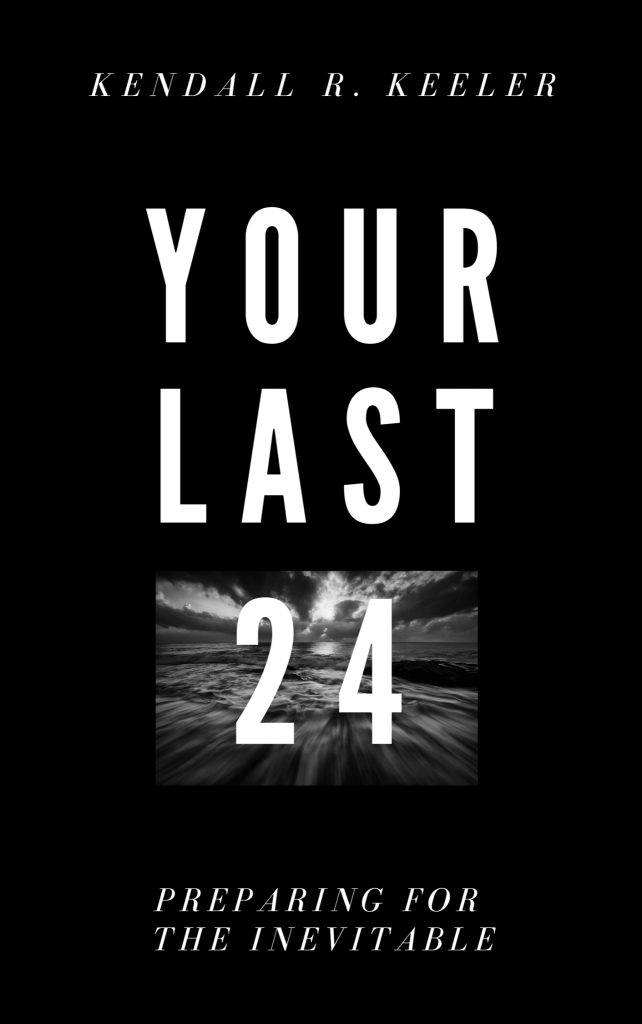
Featured in the Chester County Press and on my recent book review of Kendall Keeler’s debut I was blessed to have a conversation with the author himself. Kendall agreed to sit down with all of us here on Crutchprints in the Sand and talk a little more about the first book in his Legacy Journal Series, Your Last 24 and the unique message it carries. Kendall has generously offered his book as a free download when signing up for his mailing list. You can find this here: kendallkeeler.com. Trust me, even if you read the electronic version like I did, you will want a paperback in your hands for quick reference! More on this later.

Nothing quite rearranges your priorities like the possibility of death. Amputees and cancer survivors are just two groups of people that have been forced by life’s circumstances to face the possibility and reality of death. We have pondered its meaning, our existence, and answered hard questions in search of peace. If we are fortunate to survive we often walk away from death and all its reminders – hoping to escape its grip and pain forever. This book blew my existing resolutions out of the water and allowed me to take another look at mortality without the baggage of pain I thought I would carry. I hope through this interview and your subsequent reading of this book that you will find the message also enriches your life and relationships.

Crutchprints: What made you pick this topic and does this mean? 

My experience at age 25, when the death of a close friend shocked me into asking myself the question, “What if today was my last 24 hours?”  Over the years I’ve discovered the benefits of courageously facing my own inevitable death.  I believe that others will benefit if they do the same. 

First, it’s important for me to talk about the value of questions. In my book, I explain this in more detail, but the concise version is this: the person who is the voice in your head, asking you the questions that you are attempting to answer in the way you live your life, is the person who is ultimately controlling your motivations, your actions, and ultimately controlling your life. In Your Last 24: Preparing for the Inevitable, I invite my readers to develop a personally scripted Last 24 question. By this I mean, if you want to take control of your own destiny, you need to control the questions in your mind. Developing a Last 24 question is an important step toward preparing yourself for your last 24 hours, whenever they might come.

Crutchprints: Are last 24 hours questions just a matter of what a person finds valuable?

A Last 24 question is not just about recognizing what a person values, it is about consciously creating a sense of urgency for living those values. We often have wonderful intentions but instead of doing the difficult work of living our values, we procrastinate. The Last 24 question is intended to create an internal alert to daily live our values and ultimately to minimize end-of-life regrets.

Crutchprints: A lot of us here on Crutchprints are disabled people that have faced death, support persons, and people who are chronically ill. What would you hope that we take away from this book?

The intention of this book is not an attempt to comfort those who are currently facing death, these people are already thinking about death – probably daily.  Other authors have already written excellent books to provide comfort for the grieving.  This book is intended to be an alarm for those who are thinking and acting like they don’t need to think about their own death.  It is an opportunity to courageously and deliberately walk into the dark valley of the shadow of death, then attempt to turn on the lights.  I hope that some in the Crutchprints audience will have the courage to join me on this journey.

Crutchprints: In Hour 6 you state, “Truth be told, most people who are asking why questions are not really looking for answers to their spoken questions. They are usually asking a core unspoken question behind the spoken questions. Typically, this core question is a question of trust.”  How does trust impact an outlook on death?

When we experience the tragedy of death the most natural response is to ask “Why?” That question is, for most people, directed at God. If the person asking the question believes God to be worthy of trust, then that person is more likely to have hope and is more capable of looking beyond the tragedy of death.  Trusting God allows a person to believe there is something good on the other side of their pain. 

Crutchprints: You discuss the gift of pain in the first few chapters. Yet we live in a culture and society where remaining free of pain and suffering is often associated with success or moral achievement.

Let me clarify that I am not proposing that pain should be some kind of goal or achievement in itself. Freedom from pain and suffering is something we all desire and should desire. But the path to pain-free living is discovered through the valley of pain.  Freedom from suffering is on the other side of the suffering we are experiencing.  In my book, I illustrate this principle through the analogy of a physical injury.  The only way to experience healing from that wound’s pain is by pushing through the extreme pain of surgery or stitching or cleaning.  

Crutchprints: I love how in Hour 9 you address the forbidden fruit and the one argument I’ve heard frequently, “God made a mistake when he gave humans free will.” Is free will a bad thing?

That is an interesting statement “God made a mistake when he gave humans free will”, because I think the person making that statement is probably not referring to their own free will, but rather to the free will of others – especially people who do hurtful things.  That person has probably experienced pain through the foolish free will choices of another.  But as I mention in Your Last 24: Preparing for the Inevitable most people are inconsistent in their views of justice.  We want God to punish others for their wrong choices, but we resist God when he disciplines us.  I have yet to meet a person who truly wants to be a robot – without any freedom of personal choice.  But I meet people all the time who want others to be robots.  We can’t have it both ways.

Crutchprints: A journal prompt in Hour 11 says, “What is dangerous about viewing death as an enemy?”. How would you answer that?

When I view death as my enemy it causes me to believe that death needs to be conquered rather than accepted. Since the very beginning of God’s relationship with his people, substitutionary sacrifice (death), has been an essential element of worship: God’s invitation for Abraham to sacrifice his only son, Israel’s annual sacrifice of the Passover lamb, Jesus laying down his life for us, etc. But there is also an irony introduced in scripture. Paul in 1 Corinthians 15:26 calls death an enemy that will some day be destroyed by Jesus.  There will be a day when death is no longer necessary.  But in our current circumstances, until Jesus ultimately ends this reign of death (Revelation 20:14), death is necessary.   Jesus’ physical death was required to conquer our spiritual death.  Our physical death is necessary to enter the place where we will experience eternal life.  As the pilgrim Christian discovered in John Bunyan’s Pilgrim’s Progress “You must go through, or you cannot come at the gate (of the Celestial City)”. 

Crutchprints: This book is your debut, but we are informed there is a sequel coming up!

The second book in this Legacy Journal Series is titled Remember Me: Living a Life that Lasts.  That book will consider the human longing to be remembered and provide eternal principles for ensuring that we can live a life that will last…forever.

Crutchprints: If I am correct, your wife Barbra was key in the development of this book.

I did 98% of the writing, but Barbra was my first and primary editor.  She loves words and grammar.  She is one of the few people I know who enjoy diagramming sentences! She also reflected back to me how the material was communicating.  She helped me discover areas in the manuscript when my communication wasn’t clear.  In addition, I also had several friends who gave helpful feedback throughout the process of my writing and editing.  

Most of the material in this book represents topics that Barbra and I have discussed for the past 25 years, so nothing in this book was a surprise to her.  Additionally, I have made the personal commitment that I want to be living a principle before I attempt to encourage someone else to apply that principle to their own life.  Personally, I’ve been asking my Last 24 question for over 20 years.

Crutchprints: You ask a lot of “what if” questions in this book that you seem to already have the answers for. Why take this approach?

The key word in your question is “seem”…that I “seem to already have the answers”.  I took this approach because I want to approach these subjects as a learner and invite my readers to also be approaching the topics as learners.  I am still on a journey of discovery.  I believe in absolute truth, but I learned a long time ago that my human weaknesses can blur my perception of absolute truth.  I don’t want to communicate as if I have all the answers, but rather invite the reader to walk through this journey along with me.  Let’s discover truth together.

A special thanks to Kendall Keeler for taking the time to sit with us at Crutchprints! To hear more from Kendall you can view these links to his blog and social media, or an article in Chester County Press. To purchase a copy of Kendall’s book Your Last 24, click here.

Hats Off!

Carrying an umbrella is an impossibility for someone on crutches. Making the dash from the house to the car has not always produced safe results for me, and there are some days I simply want my hair and face to stay dry. Must I explain? Anyway, I’ve experimented with several alternatives over the years, starting with the granny-style clear plastic kerchiefs that tie under the chin but drawing the line at headband-umbrellas (you’re welcome). I found this hat two years ago and it has saved my hair from matching a matted dog, kept drops off my glasses, and saved fluid mascara many times. The sides come down so if you plan on looking up a lot you won’t get a great view, but why would you look up in the rain? The wind at our Pennsylvania home is cyclonic on a good day and I have not had this baby go sailing across our neighbor’s yard with me hopping after it yet. It may slightly skew hairstyles because it is a hat, and humidity does that anyway. Affordable at under $20 (though it is now more than it was when I originally purchased) and available in more than one color, this hat will do you a solid.

You can find this hat here on Amazon.

*Please remember when considering these recommendations for yourself or a loved one:

a) Ashly is an amputee at nearly the hip level of her right leg;
b) Ashly is on crutches or in a scooter 100% of the time;
c) Ashly has been an amputee for thirty years;
d) Ashly is still young and active in her thirties;
e) The crutches that Ashly uses are forearm crutches;
f) What works for Ashy may not work for you;
g) Ashly receives no incentives, gifts, or compensation for reviews, advice, or mention of any product or company in these features.

*Product, person, and organization endorsements and reviews are not compensated, neither are they to be interpreted or considered as professional, legal, or medical advice. Neither Crutchprints.com nor Ashly Ash has interests, holdings, political affiliations or other ties with persons, corporations, or other entities referenced. Neither Crutchprints.com nor Ashly Ash has received free product(s), sample(s), or compensation(s), or service(s) for postings unless otherwise disclosed.
**All recommendations and advice that are posted on Crutchprints.com will be based strictly on personal experience and opinion and should not be taken or interpreted as legal or medical advisement under any circumstances.

Book Reviews: Wild Land by Rebecca Hodges

This was a truly heart-stopping page turner of a book, just like the cover promises! The characters are beautifully developed and incredibly realistic. Kat finds herself alone on retreat to contemplate end of life decisions when she has children and two dogs suddenly dumped in her lap. So much for the quiet she needed! When a wildfire cuts her and the children off from the parents and safety, Kat is forced to flee on foot with kids and dogs in tow. Based on the description I expected our main character, Kat, to be selfish and whine a lot when faced with the invasion of personal space. But Kat ended up being a lovely and genuine person willing to sacrifice herself bravely for others. Right up to the end this will be a heartwarming story that will take only a few days to work through. April 2020 brought his book to me as part of the Once Upon a Book Club box (Crutchprints Facebook for unboxing video). The gifts matched the book and included a red straw hat, hiker’s backpack, bracelets, and more. I’ll be using those items for a long time and thinking of Kat each time I do.

Book Review: A Thousand Roads Home by Carmel Harrington

“Home isn’t a place, it’s a feeling.” In this heartwarming novel Carmel Harrington captures the essence of this featured line in a way that sticks with you long after you’ve turned the last page. Ruth calls herself an ‘aspie’ as she and her son make their way into emergency housing for the homeless. Tom is a rough-sleeping homeless man in Dublin with a mysterious past bound to cross that of Ruth and her son. As the plot unfolds we see how intertwined these lives are and how very different paths can be united first with friendship, then into family. “Everyone has a story if you take the time to listen,” will bring new depth and meaning to a vastly misunderstood niche of living. This book was the Once Upon a Book Club’s September 2019 feature and accompanied with gifts to open at different points within the story. While the gifts are rated as average in this box, the book itself remains the shining star.

Book Review: Gifts of Imperfection by Brene Brown

Gifts of Imperfection by Brene Brown in typical style brings forth a beautiful and chaotic mess that we call real life put forth in a way that encourages us to embrace all of it. Brown challenges our mindsets and behaviors in ways that allows us to step back and see the striving and performing for what it really is. Not having felt this would be applicable to me, I found myself cast into the reality of my own shortcomings and scrambling to embrace them (or more accurately justify my responses to them). Ultimately, this book is a critical component for those on a journey of self-compassion. The beginning is profound as principles are established and hard words are delivered, but about halfway through Brown changes her focus and gives many practical examples and applications that we can heartily embrace.

To Unmask = Sin and Poor Witnessing? I think not.

During this time of Covid-19, I’ve read many things by well-meaning Christians that seem to imply certain behaviors carry the weight of sin behind them. Specifically, I am speaking of compliance or noncompliance to governmental/business guidelines of social distancing, wearing masks, etc. I’ve read articles in newspapers, emails, and viewed social media postings that accuse Christians choosing to not comply with certain standards as committing sin or being poor witnesses.

I am considered high risk during this pandemic and have my own beliefs and responses to the guidelines. But let’s back up a moment, friends. The bible is clear to us about living with love and respect for one another and for our authorities. It does not, however, say that if you don’t wear a mask you are not living in love. It doesn’t say opening your business to feed your family when the government tells you not to will make you a poor witness. If that were the case, no soldier in the American Revolution could be considered a good witness or loving christian for defying their authorities and acting in accordance with war.

Placing a moral burden on behaviors that are not consistent with our own personal beliefs is dangerous territory. Sometimes behaviors are not good or bad, sometimes they simply ‘are’. Trauma survivors of severe abuse may have a difficult time wearing masks due to the particulars of abuse they’ve suffered. Does that mean they do not ‘love’ appropriately? A recovering alcoholic may resist the urge to drink by leaving his home on quarantine and buying paint to have a project. Does that mean leaving his house was nonessential? If someone falls in front of you, are you to cross more than six feet away to avoid helping in the name of love? 

Again, general blanket statements about behavior are not wise and should not be taken seriously. Remember, God sees the heart, God is in control, God is bigger than Covid-19. This is not to say we should not respect the space and desires of others or that we should be unwise in our own behavior. But let’s remember that the bible was written with the notion of freedom in Christ. Invoking scripture to support a personal belief or blanket statement is an inappropriate use of scripture. 

So, within your own heart, through prayer and your relationship with Jesus Christ, act in accordance with the way the Holy Spirit is guiding you in each moment.

Redundancy in our Bureaucracies

While I am not a professional or expert in government models, I took a different perspective on the models presented for bureaucracy. Rather than see each of the three as complete and individual models I see the weberian model as being the structure of organization within the bureaucracy where the other two models seem to be characteristics of how bureaucracies function (their incentives, motivators, reasons behind the particular culture of the bureaucracy).

So while our current federal bureaucracies are structured very similar to the weberian model, we often see operations and functions take on characteristics of the monopolistic model. In this we see that without competition there is little incentive for the bureaucracies to become innovative, increasingly efficient, thrifty, and well-managed with a focus on service output. No one is going to compete with most of the agencies in our government like the IRS, EPA, FBI, etc. and therefore we see a lot of waste and lackadaisical work ethic. (This is another reason, if I may interject my personal opinion here, that capitalism makes for such an efficient, innovative, and industrious economy. Incentives and motivators are powerful!)

Furthermore, because there is a weberian structure with monopolism at the highest levels there needs to be some sort of revenue and resource flowing into the bureaucracy. Because of this, I can see how upper levels of bureaucracy often function in the acquisitive model of bureaucracy as they compete for budgeted resources and seek to maintain the monopolistic characteristics the entire bureaucracy has become accustomed to.

I did not truly comply with the question by giving any one type of bureaucracy model to describe ours the best. I think that all three are not only applicable but appropriate. I would give as my final answer that we are structured in America as a Weberian model bureaucracy displaying characteristics and actions that comply with the principles of both monopolistic and acquisitive models.

As for the patronage system of filling bureaucratic jobs I see there could be a few ways in which it would be beneficial in comparison with the current merit system. The patronage system would allow for more efficiency due to the majority party being in control and little resistance from bureaucratic workers. The rules and laws that needed to be implemented with indebtedness to the president for their position along with partisanship would invoke a greater unity among bureaucratic workers. Indebtedness and partisanship are motivators for finding solutions to red tape scenarios. 

Furthermore, less qualified workers for positions would guarantee the reliance of many on a few. Management could easily operate and push agendas simply by having greater qualifications or by playing on the ignorance of the staff. Of course this does not speak for the quality of work being pushed through the bureaucracy, but we are only speaking here for possible advantages.

Efficiency and nonresistance would assist the president as he seeks to fulfill campaign promises. Congress’s public approval soars when they “get stuff done” I believe the unity and fulfillment of agendas would reflect well on Congress in the eyes of the public as well.

I realize that The Pendleton Civil Service Reform Act of 1883 and the Hatch Act of 1939 address the issue of patronage within the United States. I would suggest that patronage does still occur on a smaller scale. My father worked for the department of transportation, a state level bureaucratic department, and when he ran into trouble with management from the opposite side of the political spectrum they did very little to assist him or keep him as an employee. An alternate with the same position and different jurisdiction ran into the problems and received full support. The bias was evident and I suspect because the top-level positions are often appointed that there is a trickle-down effect. I wish I had an article to share here or some example more concrete of what I am attempting to explain! In the end, patronage is managed well through these acts but it does not mean that it is obsolete in our structure or that we are truly a merit-based system through and through.

References:

Bureaucracies, American Government 2e, OpenStax, Creative Commons Attribution 4.0 International, 2 ed., 2019, ch.15.

American-Japanese Internment Camps – How did this happen and can it happen again?

upload via cloudHQ

I will never forget when I first learned about this in middle school and the sinking feeling it gave me of betrayal! Hearing the atrocities of other countries and the mass ill-treatment of groups of people I had believed that we in America had risen above that and were beyond reproach. Remaining discriminatory practices against race, disability, gender, etc.were simply the residual remnant of the past and would easily be overcome with awareness and time. The new knowledge of American-Japanese (I am deliberately placing the word ‘American’ in front) internment camps created a paradigm shift that opened my eyes to the complexities and contradictions that occurred not only abroad in far away places, but here at home. And worse, many of the adults I spoke to about this after class affirmed the government’s action!

Taking this opportunity to review the case file of Korematsu v. United States, (Korematsu v. United States, 584 F. Supp. 1406, 1984 U.S. Dist.) the circumstances of Executive Order 9066, and particularly the 1984 US Supreme court grant of a Coram Nobis writ (writ of error post-conviction) to understand not only how this happened but whether it could happen again I was disappointed with what I found.

The case quotes the commission created by Congress in 1980, Commission on Wartime Relocation and Internment of Civilians: “”broad historical causes which shaped these decisions [exclusion and detention] were race prejudice, war hysteria and a failure of political leadership.” As a result, “a grave injustice was done to American citizens and resident aliens of Japanese ancestry.”  (Korematsu, 584, F Supp. 1406, 1417.) I feel it is imperative to note that while damages were awarded throughout the years following and up until the 1980’s, for many it was too late and too little.

Executive Order 9066,was granted with no evidence and when the case was initially brought before the US Supreme Court in 1944 this information was omitted. “The Commission found that military necessity did not warrant the exclusion and detention of ethnic Japanese.” (Korematsu, 584, F Supp. 1406, 1417.) Therefore, in short, yes, this could happen again by Executive Order. 

Our US Constitution states in Amendment XIV, “…nor shall any State deprive any person of life, liberty, or property, without due process of the law.” Being an Executive Order, however, this was beyond state jurisdiction and it fell under Article II of the US Constitution which allows considerable sway in determining the specific permissions of the Executive Chief. The US Supreme court has upheld that all Executive Orders are constitutional. 

So while I’ve laid out the clear path of how this vicious order was enacted lawfully, it was also overturned in 1984 and deemed an injustice (albeit largely due to the original Executive Order 9066 being granted with no evidence). Agreeing with this overturning, it is an injustice for the reasons I’ve implied above: civil liberties, civil rights, Amendment XIV and the Due Process of Law clause, Amendment IV, V-VI (specific trial processes), and Amendment IX, “the enumeration in the Constitution of certain rights shall not be construed to deny or disparage others retained by the people.“ It is for these very same reasons that today the same principle should never again happen

Amendment I protects those practicing the Muslim religion with a right to privacy as well as freedom to practice. The Equal Protection Clause of the XIV Amendment protects “all persons”, not only citizens.  I do fear, however, that in the “rational and legitimate interest of government” (American Government 2e, 2019.) the justification for violating the Equal Protection Clause of the XIV Amendment may come into play at such a time. If that would happen, what would the limit be, where would the line be drawn to protect us? Would any group be safe? If the government is able to do this we may be living a complete illusionary experience like I did until middle school, believing America faultless. Without freedom, what are we? As Alai Stevenson said, “My definition of a free society is a society where it is safe to be unpopular.”

Summing up my thoughts on this from a 2017 Washington Post article about this historical event: “’Watching the leadership and the politics that go on now it’s a little disconcerting to think that it’s potentially going to happen again,’ Marutani added, ‘Disregard the Constitution, it’s just a piece of paper.’”

References:

Civil Liberties, American Government 2e, OpenStax, Creative Commons Attribution 4.0 International, 2 ed., 2019, ch.4.

Korematsu v. United States, 584 F. Supp. 1406, 1984 U.S. Dist. LEXIS 17410, 16 Fed. R. Evid. Serv. (Callaghan) 1231 (United States District Court for the Northern District of California April 19, 1984 ). Retrieved from https://advance-lexis-com.egcc.ohionet.org/api/document?collection=cases&id=urn:contentItem:3S4N-FDM0-0054-53K2-00000-00&context=1516831.

(USCS, Constitution, Amendments, I, XIV.)

Muyskens, John; Steckelberg, Aaron, The Washington Post, “Incarceration by Executive Order.” Feb 19 2017, WashingtonPost.com, https://www.washingtonpost.com/graphics/national/incarceration-executive-order/, Sep 3 2019.

“7 Inspiring Quotes about Freedom and Independence,” Goodnet: Gateway to Doing Good, Arison, Jul 2 2013, http://www.goodnet.org/articles/ 7-inspiring-quotes-about-freedom-independence, Sep 3 2019.

Book Review: Your Last 24

Your Last 24 by Kendall Keeler is one of those books that can be read in two hours, processed in two months, yet personal incorporation would take two years! The first book in his Legacy Journal Series, it is a timeless treasure you want to keep a few physical copies of on hand to share. At first, it seems Kendall is restating the obvious, but as each chapter builds we are pulled away from our closely guarded (and often sub-conscience) beliefs about death, God, and self. We are reinserted with a new understanding and powerful perspective and are left wondering how this happened to us! No one will read this and remain unchanged! Stay tuned for a feature with this author on Crutchprints in June!

Reframing: Social Interaction is a Need

As I scroll through social media posts and hear stories of various emotional responses to the Covid-19 Quarantine, I have been surprised to be confronted with an aspect of isolation I had not considered. It never occurred to me that limiting social contact would have a profound effect on so many. Even with the presence of technology, there are a lot of threads quarantine is tugging at, threatening to unravel garments. 

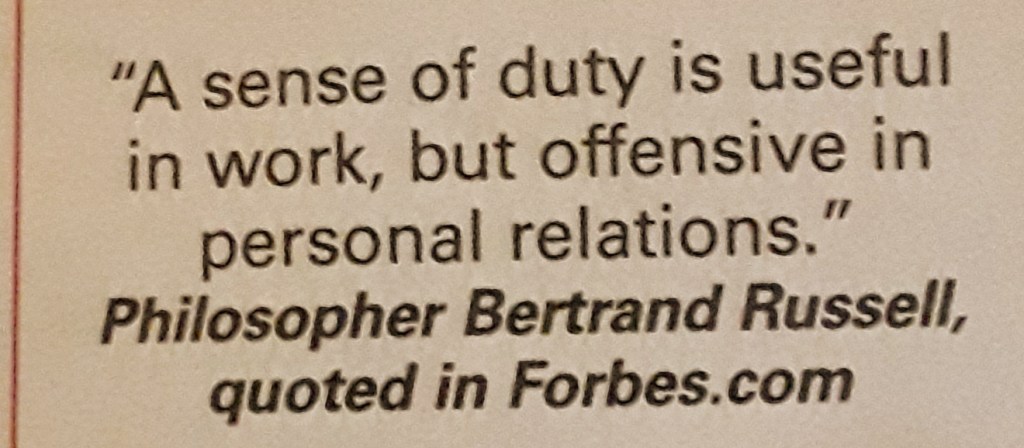
The duty of social distancing is tough

I see a hundred humorous memes posted each day describing the way quarantine and isolation drives us to drink alcohol, I hear of people hiding in their closets for personal space, the bitter argument over what constitutes an essential business continues, and I see women pulling their hair out trying to homeschool. Many are juggling the added responsibility that accompanies 24/7 childcare with work-from-home dynamics. Restaurants are closed and everyone is cooking three meals a day causing an influx of “what the __ do I make for dinner”, “where can I buy ____”, and “when is unemployment coming” posts. Many sites are brimming with the honest posts of those struggling without therapist interaction, access to activity venues, or other typical escape routes.

My first response to all this was: This is how elderly and disabled people live constantly, with no end in sight, what’s the big deal? Quarantine will end, the pandemic will eventually come to a grinding halt, life will resume for most people. But those that are elderly and disabled will continue on, dwelling in the isolation they have known long before this outbreak. Elderly and disabled often have limited mobility, causing social interaction to be at the mercy of technology or the good graces of those that choose to make an effort. This has become a way of life that many elderly and disabled have had to adapt to over the years, often begrudgingly.  After all, what choice have we had?

For me, this pandemic has highlighted an aspect of disability and elder care that hasn’t garned attention in times past. As I observe the mental health impact this quarantine bequests on people that are otherwise completely healthy and have no disability or mental health concerns. If being stuck at home and under stress has this much of an impact on people of full capability, sending many into a state of chaos, anxiety, and depression, how much more would limited interaction affect a person that in addition to long-term endurance of quarantine-like conditions also struggles with some sort of physical or mental health issue? 

God created us as social beings and this is not only displayed in scripture but reinforced as science addresses mental well-being. The smallest social interaction has an enormous impact on well-being, even when we do not think we need it. I listened to an interview with Nicholas Epley recently, social psychologist and author of Mindwise: How We Understand What Others Think, Believe, Feel, and Want. (Epley, N. (2014). Mindwise: how we understand what others think, believe, feel and want. London: Penguin Books.) In various studies Epley found that when our intuition is for solitude, it is often incorrect. In each controlled study they discovered even when people thought they preferred solitude and silence on public transportation systems they rated the satisfaction of their experience much higher if they socialized. The type of conversation didn’t matter, whether the person was a stranger didn’t matter. In the interview with Laurie Santos, Yale University Professor, Epley described another situation where a railroad corporation surveyed customers and found customers claimed to desire solitude and silence during commute times. But when a rail-car was opened for social hour it had to be shut down due to overcrowding! A fact that had Epley place his hands on his head, shaking it. Another clear example of ways that our intuition can be often incorrect.

In the first lecture of Yale University course Science of Well-Being, Professor Laurie Santos addresses what she calls the “G.I. Joe Fallacy”.  (Science of Well-Being is the most popular class in the three century history of Yale, and as of March 2020 during Quarantine more than 600,000 students have signed up to take this online free course.) (Santos, L. (2018). Coursera. Retrieved 2020, from https://www.coursera.org/learn/the-science-of-well-being.; Hathaway, B. (Mar. 25, 2020) YaleNews. Retrieved May 4, 2020, from https://news.yale.edu/2020/03/25/housebound-world-finds-solace-yales-science-well-being-course.) Santos describes the G.I. Joe cartoons from the 1980’s that ended with a moral lesson for children such as street safety. These blips always ended with G.I. Joe reminding us that, “knowing is half the battle”. It turns out, however, knowing is not half the battle, and that is the fallacy. In our minds we often know that we want to be alone, or that we won’t feel better being around people. Science has proven otherwise. Now on the flip side of this coin knowing that we must be socially involved doesn’t help unless we actually implement socialization even when we don’t want to. This may mean smiling on the subway and talking to the person across from us. It may mean making small chat with someone in the locker room, a cashier, or putting our phones away during dinner. Whatever it takes to increase social connection can be done to increase community well-being and personal happiness.

Empty shelves weeks after Covid19 Quarantine

How does this apply to elderly or disabled people spending an inordinate amount of time alone? Put simply, social connection is that much more important for them. There may not be studies on this available yet, but the existing data certainly contains implications. The truth is, disabled and elderly people are often thought of in terms of ‘need’. If there is a need for food, water, transportation, medicine, it will be met. It may not even occur to a healthy person to ask if their disabled or elderly friend or neighbor needs a social call. Likewise, it may not occur to someone that is disabled or elderly that a social call would be considered a need. After all, don’t they feel like they bother friends and family enough with other needs?

The thing that amazes me about science and behavioral health is the way new data reinforces biblical principles in place for thousands of years. For example, there is a Jewish custom, Havruta (fellowship), where study and learning must occur in pairs, never alone. (Schulz, R G. (n.d.) Havruta: Learning in Paris. Myjewishlearning.com. (last visited: May 4, 2020).) The idea here is that iron sharpens iron; the enrichment of education is through interaction with peers. (Proverbs 27:17.) Bryson Katele also makes a great point when he describes the togetherness of Christians to be not a luxury or a devotional, but a necessity. (Katele, B. M. (2003). Fellowship: Its Meaning and Its Demand. Ministry. June 2013. Retrieved from https://www.ministrymagazine.org/archive/2003/06/fellowship-its-meaning-and-its-demand.html.)

“Let us consider how to stimulate one another to love and good deeds, not forsaking our own assembling together, […] but encouraging one another; and all the more as you see the day drawing near.” (Hebrews 10:24-25.) Social connection is a key element of who we are created to be. There are so many differences in the world –  differences in abilities, opinions, beliefs, habits, interests, careers, etc. But right now, we have one thing in common: Quarantine. We all share together and stand together in this, but when this is over what will bring us together then? 

I’ll tell you: We are humans that need social connection. This unity isn’t applicable only to times of quarantine or crisis. When life goes back to revolving around four spinning wheels and busyness, let’s remember how isolation impacted us and the people around us. Let’s remember how isolation sent the most stable of us into a state of chaos and how the most vulnerable seemed so steady. Let’s remember the sacrifice of millions of healthcare workers putting their lives at risk, realizing lives were depending on their social connection. Yes, when things return to a new normal let’s take a few moments to pause for a visit with an elderly or disabled person near us. They need it, and, it turns out, so do we.