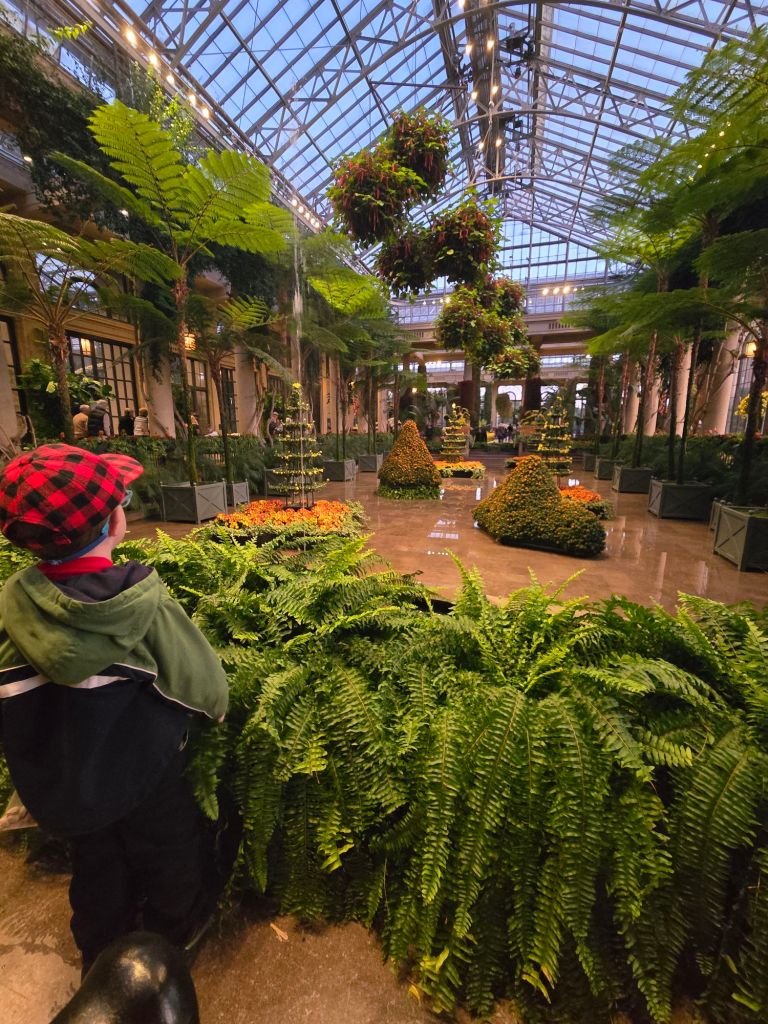
Friday night we went to Longwood Gardens for a fountain show.
It was themed around the silent vampire movie from the 1930s, with the organ music played live for the audience.
It was done well! Really.
Ricky absolutely loved it.
He clapped.
He screamed.
He was completely captivated.
Mom and I mostly looked at the back of his head and then looked at each other.
Because, to me, there was so much potential.
It could have been more.
More music.
More drama.
More magic.
More interaction.
And then I realized the problem: Disney has ruined me.
I have been spoiled.
The live Fantasia water show at Disney World has depictions in the water, boats, Mickey directing the show, fountains, lights, villians, heroes, dancing, music…
It is ridiculous.
It is magical.
It is completely unfair to every other fountain show in the world.
Because once you’ve seen Disney do something, you start thinking:
Okay, but where are the dancers?
Where are the projections?
Where is the character?
Why isn’t Mickey conducting this?
I realize this is an unreasonable standard.
But I’ve seen what is possible.
And now a perfectly nice fountain show is going to have to live with that.
Sorry, Longwood.
The child enjoyed it.
The adult has been spoiled.
Which brings me to the real question.
How old is old enough to take Ricky to Disney before I completely ruin him for every other live show for the rest of his life?
Because I’m seriously considering passing the condition on to my child.
A week before my fall, my mother-in-law took a video of me walking on my crutches.
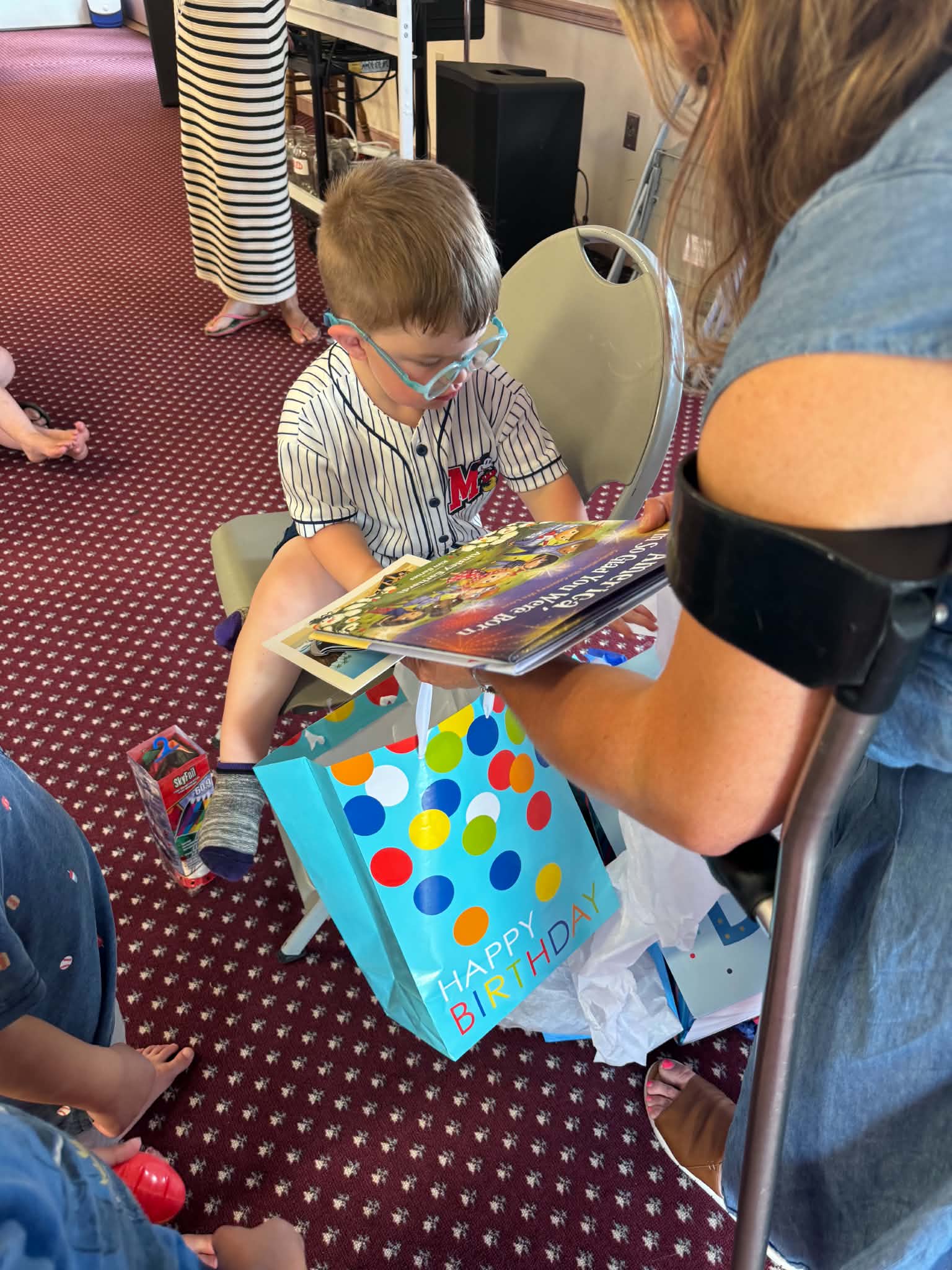
It was at my son’s fourth birthday party, where I was rushing around trying to organize a sack race. There was a lot of bouncing, hustling, and general chaos. It was not my most flattering moment.
At the time, I wasn’t thrilled to discover I’d been filmed in action. Little did I know I was starring in what would become an important piece of evidence.
In hindsight, I’m awfully glad she hit record.
Since my injury, I’ve used that video several times to show doctors and physical therapists what I could do before my mobility changed. It’s surprisingly difficult to explain how easily I once moved around on crutches to people that have only ever known me in a wheelchair.
“Two weeks before my fall, I was in Maine on a sailboat! Walking around the deck while it rocked. With waves. And morning dew. No problem!”
“One week before my fall I walked across slippery indoor pool decks and navigated the locker room showers every singleday.”
“I was hiking up a rocky, 45-degree slope without even getting short of breath! My Fitbit says I walked several miles a day on crutches!”
Each declaration was met with the same blank, vaguely doubtful expression. Because disabled amputee women, on crutches and in their 40’s do not do these things. My former life required supporting documentation.
Fortunately, I now have a very short clip of video evidence.
Hey, I disclosed it wasn’t the best take.
Meanwhile, in other news, Ricky has been operating the van lift for my scooter for two years. What started as a little boy helping Mom and me giving him a task to keep him close in parking lots has turned into a genuine skill. Now that I can’t walk, he can guide an unfamiliar adult through the process of getting my scooter out of the van.
This week, he did exactly that.
At four years old, Ricky has become a scooter-lift technician, and a training supervisor.
I’m not sure what his hourly rate is, but I suspect it involves snacks. In fact, after our doctor appointment his impressed trainee upgraded the compensation package by treating both of us to lunch!
It’s funny, the things that become important after life changes unexpectedly. A video you didn’t think much of. A little boy learning how to help. Ordinary moments that turn out to be anything but ordinary.
We spend so much time thinking about what we’ll need tomorrow that we rarely recognize what we’re collecting today.
Sometimes it’s a video. Sometimes it’s a skill. Sometimes it’s a four-year-old who knows more about your van than the adult he’s training.
And sometimes, it’s someone who thinks to capture a moment you don’t yet realize you’ll want to keep.
I’m glad my mother-in-law thought to film it. Who knew that one day I’d need video evidence to convince medical professionals that I used to be considerably more mobile than a decorative throw pillow?
Taking a four-year-old to a fall festival is a reminder that children operate according to an entirely different set of rules.
Unfortunately, they don’t distribute a copy of the handbook.
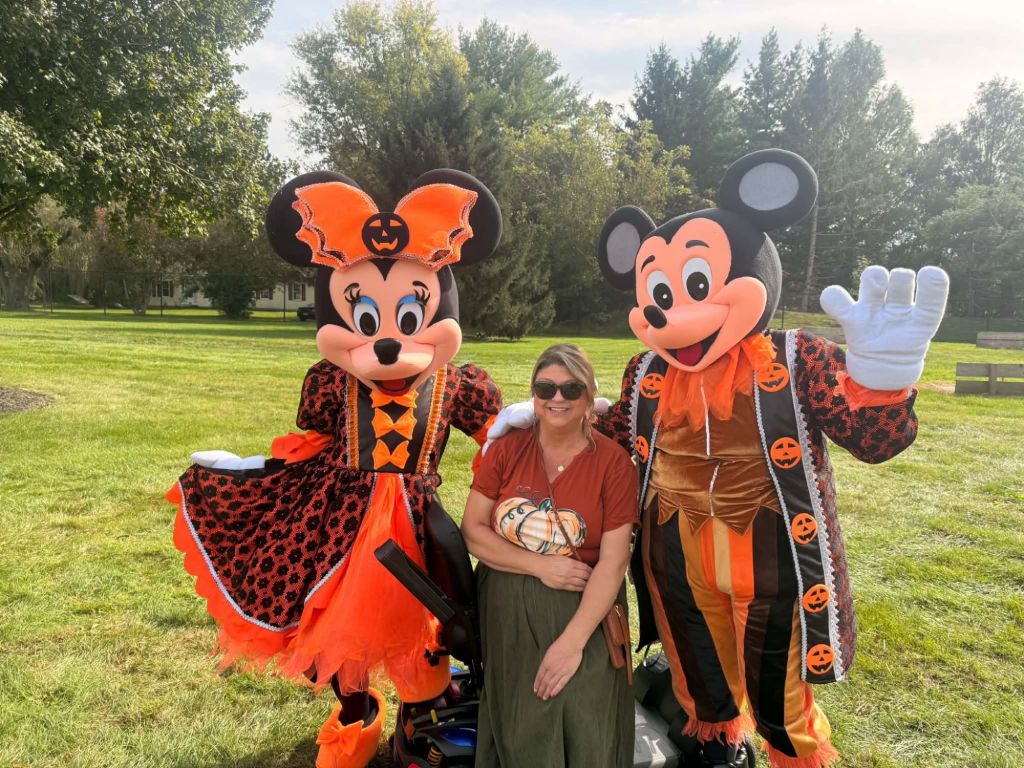
At our local fall festival, Ricky was frightened of Mickey and Minnie Mouse.
Why?
Because they were scary.
I asked no further questions. Instead, I channeled my inner child, and inserted myself promptly between them.
But for Ricky, apparently the matter had been thoroughly investigated and the findings were conclusive.
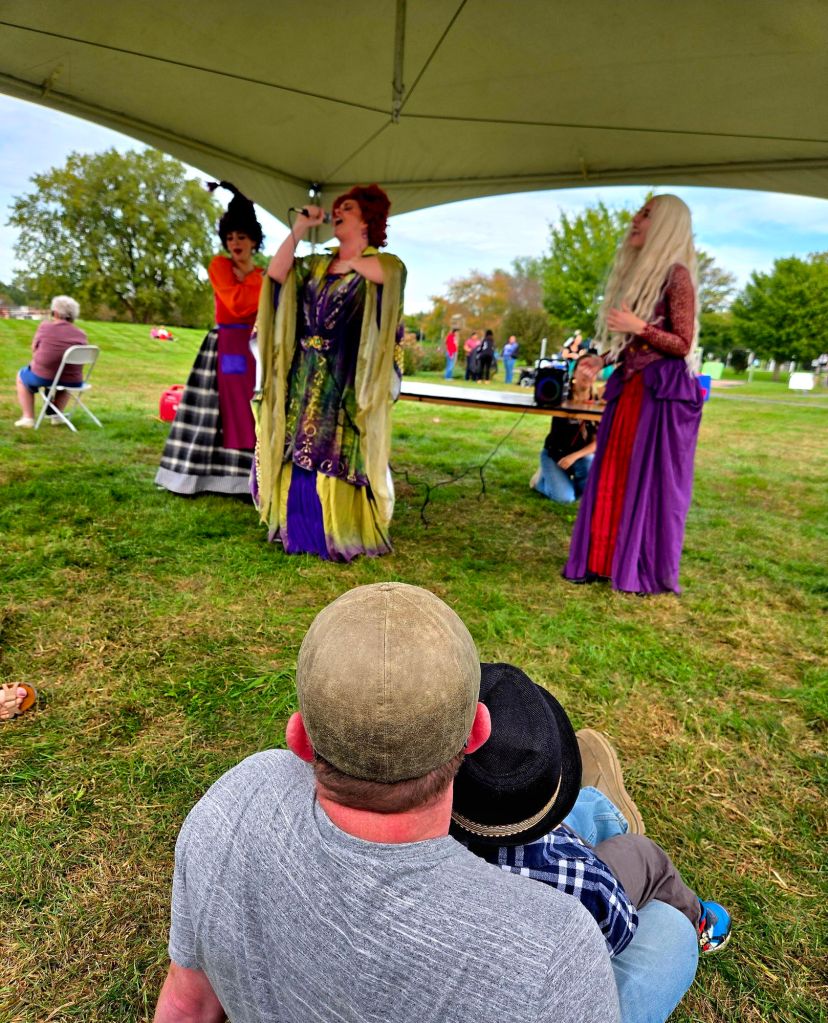
The witches from Hocus Pocus, however, were another story. Ricky was delighted to meet them.
So let me get this straight. Two oversized mice in cheerful costumes are a public safety concern, but three witches that draw children in so they can suck the life out of them are perfectly acceptable company.
I don’t know what criteria we’re using here, but I would like to see the evaluation form.
Meanwhile, fall continues in full swing. Pumpkin coffee, crisp air, long pine needles scattered invitingly. Sweata-weatha has arrived and my mood is as lighthearted and free as falling leaves.
Or at least as much as Meg Ryan in You’ve Got Mail.
So if Ricky gives something his approval, I’ll consider it. If he declares it scary, I’ll respect his decision.
And if three witches invite us over for tea, apparently, we’re good to go.
I am starting to believe gaslighting gets a bad rap.
Now, hang on and hear me out.
It’s generally defined as manipulating someone into questioning their own perception of reality. Obviously, doing that to another person is not great.
But I’ve discovered that a little self-inflicted gaslighting can occasionally make life better.
Call it self-deception. Call it selective reality. Call it turning a blind eye. Whatever you call it, I think there are times when refusing to acknowledge reality is actually a perfectly reasonable life strategy!
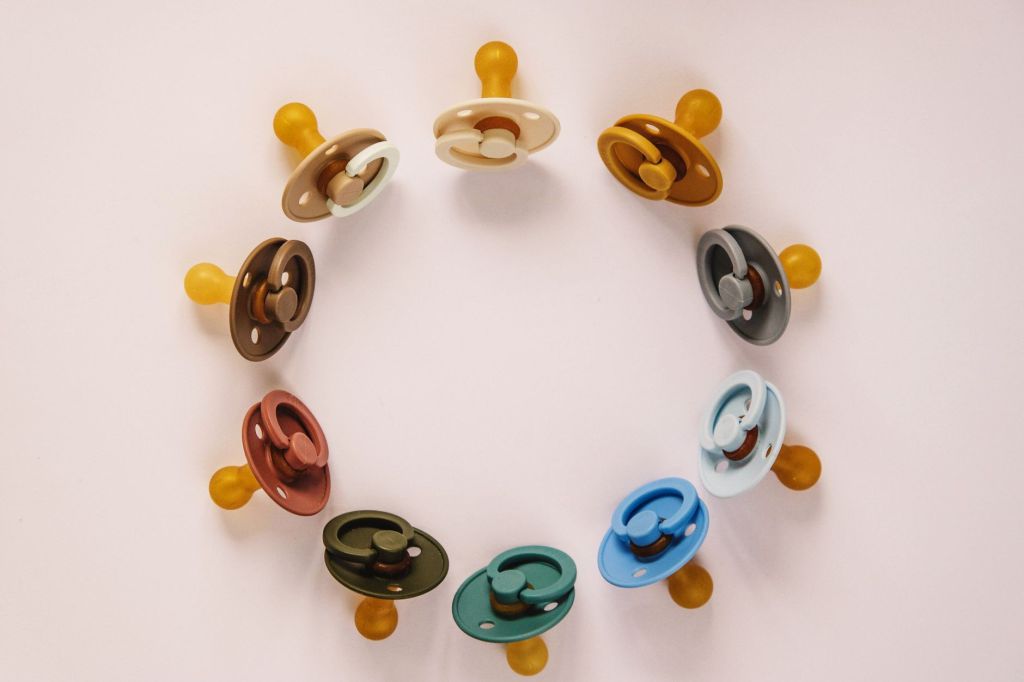
Take my son and his pacifier, as an example.
When we hit the point where I knew it was probably time to let it go, at about 16 months old, I wasn’t ready for the nightmarish fights I had heard rumors of.
So when I came across an identical but really small pacifier among his things, I had an idea:
What if I gave him one that was too small? Could he tell the difference?
Maybe he’d unknowingly decide to quit.
So I handed it to him.
He sucked on it. Pulled it out. Stared at it.
Turned it around. Tried it again.
Then he set it down. He repeated this a few hours later — and never picked it up again.
I had apparently gaslit my child into giving up his pacifier.
Parenting win.
And now I’m starting to see the possibilities everywhere.
Not eating veggies? Throw in a little dressing and call it a salad.
Pretty sure I heard my son say something inappropriate, not 100% sure? Keep moving, he will probably say it again later.
The thing I dropped on the floor? If I can’t reach it, it has officially become part of the house.
The extra time it takes me to do chores is frustrating? No, I am simply slowing down to smell the roses.
And when I tell my son, “Mommy can’t do that right now,” I am not avoiding. I am teaching him valuable lessons about patience, problem solving, and arguably the most important skill of asking Dad instead.
See?
Gaslighting.
But the kind where everyone wins.
Maybe the goal isn’t always to confront reality head-on.
Sometimes you just need to look reality directly in the eye, politely disagree with it, and carry on.
Preferably without dropping anything on the floor.
Because if you’re a mom with a disability, there are already enough things in life reminding you what you can’t do.
I see no reason to make matters worse by being completely honest with myself.
Sometimes, a little questionable reality is just good parenting.
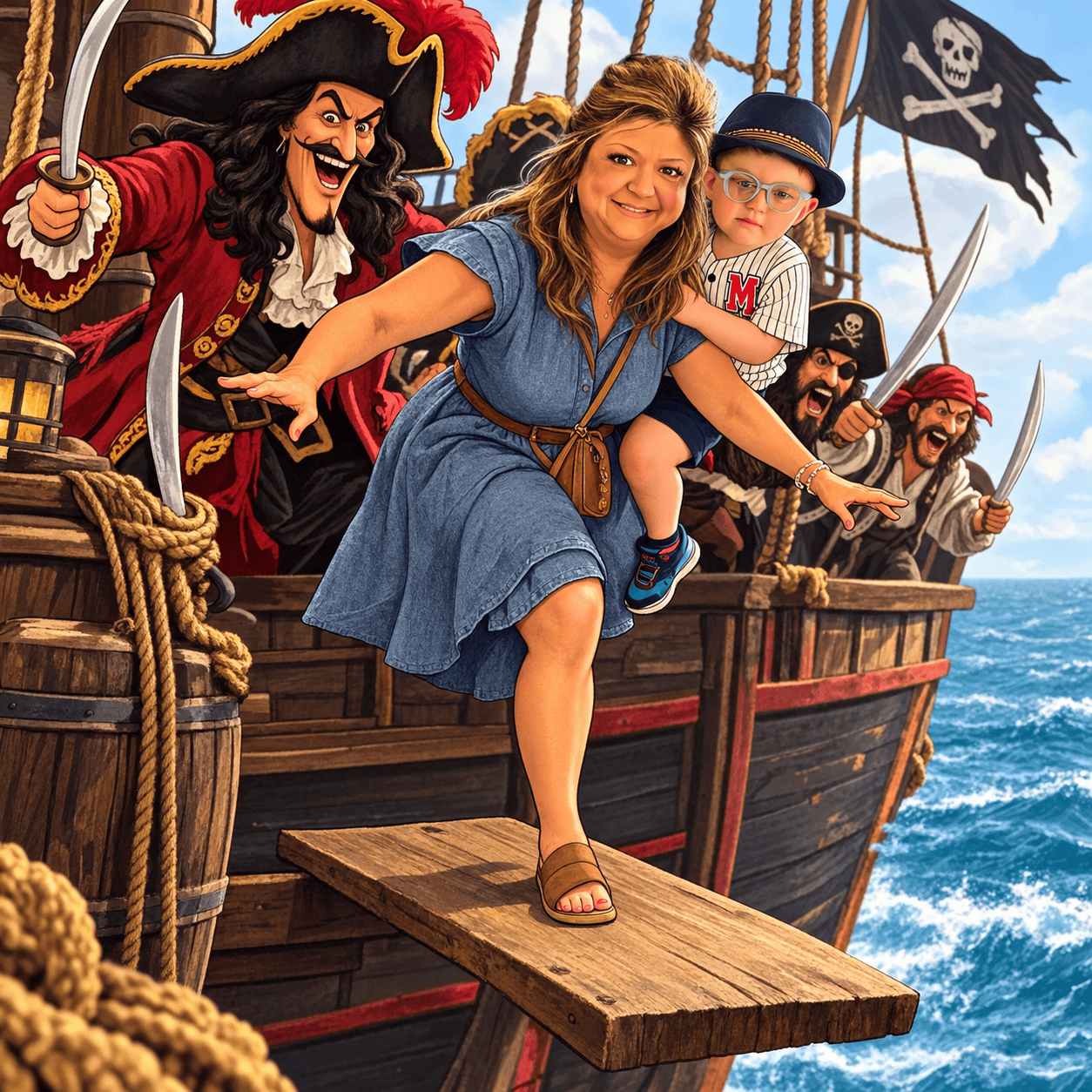
Lately, my son has been watching Peter Pan on repeat. He loves the flamboyance and eccentricity of Captain Hook. Apparently he has chosen the pirate with dramatic feathers and questionable judgment as his role model. I wish I could say I was different as a child and teenager.
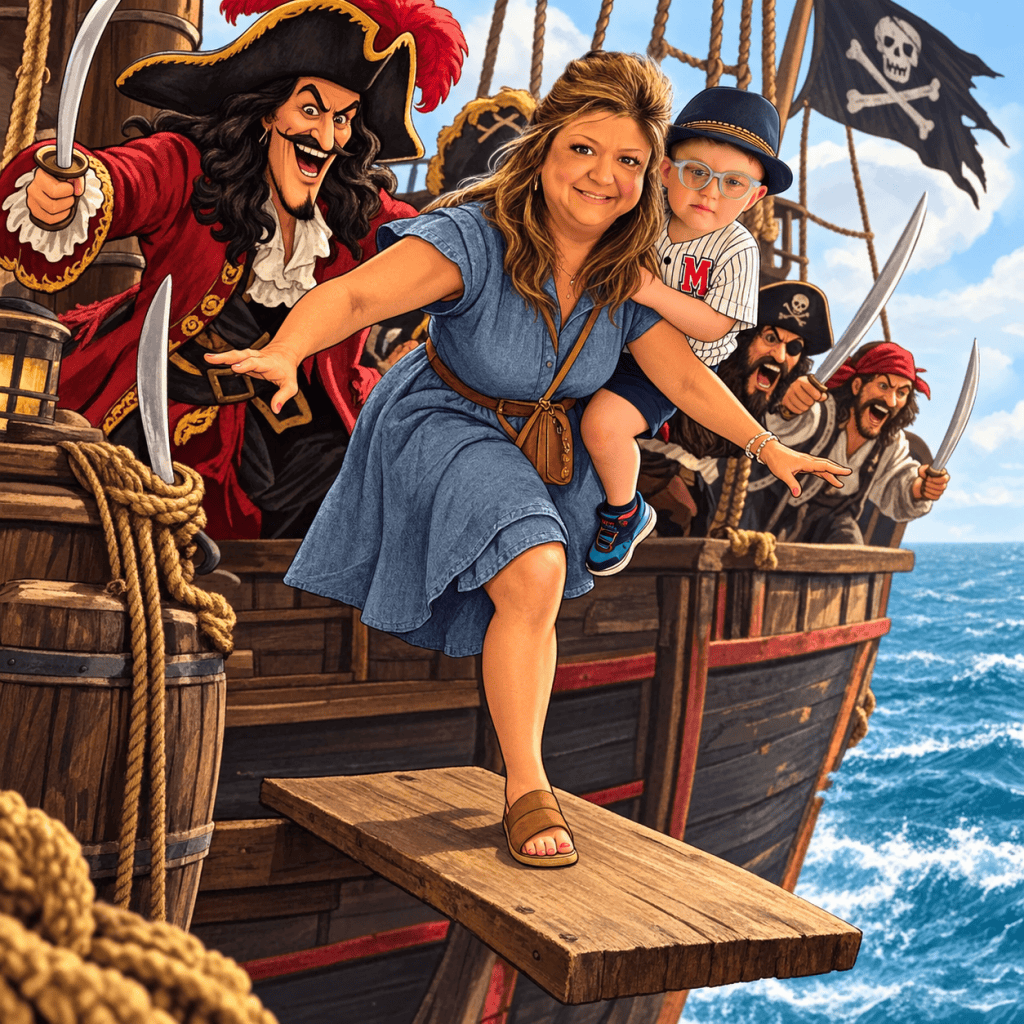
The other day, I happened to glance up during the part where Wendy has to walk the plank off the pirate ship. She steps off—and there is no splash. Peter Pan has caught her, unbeknownst to the pirates.
I feel like I relate to Wendy.
Walking by faith can feel eerily similar to walking a plank.
For some reason, I always assumed I would be protected from really bad things happening to me. Somewhere along the way, I think I started to believe that surely God would look at everything I’d already been through and give me a little extra grace from, at least, any other physical trauma.
I don’t know why I thought this. And if we’re honest, I suspect most of us do. We don’t necessarily expect life to be easy, but we quietly assume there will be some sort of limit to how hard it can get.
So when I slipped and fell and tore the tendons in my shoulders, I was shocked. And when I say shocked, I mean genuinely, completely, how-is-this-even-happening-to-me? shocked.
It took me almost a month to put words around what had happened and why it bothered me so deeply.
I realized that somewhere along the way, I had confused grace with protection.
I thought grace meant I would be spared from certain things. But grace is a gift. I don’t earn it, and I don’t get to decide what form it takes. I’m not entitled to the grace of staying on crutches instead of ending up in a wheelchair. I’m not entitled simply because I’ve already had my share of difficult things.
That was a hard realization.
I had been living my “vertical life” on crutches without really questioning how quickly it could all change—how one fall beyond my control could completely alter the way I moved through the world, forever.
My attitude has been adjusted.
Did it need to be adjusted quite this dramatically? I would like to formally submit a complaint to the captain.
But if I have to walk this particular plank anyway, I might as well let it teach me something.
Grace is a gift. It doesn’t come with guarantees about how my life will look.
Our house is now on the market. And locally, there aren’t a whole lot of houses for my situation and the funding for custom construction is out of reach. So now, I wait.
Will the timing of all these things come together perfectly?
I can no longer assume that they will.
Ideally, I will step out and there will be no splash. But I could get to the end of the plank, take that final step—and find nothing there to catch me.
Peter Pan is a little busy off in Neverland, after all.
And maybe that’s the point.
Faith isn’t knowing exactly what will be underneath you when you step off the plank. It’s taking the next step anyway.
Off I go.
And whatever happens at the end of this plank, I’m thankful that I can swim.
Or at least tread water.
I’m just secretly hoping I can at least have a nice feather hat and some ruffles to complete the look.
My 30-year-old sister recently came and did something no one should attempt without a strong relationship: she helped me clean out my closet.
By “helped,” I mean she took everything out and then proceeded to ask questions I apparently wasn’t prepared to answer.
“When was the last time you wore this?”
“Why are you keeping it?”
“Are you 70? Because this makes you look 70.”
“Do you really need four black shirts?”
Apparently, I did not recruit a closet organizer, but a person with absolutely no sentimental attachment to my clothing.
We discovered shoes from circa 2014. Some were literally falling apart. Some shirts had holes or had pilled beyond redemption. Wool shrunk. Some things needed replacing, and some things I loved had to be banished anyway.
And then there were the things I had been keeping simply because I had always kept them.
It got me thinking about September.
Rosh Hashanah, the Jewish New Year, traditionally falls in September. It is a time of reflection, renewal and taking stock.
What still serves a purpose?
What am I holding onto simply because I’ve always held onto it?
What no longer fits or flatters?
What needs to be replaced, upgraded—or passed along to someone else?
We’ve been asking many of those same questions in our house this week.
We’re staging our home to sell and looking for a new one. Because of my wheelchair, there is so much of this house I can no longer access. Moving means decluttering on a much larger scale than one closet.
“Keep or toss. No stories,” my mom reminds me as she does the brunt of this work for me.
And she’s right.
After 14 years in one house, sometimes you don’t need to hold something, thank it for its service and wait for it to spark joy.
Sometimes you just need to look at it and say, “Why on earth do we still have this?”
Then put it in the box.
This isn’t only about what we’re getting rid of. It’s about making room for what comes next.
So what am I keeping?
My faith. My family. Laughter. Piano. Embroidery. The little ordinary things that make life feel like ours.
And hope for whatever house—and whatever chapter—comes next.
The rest?
Well…
My sister and mom have already made their opinions clear.
The last time I was regularly writing here, I was dreaming about becoming a mom. Then, in June 2022, my son arrived—and suddenly life became very, very busy.
Somewhere between diaper changes, toddler years, doctor appointments, family life, and simply figuring out how to do motherhood with a disability, Crutchprints got quiet.
But I never stopped thinking about it.
A lot has changed in these four years. I’ve changed. My life looks different than I imagined it would. I am a fulltime wheelchair user now due to a fall, and I’ve learned things I never expected to learn about motherhood, disability, faith, marriage, independence, and finding joy in an imperfect life.
So I’m dusting off Crutchprints and starting again. Even without the actual crutch-using prints.
I don’t have a grand plan or perfectly polished essays. I think I’ll just share little pieces of life—the funny moments, the hard moments, the things I’m learning, the places we’re going, and the reminders that life doesn’t have to look the way we imagined for it to still be beautiful.
One of the messages that I have so carefully guarded on Crutchprints is the fact that there are times God chooses not to answer our prayers, for whatever reason, and that is ok. There are times that no matter how much we pray, fast, read scripture, believe, and cling – the answer is no. Understanding and accepting that we do not always receive the things we so heartfully seek takes great depth of faith and trust in God and his omniscience.
In November, I found out that I was expecting a child again. Last time, after believing that God had finally granted me the miracle I had prayed for 11 years to receive, I lost the baby at 14 weeks. Last time, I was prepared to shout from the mountaintops, “See! God listens! God DOES give us ALL the desires of our hearts! Don’t give up, don’t stop and you too will receive your miracle.” Then, I lost my child.
So when I read my positive test this time, I pulled in and went deeper to ponder these things and the way in which prosperity preaching not only reduces God to a formula (if we do X, God will do Y, we will get Z), but contradicts reality.
Behold, I am doing a new thing; now it springs forth, do you not perceive it? I will make a way in the wilderness and rivers in the desert.
Isaiah 43:19
This verse has appeared to me a lot over the first months of this pregnancy. It is one of those verses that I’ve never felt a connection to. Yet, again and again it appeared in the oddest of places. After about the eighth or ninth time I started to wonder if this was some sort of sign. Again, ever hesitant to accept yet one more thing as a sign of positive promise only to be disappointed, I continued to secretly tuck my thoughts away and ponder them. Was God really doing a new thing? Today, at 7 months pregnant, IS God really doing a new thing?
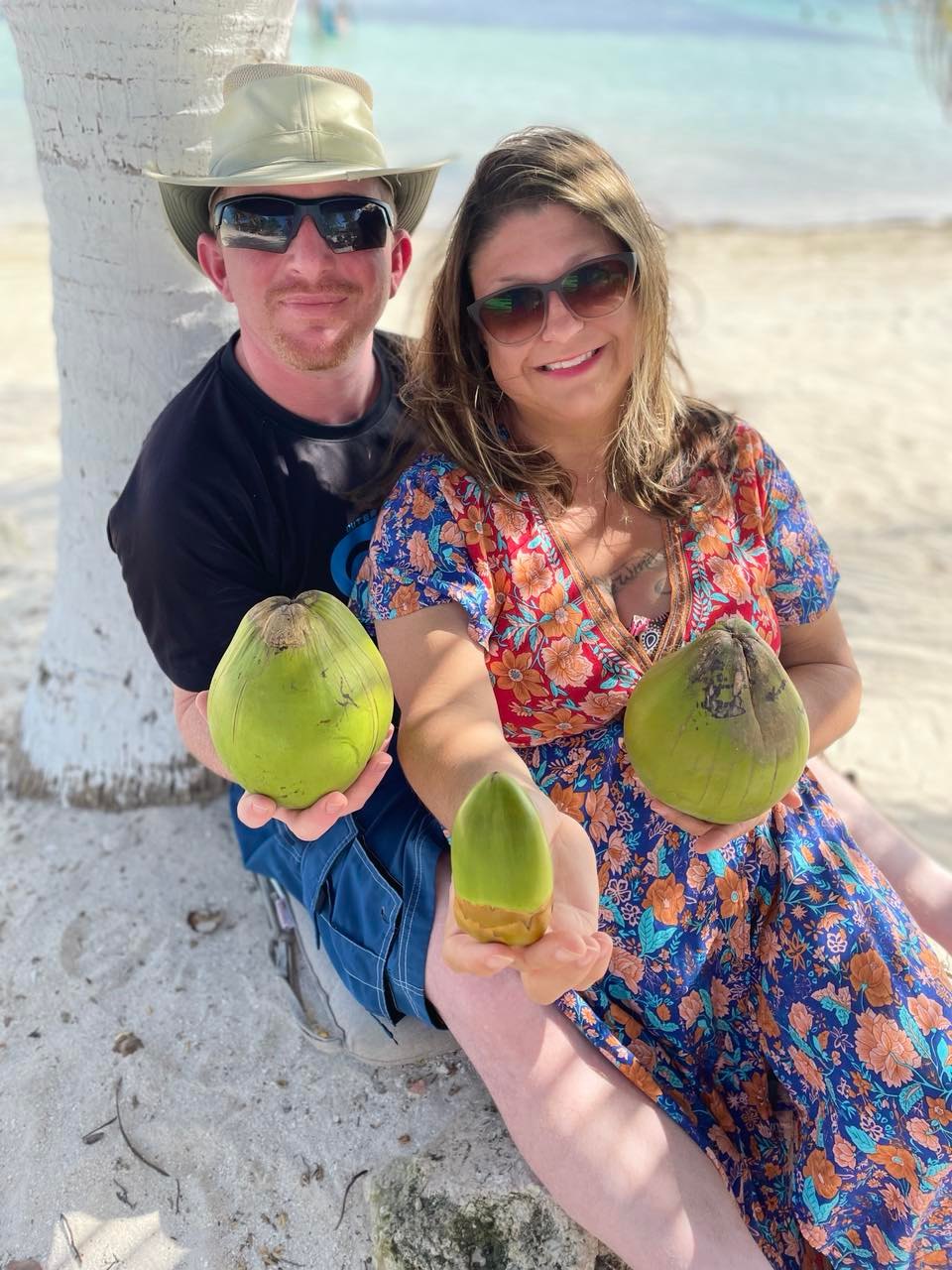
Announcing the welcome of our little coconut
Of course, all of this isn’t merely a faith issue. Any woman that has lost a child and then became pregnant again knows the fear that tries to torment and steal our joy and peace. Fear all the way through as we approach the date of previous loss, fear when we don’t feel the baby move, fear when the doctors inform us of all the risks. My existing health conditions and those risks only seem to multiply the trials. Yet, I had to make a decision early on. Was I going to embrace this “new thing” that the Lord was doing within me or was I going to remain unattached to my child and emotionally unavailable as he took form in my womb? The obvious answer, and toughest choice by far, was to be present in emotion, joy, and body.
Over the last few months many friends have approached me asking if I am going to share my miracle and my testimony. They understand that this is an answer to prayer and feel I must share this to give hope to other women struggling with infertility and pregnancy loss. I hear their hearts and agree to some extent. But something within me feels strongly reserved. First of all, there are still too many unknowns; secondly, the fact remains that just because God may have given me this gift doesn’t mean that he will give it to everyone else too. Would I be encouraging others or giving them false hope? I still don’t know the answer.
We are celebrating with weekly message board posts
As of now, dear readers, I have decided that while God doesn’t always answer our prayers and give us what we want, he does sometimes still surprise us. He surely has surprised me. Is it a timing issue? Maybe. Is it a test? Possibly. But mostly it is a chance and opportunity to grow closer to him with joy, thanksgiving, and modesty as we humbly accept what we had grown to believe could never be experienced by us. Every day that I am pregnant I am experiencing something I had accepted was not going to be possible for me. Every day is a gift, every small kick brings joy, every bit of preparation is a celebration, every week closer I watch the viability rate rise and my faith soars. And no matter what the final outcome will be, all of this is a gift and surprise from God that I humbly accept today, here, and now.
Should my story encourage others? Yes, but not in the way that we are inclined to believe. God is not and will never be a formula. We cannot earn his gifts, his love, his surprises. But, he will give surprises to us when and as he sees fit and in those moments of joy we can stay present and enjoy them to the fullest. Today is my moment.
“I’m not finding a heartbeat.” The five words I am now certain every expecting parent finds tosses their joys, their hopes, and their excitement as effortlessly as one flipping a coin. Those five words existed between expecting a heartbeat, and experiencing heartbreak. It didn’t make sense to me. My body was still acting like I was pregnant, the baby was still inside of me, even my belly was still growing! I leaned my head back on the pillow, staring silently up at the ultrasound screen, at my baby. My husband patted my arm incessantly, trying to comfort me, but I simply went numb as tears streamed uncontrollably down my face. I knew better than to make a scene here, in the midst of professionals and white sheets and medical equipment. I knew better than to become someone’s dinner table story that night, “This poor handicapped woman and her husband lost their baby today and her grief was so raw…” So I sucked all of the emotion and the tears and pain and sobs inside of me like I was vacuuming the debris of an explosion, put on my sunglasses, and silently left.
Before the appointment we agreed to stop at the grocery store for a few things on the way home. Not thinking clearly, we stopped anyway but we couldn’t even locate what we needed. As we wandered through the aisles in a daze, there were people going about their day around us. No one smiled, no one seemed to have a clue. Our world has just turned upside down, I thought, and not a single person around me knows it. I could have used a smile, a nod, a touch in that moment. Instead I felt more isolated and more alone than ever. I made a mental note to always smile and to be kind to people in public. You never know what that person next to you in the store is going through, perhaps this is one of the worst days of their life, too.
Just two weeks before this we had sent out an announcement to our friends and families, telling them of our expectant miracle. Any follower of this blog or my book will know of the articles, the prayers, the waiting, the wishing, and the hoping that both Rick and I have held over the years for a child. A few years ago, we finally gave up, accepting that it simply wasn’t meant to be for us, and resolved ourselves to being the best aunt and uncle that we could be in lieu of this. When we were told God had granted us our miracle, we were ecstatic! Now, we thought, we would have our own child to invest in and love with God’s love! Suddenly, it wasn’t meant to be, again. Wrapping our heads around that was hard enough. What made it almost impossible, I thought, was that my grief was going to be so public. When it comes to personal pain I am not a public person. It is my nature to suck it into myself, process it, hibernate with it, work on it, then come out when I can face others without the ache of emotion oozing from me. This time, it seemed I would have no choice.
My life has been hard, full of seemingly harder times than easy ones. So many struggles and so much pain has laced my short life that when I first heard I was pregnant unexpectedly, I wanted to guard my heart. I half expected something to go wrong, because when does anything come so naturally or easy for me? I wanted to guard myself and protect that part of me just in case something bad happened. But when I said this out loud to my mom one day, I realized how incredibly sad I sounded. What’s more, all of my education in trauma resonated within me. Children can be rejected from the womb, they can have issues that stem from that sort of womb wound. I prayed and thought about it for a full day and night and decided that my child must know it is loved, it must know that as part of God’s creation it is treasured, even if it meant putting my own heart on the line and possibly experiencing the pain of loss and heartbreak. Besides, countless people reminded me, God wouldn’t create a miracle and not see it through.
Now, knowing that the little one inside of me was dead, I felt every ounce of that loss and heartbreak to the fullest. The week I waited for surgery to remove the baby was difficult, but also a very precious time. I took that time to continue loving my child, even if he or she was gone. It was a time I cradled it, spoke to it, loved it, and made sure that when the flesh of my flesh was gone from me it would know beyond a doubt that it was treasured. And I believe when it returned to God’s arms after the brief stint it had with us here on earth, he or she knew.
We both felt so foolish for announcing my pregnancy at the expected 12 week mark. We should have waited, we thought, especially knowing my existing medical conditions. But when the baby was removed, the surgeon said the pregnancy was completely normal up until the point when the baby’s heart stopped. There was nothing about my pregnancy that indicated my health had anything to do with the death. There was no reason we should have delayed sharing our good news with people.
But none of that changed the fact that my grief was still public. Messages poured in from everywhere: Texts, Facebook, Instagram, e-mail, and cards. Women from the community surrounded me in every sense of the word. One woman from church came and simply sat with me for hours, as I processed and spoke aloud and asked questions about my body and the changes I could expect. My mother and father were here daily, checking in with me, holding my hand, helping me to doctor appointments. Flowers continuously my tables. My aunt brought meals and let me write some of my feelings to her without judgement. My best friends mourned with me and stood by me. So many women knew the pain of losing a child, but had endured that pain silently. Too many messages started with, “I don’t tell anyone this…” or “This isn’t public information, but…” Women of every shape, size, background, and health condition surrounded me with their stories, their love, their understanding and I am still overwhelmed with gratitude. It reassured me that losing a child doesn’t happen to only certain people, it is not a discriminatory process.
Earlier I wrote about how how isolated I felt immediately after the news when I in the store and no one knew my pain. Yet here, in my public grief, I was not alone! God used the prayers of others when I couldn’t pray, God used their messages and stories to touch me and heal me in a way that otherwise would never have been possible. Rather than being alone and fighting through the grief from a place of isolation, in his mercy I was among friends.
I can hear my readers now, If God was really merciful he wouldn’t have let the baby die at all. And again, I don’t know why this happened. I don’t know why it was taken from us or why the precious life he created never lived to see the light of day. I’m also angry that we must go through the pain and suffering and loss for something we had accepted we wouldn’t have.
After unspeakable pain and trauma and loss in the bible, Job asks God why. God let’s him rant and rave for a while, then turns and answers. But he doesn’t exactly tell Job why. He never answers him in that way. Instead, he asks Job a list of questions such as (paraphrased): Where were you when I laid the foundations of the earth; Do you know it’s dimensions; Where were you when I filled the seas and hung the stars; Have you given orders to the morning or shown dawn it’s place; etc. In Job 38-39 God asks questions of Job like this, one after another.
God is bigger than anything we can ever imagine and he knows things that we cannot even begin to fathom. I don’t understand his ways, and yes, this grief is hard and it hurts, but it doesn’t change the fact that God is still God. He is omniscient, omnipotent, and omnipresent in every aspect of his creation, and I can trust that enough to know that it is out of my hands.
But what is in my hands, now, is the ability to walk and love other women when they face the same pain. I can be kind to every stranger I encounter, possibly breaking through their pain and isolation like I needed that day in the grocery store. I can respond and lift up other women like they have lifted me. I can choose how to love others as my heart heals, and stand by them so that they do not know the isolation and darkness that grief can bring when we are alone. In short, I can stand with people in the space between their heartbeats and heartbreaks. And if you are one of those women that stood with me in that space, thank you. Even if I didn’t respond to you yet, even if I haven’t had the courage to face you yet, thank you.
This workbook is for a four-week look at fires and burnout in our lives. This is an opportunity for self-reflection, gaining new skill sets, and analyzing the things in our lives that may be consuming too much time, relationships, our health, or our careers. This printable four week study guide is packed with exercises to complete, opportunity for self reflection, and even a little fun along the way. Take the time to dig in and enjoy this!