The Best You’ll Ever Have – In Crutches

In 2005 it was decided that I would be thereafter limited to using crutches for most mobility and function. I was referred by a fellow amputee friend to check out Thomas Fetterman’s crutches, and several prosthetists confirmed they were the best that money could buy. My mom helped measure me for a custom fit of titanium “gorilla” crutches and purchased them for me as a gift.

Fetterman Crutches

I never thought much more about this until 2020, when on a kayaking trip I nearly lost my crutches downriver! I immediately came home to order a spare pair, and took my measurements again. In spite of the fifteen year difference, the company maintained records of my original measurements and noted that these were not the same as I submitted on my new order. Impressed to say the least, they did not disappoint further and helped me to resolve the difference in measurement and included much needed advice about my existing pair.

These crutches are truly the most amazing investment and worth every dime spent. Yes, I’m still using the exact same pair of crutches that my mom purchased for me in 2005. If you know anything about crutches, you are likely rereading that last sentence to make sure you saw it right. Yes, the welding is intact and I am using the exact same pair bought in 2005.

Below: 2005 a few months after receiving my crutches; 2020 pictured with the exact same pair.
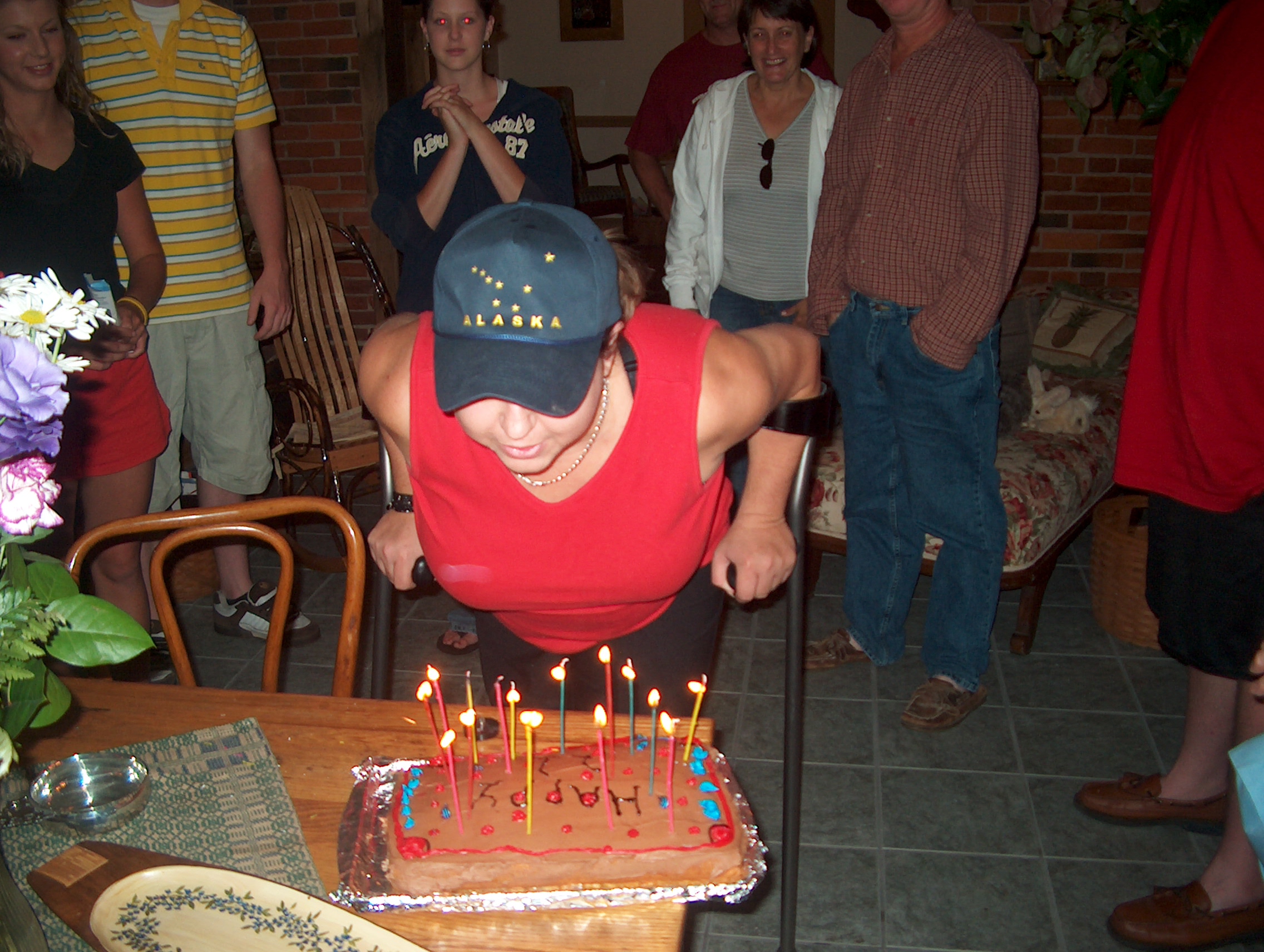
Before Thomas Fetterman’s titanium forearm crutches I was discarding about one pair of aluminum crutches each month. They would snap, bend, and even break out from underneath of me. My lifestyle is active and I needed something that could take the bangs, falls, drops, heavy bags, constant movement, and accidental crunching underfoot when laid on the ground. I love the ocean, so they needed to withstand salt. I love to swim, they needed to withstand the showers at the gym and the kayaking. They have been strapped onto bikes, horses, motorcycles, go-carts, jeeps, scooters, fishing boats, and I’m sure much more – they even float! Furthermore, my doctor warned me about the breakdown in my shoulders and arms over time on crutches. These are titanium, extremely lightweight, and now when I pickup a pair of aluminum crutches I am astounded at the heaviness!

In the end, I cannot recommend these enough and would like to show you my own cost comparison of time used: 15 years x 12 months/yr = 180 months.

Thomas Fetterman Titanium Forearm Crutches: Initial one-time Cost approx. $1,145 + ($127 x 15) yrs of replacement hand grips and tips = $3,064 for 15 years or $204 per year. *Also includes 10 year guarantee.

Prescription issued Aluminum Crutches: Approx. $150 pr x 180 mos = $27,000 over 15 years or $1,800 per year. Granted, insurance would cover some of the aluminum crutches but currently my insurance will cover the amount after I pay the first $3,000/yr which means these crutches would be 100% out of pocket cost to me.

I’ll let you resolve the savings in your head on this one. If you or a loved one will be permanently using crutches, take a moment to check out Thomas Fetterman titanium crutches.

*Please remember when considering these recommendations for yourself or a loved one:

a) Ashly is an amputee at nearly the hip level of her right leg;
b) Ashly is on crutches or in a scooter 100% of the time;
c) Ashly has been an amputee for thirty years;
d) Ashly is still young and active in her thirties;
e) The crutches that Ashly uses are forearm crutches;
f) What works for Ashy may not work for you;
g) Ashly receives no incentives, gifts, or compensation for reviews, advice, or mention of any product or company in these features.

*Product, person, and organization endorsements and reviews are not compensated, neither are they to be interpreted or considered as professional, legal, or medical advice. Neither Crutchprints.com nor Ashly Ash has interests, holdings, political affiliations or other ties with persons, corporations, or other entities referenced. Neither Crutchprints.com nor Ashly Ash has received free product(s), sample(s), or compensation(s), or service(s) for postings unless otherwise disclosed.
**All recommendations and advice that are posted on Crutchprints.com will be based strictly on personal experience and opinion and should not be taken or interpreted as legal or medical advisement under any circumstances.

Can Family & Friends Suffer from Secondary Trauma?

Secondary traumatic stress is a risk when we support and engage wholeheartedly with a trauma survivor. More recently, secondary traumatic stress has come to the front as an issue separate from burnout, and it should be addressed.

While burnout is a state of physical, emotional, and mental exhaustion caused by long-term involvement in emotionally demanding situations, secondary trauma often occurs when there is interaction between the supporter and survivor and the supporter becomes traumatized. Secondary traumatic stress is often used interchangeably or referred to as “vicarious trauma.”

There are many indicators of secondary traumatic stress including but not limited to: anger, sadness, prolonged grief, anxiety, depression, headaches, stomachaches, fatigue, constipation, cynicism, mood swings, isolationism, avoidance and lack of motivation.

If you are supporting a survivor of severe trauma and feel a number of these symptoms, confirm your suspicion of secondary traumatic stress, we urge you to check in with your own needs and make self-care a priority.

Leaving secondary traumatic stress undealt with can bring an entourage of other problems both physically and psychologically. It is important to take care of yourself when you are supporting a survivor of trauma or trauma-based mind control. Remember the childhood song, “I’m a little Teapot”? Well, your teapot must be full before you can sing “tip me over and pour me out!”

Steps to Take….Mentally

Take time or schedule time daily to process, self-reflect, journal, read unrelated books or practice a hobby, spend time with friends/family/support network, talk to someone about the stress you are under, and find things that make you laugh.

Steps to Take….Physically

Eat healthy and regularly exercise. Don’t put your physical health on the back burner because it will impact your mental well-being and window of tolerance. If you can set aside specific time to “disconnect” and rest, check in with yourself and see what it is your body needs including but not limited to sleep and nutrition.

Steps to Take….with Your Lifestyle

Take breaks throughout the day, make quiet time to complete tasks, set limits on the number of intense emotional contacts you support, and learn to say “no” when you need to. Boundaries are not designed to keep others out of our lives, they are designed to keep us contained and not run all over like Jell-O.

On the Hunt – Job Seeking and Resume Tips

I’ve stumbled across many challenges in the modern business world when searching for a job that is a good fit and utilizes my qualifications while considering my disability. In a competitive job market, education seems to be one of the immediate factors in determining the odds of consideration. With lots of applicants and the increasing workload on employees, time is of essence when considering applicants.

Aside from education, I believe a proper resume and self-presentation bears considerable persuasion on prospective employers. Resume standards are changing constantly, I have found most recently in aiding a few in their job search that the format and structure of a resume must suit the audience. As a result, we created two resumes for my each candidate. One reflecting traditional and the other reflecting modern formatting. 

And let’s be honest, folks, discrimination exists still in many parts of this country. Yes, the ADA has fought hard for equal treatment when we have a disability. But yes, there are still a million ways that companies can and do work around this. I have done interviews where I was rejected only to be told later that it was because “you will make our employer’s health insurance costs increase” or “it’s just too great a liability to employ some people.” I’ve been written up for not following the proper business code of holding the handrail on stairs (which caused me quite a headache fighting this and proving I cannot use crutches and handrails at the same time, and oh yeah, why isn’t there an elevator in that building?), and written up for being scared of falling in the snow and therefore asking to leave work early. But there are things that you can do when being hired that will at least prevent some of the discrimination up front.

You control the interview process and it is always wise to submit resumes online when possible and seek for video-conference interviews to “save time” for everyone. Phone interviews work as well, but the main point here is taking the bull by the horns and insisting that your resume and qualifications be judged on just those things, not your disability. Moving on from this, I have other practical skills to share as well!

Self-identifying skills and qualifications is difficult for most people. Understanding and using the correct terminology, skill descriptions, keywords, and trends of the company or market for which you are applying is no longer an option but a necessity. If there is a specific company that you wish to apply for, research them. Pay particular attention to the values, mission, and vision statements of the company. There are keywords in these statements that will help you tailor your resume and interview process. Business size, history, age, culture, and marketing are other areas to research. Again, consider the audience when creating your resume to show you have the skills and pay attention to details. Hiring managers recognize when a candidate has researched and reflected that in their resume, and often this is valued to demonstrate commitment and work ethic.

In the interview stage the question is not, “will I receive a job offer?” (in most cases), but “will employment here enrich my life and the company’s objectives?” Enter an interview prepared with questions of your own, you are also interviewing the company! Other things that help in interviews: professionalism and disposition go a long way and real life experience is valuable. In a recent case-in-point of assisting the job search of others, the hiring manager told the candidate that they now seek out experience more than education in that particular field work after a few near-disasters where educated employees had none of the experience that was critical to safety. So be confident and highlight your experience!

I recommend seeking a friend or associate that knows a bit about the business world but not necessarily your field of expertise to consult with. A reliable person like this can go over your resume, ask you questions, and improve your list of hard and soft skills in a presentable way. If this person does not know the specifics of your expertise, the questions that they ask will highlight skills that are second-nature to you but not others. This is a way to gain valuable insight and evaluation before submitting your resume and with it the first impression.

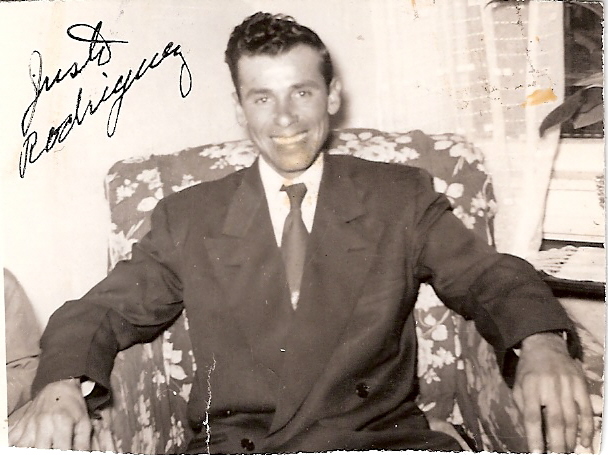
My Grandfather shortly after coming to the States

Lastly, but certainly not least, is the ability to remain flexible and willing to do what it takes. “Get your foot in the door,” so to speak, by considering a minor position from which you can display your skills and transition to the job you want the most later. My Grandfather came to the States from Puerto Rico at a time when racism ruled and no one wanted to hire him. My mom remembers him walking from shop door to shop door in the rain, doing whatever jobs people would give him for an hour or a day, determined to make his way and feed his family without assistance. Because of the look in my mom’s as she would remember this, I will always remember my Grandfather’s words, “There IS a job… but you have to get up out the chair and go try.” 

Take the 10 Question Feedback Survey!

In order to best serve the audience that is following Crutchprints in the Sand we have created a simple 10-question survey. This will give us a feel for what type of content you are looking for, what you currently like/dislike, and other valuable information that will help us curate content for each of you!

This brief survey should not take more than 5-8 minutes of your time. Please help us out by dedicating that small block of time to give us your feedback and help us improve.

Thank you, each and every one of you, for being a faithful audience and friend to me!

Exploring the Issue: Private Foster Home Breakdown and Retention

When we went through the rigorous process to become a licensed private foster home, there was so much we didn’t know. Furthermore, there was so much we weren’t told. Things like 25% of foster homes close within the first 2.5-3.8 months. By one year another 25% close. All in all, 75% of foster homes are closed before the 2 year mark.

Why is that? Why is there an incredible amount of resources invested in the recruiting, vetting, training, and licensing process of foster homes but nearly none in retaining them? We would still be foster parents, I believe, has the system worked with us even a little bit. Instead everything was set up to fail not only the child but us as well.

This paper intends to explore that issues a little more fully and will open your eyes to what foster parents across America are saying. The document is an Adobe PDF file, viewable on most computers and phones, and under 7 (double-spaced) pages. Take a moment to explore this social issue with me…

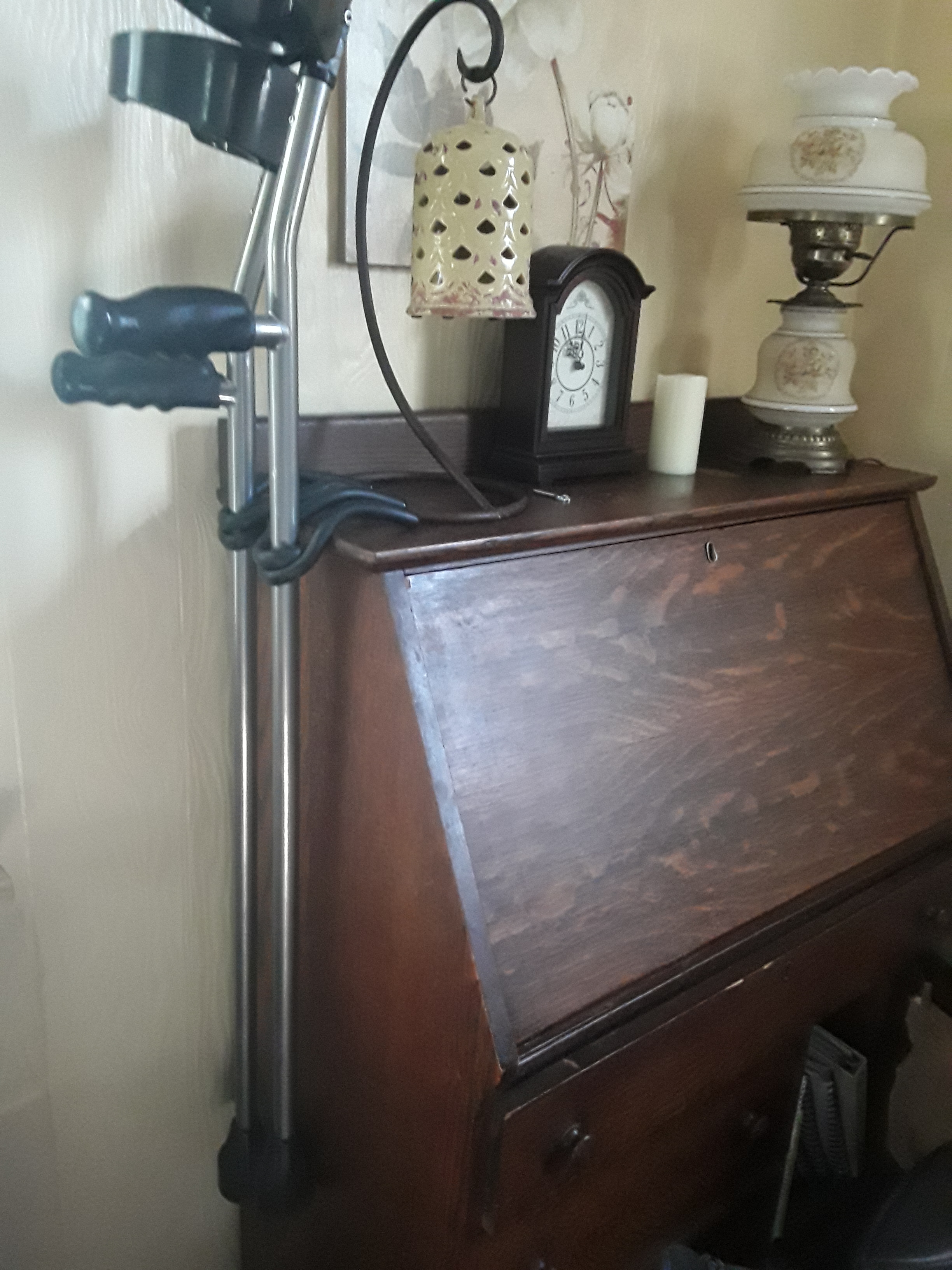
Crutch and cane holders

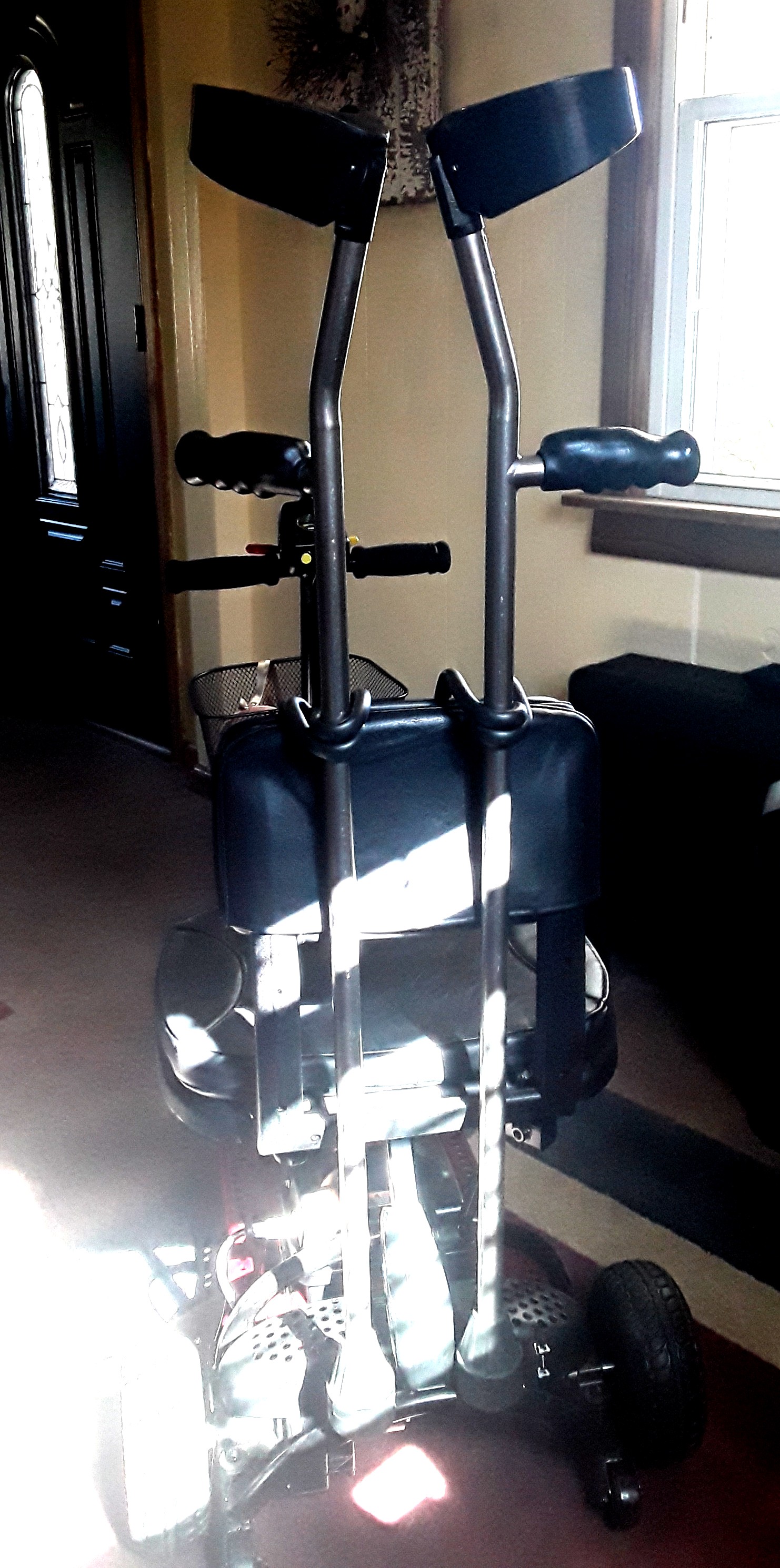
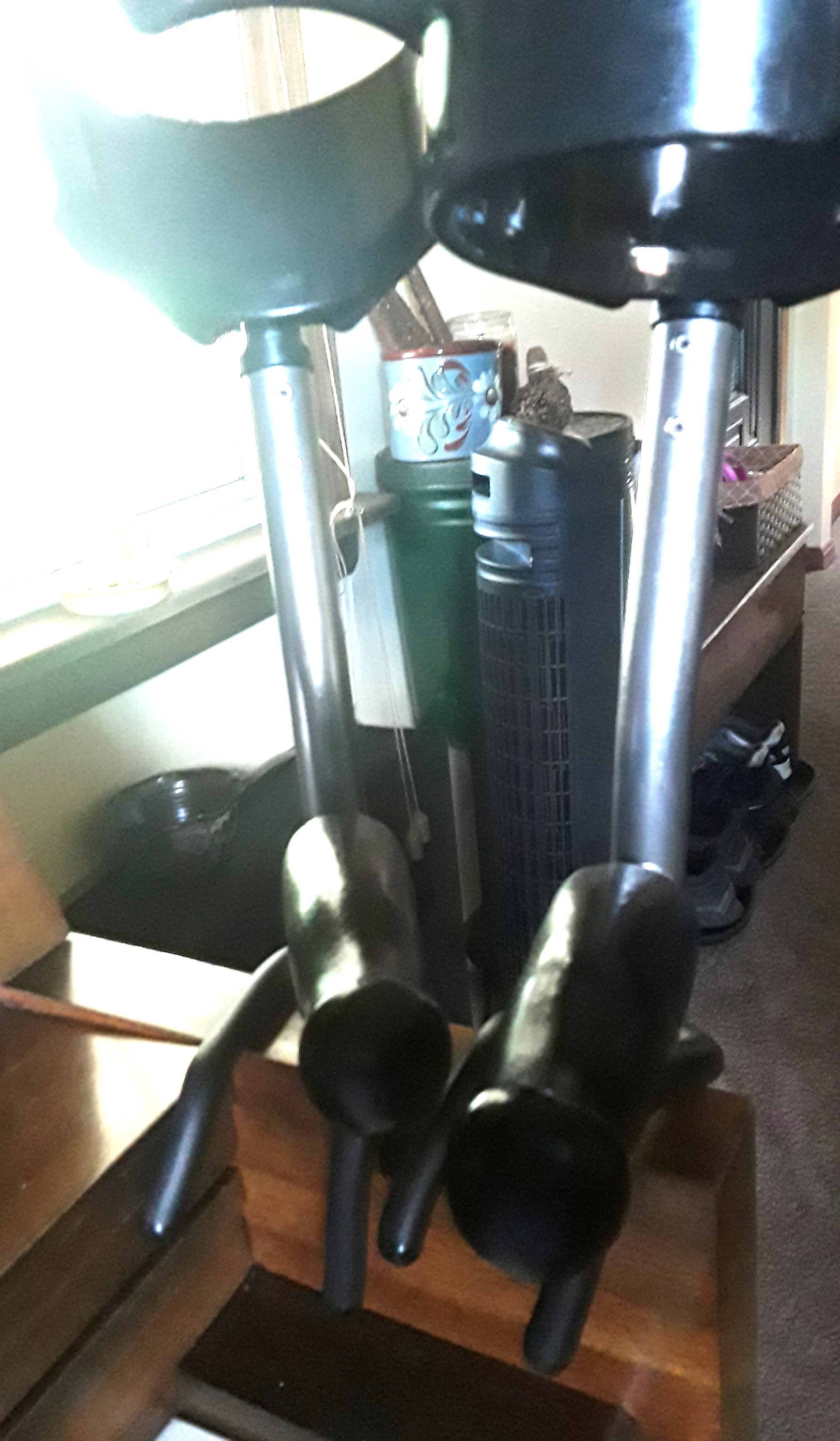
One thing that I hate more than anything is having to lay my crutches on the ground in a public place. Who wants to have their crutch handles on the dirty ground, put their hands on the dirty handles, then rub their face by accident, or eat something? Furthermore, people are constantly tripping and falling, stepping on, or knocking away my crutches because they do not see them or forget where they are laying. When I use my scooter they are one more thing in my hands as I jostle between holding my purse, driving the scooter, and managing two crutches on top of whatever else I have going on like a kid riding on my lap or needing to open/close doors. 

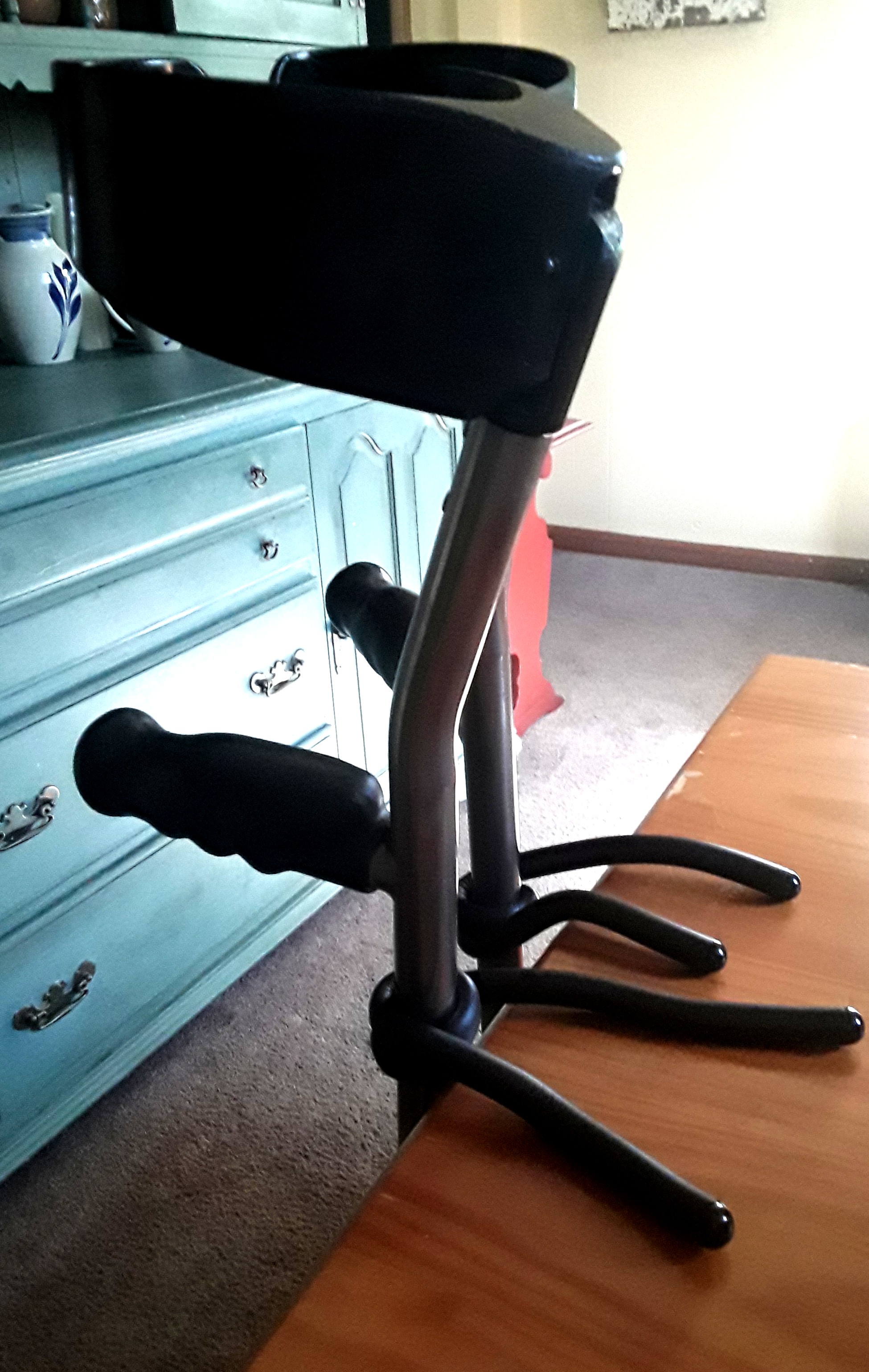
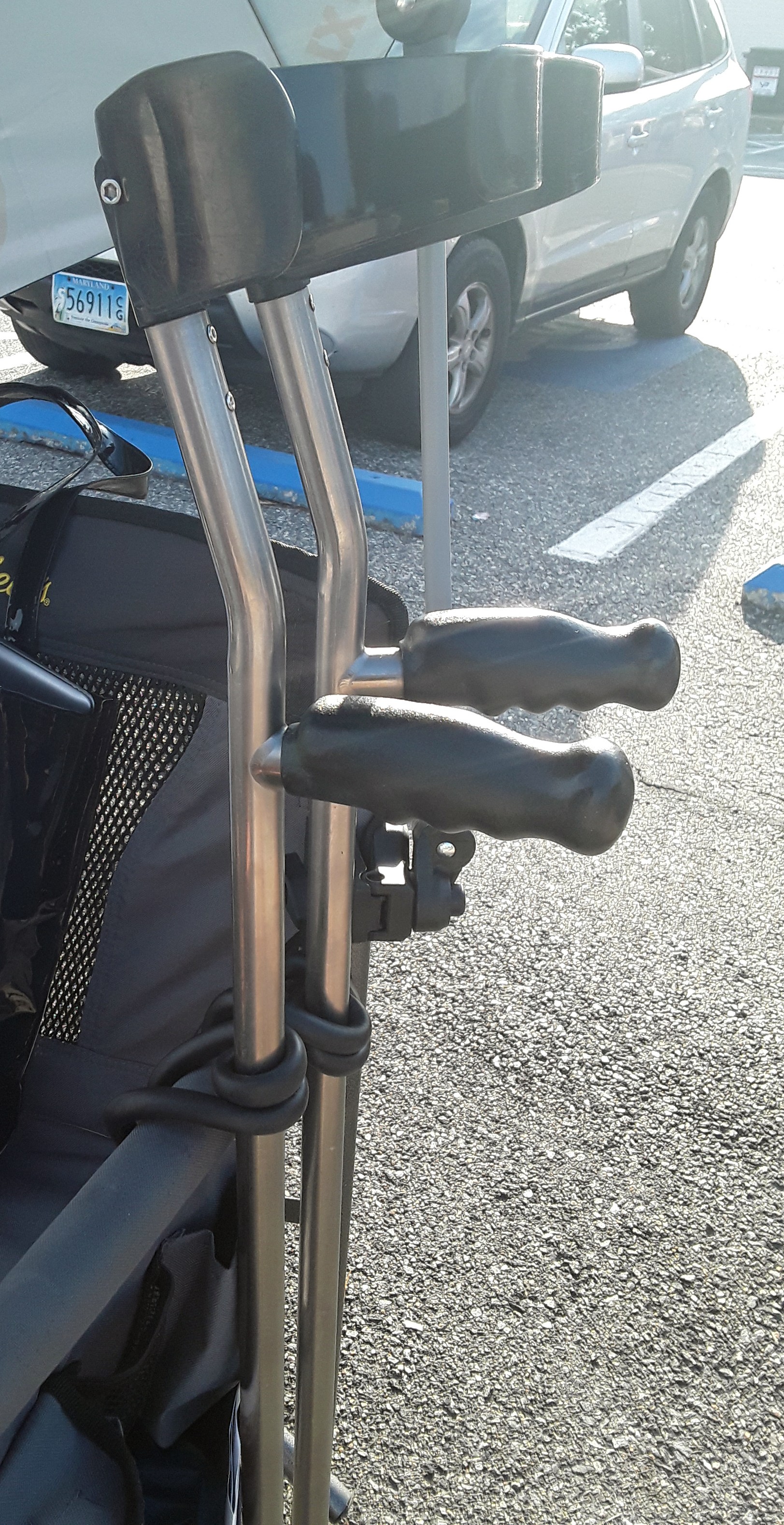
I recently discovered these things, and while I am told they are presently in most hardware stores I found mine online. They are flexible and bendable, they are slip resistant, and they can be molded and attached to whatever length or shape required. It doesn’t matter how thick or thin of a cane or crutch, it doesn’t matter how high or low you need them to be. After hours of trying to invent some sort of portable crutch-holder my whole family was amazed to find such a simple solution under $10!

You can purchase or read more about these here.

Things I have successfully attached to…

  • Chairs
  • Tables
  • Window Sills
  • Sofa Arm
  • Side/End Tables
  • Piano
  • Church Pews
  • Bathroom Sinks
  • Kitchen Counters
  • Public Restroom (Toilet paper dispenser, hook over door)
  • Stadium Cup Holder (To keep handles off ground)
  • Scooter chair
  • Poolside (Made ‘V’ formation to prop them handles up)
  • They twist and bend – there is no end to the possibilities!

*Please remember:

a) Ashly is an amputee at nearly the hip level of her right leg, 
b) she is on crutches or in a scooter 100% of the time, 
c) Ashly has been an amputee for thirty years, 
d) Ashly is still young and active in her thirties, 
e) the crutches that Ashly uses are forearm crutches,
f) What works for Ashy may not work for you!
g) Ashly receives no incentives, gifts, or compensation for reviews, advice, or mention of any product or company in these features.

**Product, person, and organization endorsements and reviews are not compensated, neither are they to be interpreted or considered as professional, legal, or medical advice. Neither Crutchprints.com nor Ashly Ash has interests, holdings, political affiliations or other ties with persons, corporations, or other entities referenced. Neither Crutchprints.com nor Ashly Ash has received free product(s), sample(s), or compensation(s), or service(s) for postings unless otherwise disclosed

**All recommendations and advice that are posted on crutchprints.com will be based strictly on personal experience and opinion and should not be taken or interpreted as legal or medical advisement under any circumstances.
Meet Dr. Sarah from MindWander

Dr. Sarah

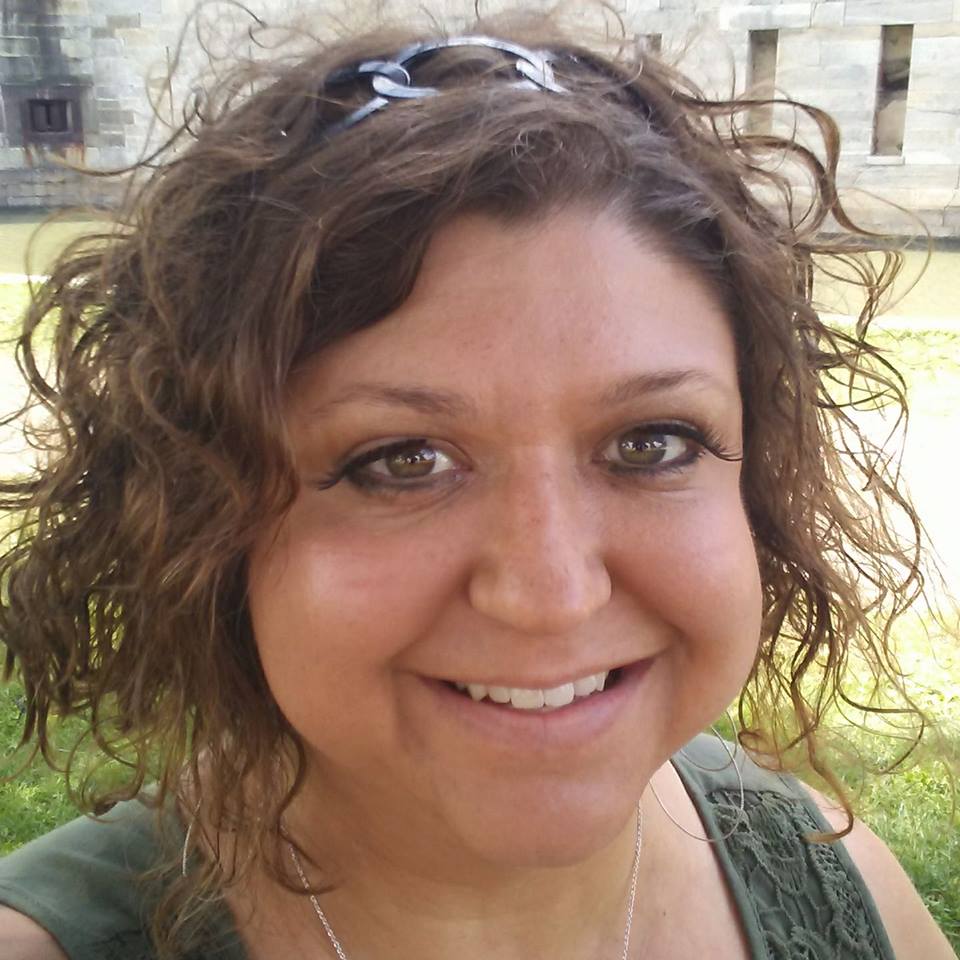
Crutchprints receives lots of resource requests for personal well-being and counseling. Enter Dr. Sarah: a business owner with a PhD in Psychology and a heart to see improvement in the well-being of women. We all have something we try to “work on” but who needs more work, right? While I am a believer in talking therapy and root causes, there are many practical “in the moment” tools that make a real impact.

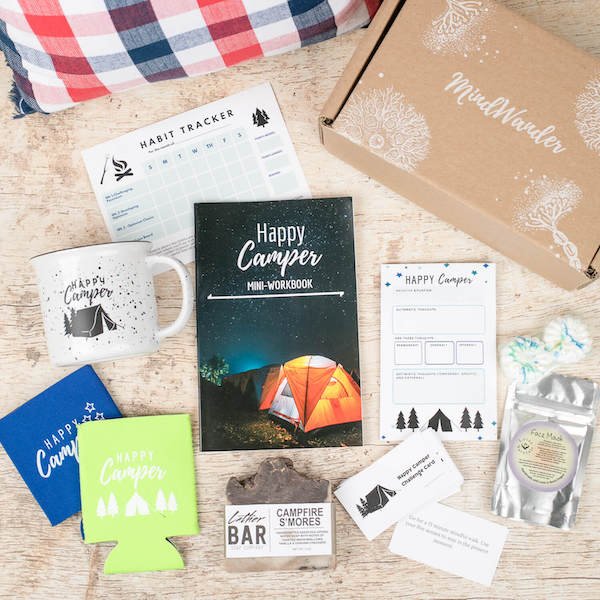
Dr. Sarah is the sole employee of MindWander, (#1 of CrateJoy’s 7 Must-Have’s for October 2019) and she addresses this need in a monthly box for women. She turns tasks of coping with stress, anxiety, and other issues into an enjoyable experience. Stumbling across her company in a Buzzfeed article, I did a search and found members raving about MindWander, expressing excitement about learned skills, and anticipating future boxes! (For some reviews click here)

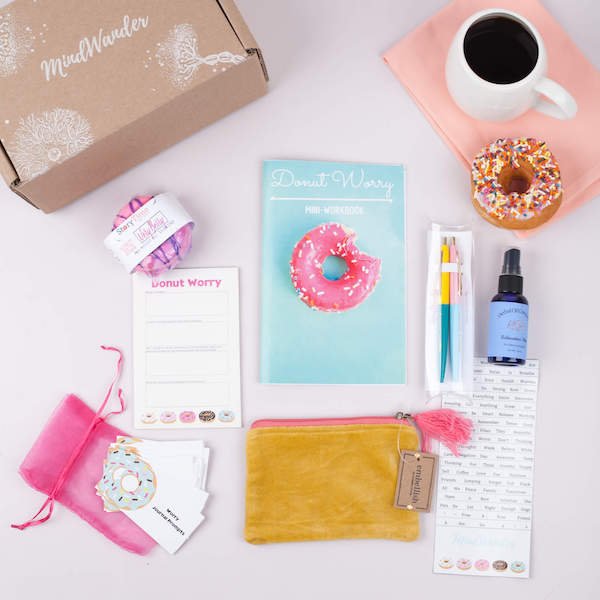
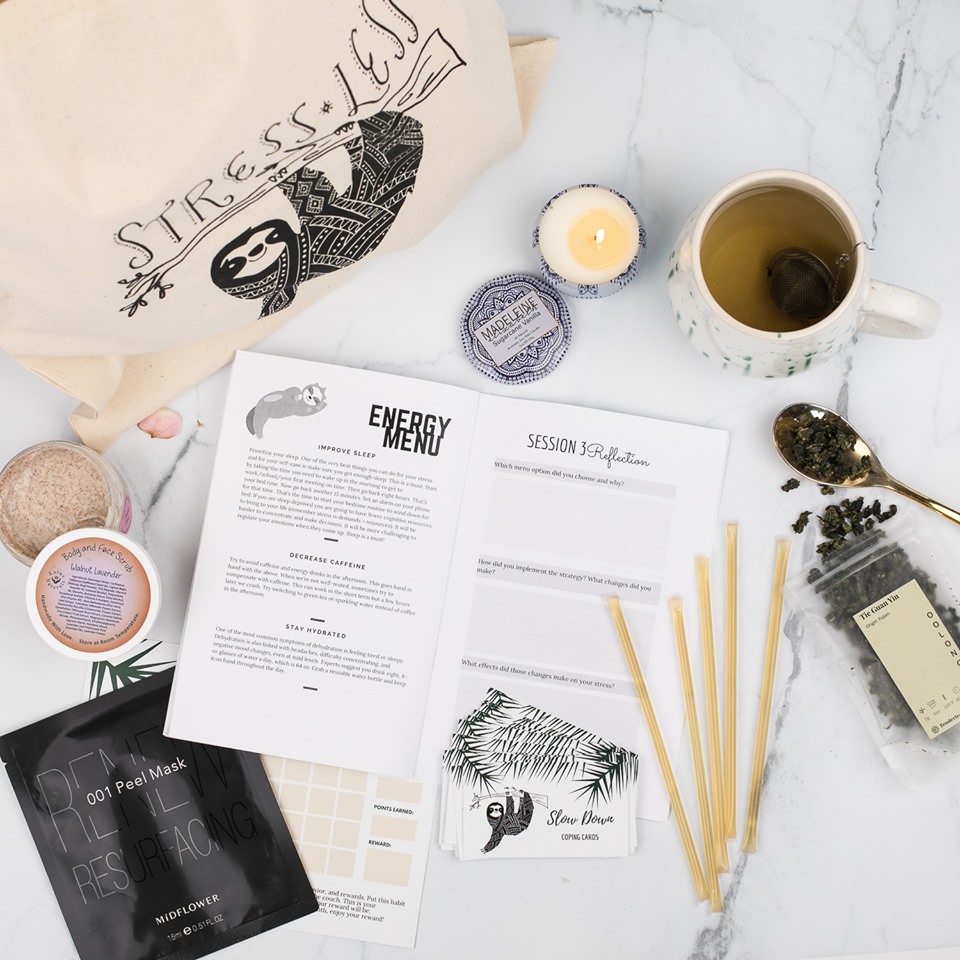
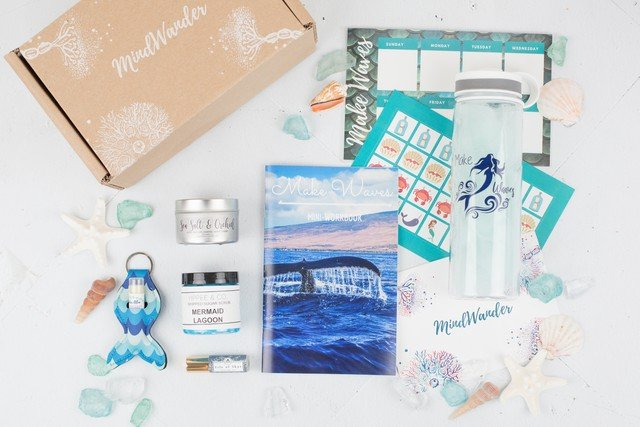
What caught my attention about MindWander was that Dr. Sarah, with her PhD in Psychology, puts this monthly cognitive behavioral therapy (CBT) tool together herself. Each box is centered on a theme and includes a personal workbook authored by Dr. Sarah, daily application techniques, 4-5 gift items reinforcing the theme (bath and body, lifestyle, novelty), and access to the member-only MindWander Facebook group with Dr. Sarah. (Where I found the discussions are uplifting, insightful, and Dr. Sarah actively engages with her members.) She offers a MindWander Mini box as well.

Some past themes include: Donut Worry; StressLess; Fearless (courage); Happy Camper (positive thinking); Growth Mindset (handling setbacks); Think Pink (mindfulness); Make Waves (self-confidence); Beat the Blues.

Halfway across the country, Dr. Sarah took time to provide an interview and answer some questions for Crutchprints!


Crutchprints: What gave you the idea to start MindWander?

Dr. Sarah: I personally love subscription boxes and subscribe to many! I started thinking about how fun it would be to have my own box and when I asked myself what I could offer that would be unique and have value to people, something CBT related was the first thing that came to mind!


Crutchprints: Where did the name MindWander come from?

Dr. Sarah: I had a colleague who talked about mindfulness practice as “taking your mind for a walk.” I’ve always liked that idea of giving your mind some space but taking an observer’s perspective on it. Let it walk around, let it wander, but don’t get caught up in it.

I also wanted a name that wouldn’t scream THIS IS A THERAPY BOX so if neighbors saw it on your front porch they wouldn’t learn anything about you that you didn’t want them to know. MindWander implies something about the mind but not necessarily something about mental health.


Crutchprints: You are passionate about Cognitive Behavioral Therapy (CBT), what sparked your interest?

Dr. Sarah: I’ve been interested in psychology since the 6th grade. The social studies textbook we were using was divided into chapter-anthropology, sociology, psychology, etc. I remember reading the psychology chapter on how we learn associations and being totally fascinated. Through high school and college I knew I wanted to be a psychologist. As I grew older I also started to see just how many friends and family, especially women, were struggling with anxiety and depression, the “common colds” of mental health. I decided these were the topics I would focus on.

10% Off Code: ASHLY

As I went through graduate school I learned how and why certain therapies work. I was especially impressed with Cognitive Behavioral Therapy (CBT). And yet when I talked to friends and family about their experiences with the mental health system, it didn’t sound like they were getting the therapies I was learning about in school. I was frustrated! I wanted my loved ones to get the best treatments for their anxiety and depression and to be empowered by learning new skills and strategies, not session after session of “How was your week?” Since them I’ve been determined to find ways to increase the availability of these therapies!


Crutchprints: Is there a resource book or podcast that you think everyone should access?

Dr. Sarah: That’s a great question! It really depends on what kind of symptoms people might want to learn more about.

One set of resources that I often suggest is the Treatments That Work series of workbooks. The set is based on research and the interventions are all supported by research so you can be sure they’re based on science. For anxiety, That Anxiety Guy has a great and informative podcast. Therapy for Real Life is also a nice podcast.

10% Code: ASHLY

Crutchprints: Is there something would-be subscribers should know?

Dr. Sarah: One thing I would love to be able to convey more effectively is my goal to create an experience and a community around MindWander. There are so many boxes out there, especially organized around self-care. If people just open the boxes and experience a bunch of stuff, I haven’t done my job. I hope that people open the boxes and experience hope about the positive changes and experiences they’ll have that month, excitement about getting started, and a sense of connection to me as a guide and the facebook group as a supportive community to provide help and encouragement along the way. It’s a work in progress!


Crutchprints: What do you foresee in the future for MindWander?

Dr. Sarah: That’s a great question! I would love to grow to a point where I could hire some help so I could focus on the most important parts of the business and reaching more people. It would also be great to have items made specifically for the boxes so that they could fit the theme exactly and I could really get what I’m looking for. I also have dreams of creating planners, calendars, and other related kits to offer as complements to the boxes. I would also, in the distant future with a ton of resources, love to develop a companion app that could link to skills from past and current boxes.


Crutchprints: Is there something that others may be surprised to know about you?

Dr. Sarah: Something I like to share as a “fun fact” is that in high school and college I worked in a murder mystery bed and breakfast. I grew up in a small, historic town with a little tourist industry and I got involved early acting in the murder mysteries. It was the BEST job for someone just starting out.

10% Off Code: ASHLY

Crutchprints: You create material for MindWander, coordinate items in the boxes, respond to each post in the member-only Facebook group on top of a career and personal life! How do you juggle all of this without becoming dysregulated?


Dr. Sarah: I use all the CBT skills that I teach in the workbooks! Honestly, it’s difficult to stay on top of everything at once and there are times when various parts of my life rise to the top or sink to bottom of the list of the priorities. I try to be deliberate about my to do list and my time while keeping in mind what’s most important. Sometimes that means skipping a work out to answer emails and other times that means emails are late because I decided to exercise instead.

Having Dr. Sarah with us here at Crutchprints has been a pleasure.

UPDATE: As of July 2020, the subscription box is no longer offered by Mindwander. Dr. Sarah has moved her courses to an online platform and base focused on the growth, development, and support of members. Check it out at: members.mindwandercbt.com

*Product, corporate, and organization reviews are not compensated, neither are they to be interpreted or considered as professional, legal, or medical advice. Neither Crutchprints.com nor Ashly Ash has interests, holdings, political affiliations or other ties with persons, corporations, or other entities referenced.

**All recommendations and advice that are posted on crutchprints.com will be based strictly on personal experience and opinion and should not be taken or interpreted as legal or medical advisement under any circumstances.
Between us Girls – Disabled Dating Advice

As I review the statistics on this blog the most sought after topic and search terms used to bring readers to my site are surprisingly about romance. #Amputee love, disabled love, romance with a disabled person, can a disabled person find love, is dating possible for disabled people, love in a wheelchair, are just a few of the searches on the blog report. Is love really so scarce and seemingly impossible for those of us that do not appear “normal” on a purely physical level? 

Everything around us says it is impossible, I’ve heard a comedian say recently “You are only with your current partner because you believe you can’t do better, if you thought you could be with someone more beautiful, you would!”  The audience roared at this, nodding in agreement and looking at their friends knowingly. Hearing that hurt me so much that I turned the channel immediately, knowing that it was a comment that would stick with me for a long time and make me question my own value and attractiveness. 

There are terms like “trophy wife” and songs about “the way she walks”. Television holds women at a nearly impossible standard of physical appearance and when we are in public and we see which women turn the heads of nearby men all of the aforementioned standards of attraction become concrete. Being a young girl with a disability is hard,and no matter how many people tell you “the right one will find you”, it doesn’t really ease your mind. You don’t measure up to the alleged standard and you know it. 

So I thought I would address a few things disabled girls fret about. There were very few people that I could relate to as a young girl that had found true love and were also disabled, much less any that were willing to speak about it honestly. Many of the women that were married became disabled after the ceremony which left the question in my mind: would someone actually choose to fall in love with an already disabled person? I had several peers scattered throughout the country but what did that tell me?  We were all navigating the same uncharted waters at the same time and to get another teenager to have an honest and vulnerable discussion about such a painful topic in the ‘90s was as likely as meeting The Backstreet Boys. I won’t mention that I am old enough to say this was the era where chat rooms were just forming on the internet and online contact with strangers was a sure way to be kidnapped and slaughtered. (Though my mother always insisted anyone that kidnapped me would bring me back due to my mouthiness in no time.)

It is my desire that this be an open discussion rather than an informational piece that can be read, reviewed, tweaked, and commented on by any man or woman, boy or girl in the disabled dating arena. Perhaps this will open up new questions and topics that you want to discuss. Please feel comfortable enough to comment, email me your questions, present your scenarios, and provide your own experiences for those muddling through romance in the world we live in.


Disabled Dating – A Girl’s Guide

How can I be considered attractive?
In short, I don’t know. The laws of attraction go far beyond my understanding and there are so many things that make up a person’s individual preferences that it is not worth trying to figure out. I can confidently say that I have found people throughout my life that have found me physically attractive. There are others that most definitely did not. I have gone around this topic many times with Rick, my husband, and even he cannot put into words an explanation satisfactory for either of us. (Much less one I believe.)  In the end, it “just is”. The sea of people attracted to us may be a little smaller than it is for the abled-bodied people around us, but it does exist. 

Is someone attracted to me physically or are they just curious?
My answer to this one seems superfluous but I will stand by it: go with your gut instinct. You will know if someone is interested in you as a person or object in the same way as others. Does your disability come up right away before and conversation about you? Does it come up over and again in conversation? If so, likely they are curious or at least lacking capacity to see beyond the physicality in front of them long term. In the same way that sometimes people attract someone only interested in a sexual relationship, you will find that the principle carries over to attraction with a disability. Some people are curious and interested in sexual relations not a relationship but you will quickly become aware of those intentions and can respond accordingly. I personally would not be happy to use my body to satisfy the curiosity of another individual (disabled or not), and I do hope you think enough of yourself to hold the same standard. 

Online Dating – How does that work?

This was a very difficult area for me. I turned a young adult in the age of internet dating being an unexplored frontier. All in all, I personally don’t recommend it. But that opinion is strictly that, opinion and preference. I’ve known people with great success in the online dating arena. They are not disabled people, but they are humans with quirks and individual flaws which is really the same thing. 

In my experience I did find that it is much easier for someone to be brazen, crude, or hurtful from behind the screen of a device than in person. Because of that, and the hurt of rejection, I learned to share within the first or second chat with someone that I am an amputee and cancer survivor. Being up front seemed to be the best option for me and prevented embarrassment later. Often I would give qualifiers as well – explaining how “normal” I still considered myself or would give examples of the activities I perform better than any two-legged counterpart. In my thirties now, I don’t think I would give any qualifiers. Here is my situation, I’m disabled, and your situation is likely children, a divorce, etc.

If they just get to know me they will find me attractive!

No, they won’t. I’m no advocate of fatal attraction or love at first sight, but I can confidently say that if someone hesitates beyond a normal measure of consideration about dating you because of your disability then you need to run (or hop, or hobble, or wheel) away. FAST. 

Sometimes it can be almost a challenge when you find someone that you like and are interested in to make them see you for a “normal” person. I’ve been there in wanting to date someone and befriending them so that they got to know me. We’ve all heard that racism is overcome with education, so the same thing should apply, yes? Well, when I pursued this avenue several times the man eventually would date me, but in the end I learned that prejudice is not always overcome with education in the arena of love. If the first reaction of a person is to not date you because of physical status, don’t try. Eventually the truth will come out and both of you will end up hurt. There are too many people out there that will be attracted to you and want to be with you for you to get tied up in making someone your project to work on or educate. 

How will I be intimate with my disability?

Excellent question. Intimacy, like in every relationship, finds a way that works for both partners. Everyone has preferences, likes and dislikes, and vulnerabilities in intimacy. Every set of partners has an intimate relationship which is unique and tailored specifically to them. Every set of partners has certain physical obstacles to overcome. Intimacy with a disability, limb loss in my case, is the same. Limb loss has not affected that area of our marriage at all, even with the rigorous questioning I’ve put my husband through! 

One thing that does make a difference is willingness and confidence. Be confident to try different things with your partner and find lots of things that work for the two of you. Marriage is a lifetime and make intimacy part of that adventure! It is not as “weird” for your partner as you imagine. There are times I am extremely self-conscious of my own body image, particularly in light of my disability. But you know what? The most beautiful and perfect women that I know have shared with me the very same insecurities! 

What if they get tired of my problems and leave me?
That is always an option for either party in a relationship. In my own case I sat down with my husband after only a few weeks of dating and painted the most grim picture that I could possibly conjure up about my future. I gave him an “out” before we really got “in”volved. Doing this gave me peace of mind to know that he would not be blindsided by any problems that I have and if he does leave me someday I know that I gave him all the tools that I could and his choice does not bear on me at all. There are no guarantees in relationships. 

There is a lot of baggage that comes with being in a relationship with someone with a disability. There are times my husband probably wants to just run away and be “normal”! Because of this I do tell all young girls to be sure they truly know someone before committing to a long-term relationship with them. Whoever your partner is, he/she needs to be selfless, patient, and eager to assist you in every matter. If they are reluctant at the beginning of a relationship – it won’t get better with time and added pressures of daily life.

Is “sexy” even an option?

You can be as sexy as you feel comfortable. I’m convinced that “sexy” is an aura and exuberance in presence, not an appearance. Take the time to try on different clothing that you feel accentuates your best qualities and pick something that you will feel confident in, assured that you look good. Sexy can be like a hot pair of high heels: it’s all in the walk! 
That is the “right” answer. If you ask me honestly, however to answer about myself I would say no it is an option.

I don’t ever seem to attract the right kind of people…

My disability helped weed out the people really interested vs shallow

I think I struggled less with figuring out who was shallow than a lot of my friends. Shallow men typically avoided me, or treated me with reluctant regard. This provided a pretty clear indicator to me of what to expect around certain types of men, and I never really was left wondering if someone was interested in me or not. 

On the other hand, my disability did attract a lot of people that were freeloaders. The overwhelming assumption was that because of my disability I would have medical drugs/pain medicine to share. Another assumption was that I should consider myself lucky to land any man and would do whatever was asked of me to keep them around. Neither was true and neither worked with me thanks to the self-worth instilled in me as a child.

What are Amputee Devotees?

Like anything, there are sexual preferences and fetishes that are geared towards amputees. I am not saying that people should not be attracted to amputees in a physical way, in that case I guess my own husband would be guilty of a fetish! Here I am discussing the predatory individuals that use perverse and aggressive behavior. 

I did not learn about this until my mid-teens. There were men (and presumably women) that would follow amputee conferences and prey on the disabled. I had quite a difficult time understanding how another human being could use the pain and suffering of a limb loss or other disability to gratify themselves sexually. 

Being warned that this existed really helped me with online dating, where predators would often sniff out disabled women. It helped to curb the shock of being offered pornography positions, and made me very leery of anyone asking “stump-related” questions. It gave me a few street smart tactics to avoid the wandering touch of those men at amputee conferences as well. 

What do I do if this happens?

If you end up inadvertently under the attention of a predator it is not the end of the world. Even I unknowingly ended up on a few dates with a devotee at one point. I figured out the truth quickly after rather aggressive attempts at physical contact with my stump, and brought the whole thing to a startling stop. My advice is to be wise and take precautions when dating. Women are vulnerable as it is, but disabled people are even more vulnerable physically. Date in public and get to know the person first. If there is an obsession or if you find the conversation seems to circle back around to your limb loss all the time then remain on guard. Remember, you are a person with a mind and interests and a life to discuss. You wouldn’t spend a whole date discussing his loss of hair, would you?

Will I always feel indebted to my partner because they are sacrificing so much to be with me?

One thing I really want to stress to anyone considering dating and seeking romance is to embrace your capability and look at the relationship as a combining of abilities. There are things that your partner will help you with or do for you because he/she has the ability to do that easier than you do. Likewise, you will find that you have capabilities to do some things to help your partner or do for your partner that he/she may not be able to do or may not do well. When you take the focus off of what you do NOT bring to the relationship and re-frame it in the light of truth, you see how a marriage really is a partnership. In my relationship with my husband carries the laundry down the steps and does it, then carries it up to a designated place where I fold and put it away for us. I pay the bills and manage all of the paperwork for our household. He brings food from the freezer in the basement and I cook and serve it before he cleans the table off and I do the dishes. I always shower first so I don’t slip and he listens to me play the piano for him to relax. Becoming a team and assisting one another in your different areas of need brings equality and strengthens the bond of romance between you.

My mom used to say to me “everyone can do something”. I couldn’t always do the hard work that my family was doing like a day of hay baling, but I could make sandwiches and drinks to take to them in the field. Find where there is a hole, and fill it. That way neither of you is perceived in the relationship as a victim or a caretaker. 

If it is a two way street why do other people act like my partner is doing me a favor by staying with me?

In public I am told time and again how lucky I am that my husband loves me and stays with me when so many others would walk out. People assume because I am the disabled one and I am the one they see in a scooter in public or on crutches that he is my caretaker. Nothing could be farther from the truth! (I often want to scream at them “He moved in with ME when we got married!”)  My mother is a bit more diplomatic in this arena and is quick to step in responding “I think he is very lucky to have her, she has been very good to him.” 

Should I just try to date only disabled people?

In real life negative and negative don’t always equal a positive. I think everyone approaches this question differently. A lot of disabled people I know have dated both and strictly view ability as indifferent. For me, I did not want to date disabled people. I felt that I would need help and with two insurance problems, two people both on the wrong side of the health tracks together would not make for a very stress free relationship. That was my own opinion and you will have to make yours. There are some great arguments for the empathy and understanding that one disabled partner can bring to another. 


At the end of the day the best advice I have is to forget what society, social media, culture, television, magazines, and doctors tell you about yourself. You are as likable as you want to be, you are as attractive as you want to be, and you are as engaging as you want to be. Cultivate your interests and your hobbies, find things you are passionate about, pursue them, and allow the opportunity for romance to find you. And when it does, do not settle. Disability is such a small part of a relationship. Instead, focus on kindness, selflessness, empathy, caring, and above all, a belief in Jesus and his sovereignty over life. 

Bringing Hebrews 1-2 to Life in 20 days

In studying Hebrews 1 and 2 most recently I sought ways to make these passages “come to life”. Our small group was about to begin covering the book of Hebrews and I sought a new approach to scripture that would be applicable, fun, and still incorporate the truths of God’s word in our everyday busy (and sometimes downright hectic) lives.

These are printable (2-sided) suggestions and activity blocks based on and inspired from coordinating verses in the chapters of Hebrews 1 and 2. Each one of these should take no more than 10 minutes a day and there are 20 blocks for 20 days provided.

While I would love to take credit for this idea, I cannot. The idea of “challenge cards” originate with Dr. Sarah (owner/operator of Mindwander CBT women’s mental health subscription box). Each month Dr. Sarah’s boxes are curated around a theme (i.e. stress, worry, positive thinking, fearlessness, etc.) and she provided journal prompts and challenge cards to help subscribers internalize and experience new skills. Taking her idea of these challenge cards and adapting them here for these bible verses has been a fun way to bring scripture to life.

Enjoy!

Dear 16 yr. old Ashly…

jg

July 5, 2019  (30th Anniversary of being Cancer-free)

Dear 16 yr. old Ashly,

There is so much in life that you are pushing through and you don’t have to. It’s OK to be who you are, to accept the fact that you really do have a disability and that it is not at all tied to your worth. It is OK to need to rest or care for a body that has been through so much. Don’t spend so much effort trying to portray to the world into you are normal because in a few years you will lose the leg you are standing on, literally, and they will see the truth anyway. Insurance won’t cover your needs so I urge you to be conscious of creating a life that is satisfied whether mobile or immobile.

Relationships

You will find love but it will not look like what you think. Stop spending time worrying about whether someone will love you with your disability, attitude, and faults. Someone will always love you. Romance may be part of a relationship but don’t spend precious time chasing sparks and fleeting feelings. Appreciate them, keeping your mind anchored in the reality that love is companionship.

All relationships, even non-romantic ones are tumultuous at times. When there are attachment pains, disagreements, or arguments you might feel you can never fully trust that person again. This is not true. People will hurt you and you will hurt people. You will lash out, so will others. But given time and space wounds will almost always heal and it allows us to see God manifesting grace. 

Some people will not like you no matter what you do. Move on when this happens. A lot of times reactions or lashing out are simply impulses stemming from pain and trauma in the past. Most people do not want to hurt others, and before this is all over you will hurt others too! 

It is also normal to say no to friendships that don’t flow correctly or become toxic. Loyalty is a great quality but if it is to your detriment or if safety is a factor (physical, emotional, spiritual) please walk away early. Don’t stick it out hoping that things will get better because the longer you stay the lower it will take you, stunting your attitude and self esteem. You are intelligent, intuitive, and I can assure you from this end of my letter that instincts are usually right. So invest in the people that lift you up and avoid the trap of thinking you have others figured out. You will find that  friend that will listen to anything, judge nothing, respond honestly, and you won’t ever have to explain yourself. Hearts are a mystery, a gem that God has placed in each person that only he can appraise.

I want you to know, Ashly, that oversharing can be very detrimental and in the wrong hands can be quite damaging. It’s wise to be private and keep things in confidence.

The relationship you have with your siblings is probably going to be the most important thing in your life long-term, next to your spouse. (Though studies will argue siblings usually outlast partners.) They will be there for you, they will love you when you are wrong, they will lift you up, yell at you, and defend you like a fighting bear! Stick close and pour into them at every opportunity with gifts and love and kindness. They deserve it for putting up with you. So does your mom, listen to her, experience proves she is right.  

Life Skills

There is this tool you will learn about from Discovering MErcy’s resource “Window of Tolerance”. Learning to recognize when you begin feeling overwhelmed, stressed, or in fear will stop you from viewing the world as your enemy. It is critical to “choose you” when your window is full and pull back or stop whatever you are doing to address your needs. If you ignore your nervous system and allow adrenaline to flow and fear to rule the day you will suffer. Physically your body will react, emotionally you will overreact, verbally you will lash out, and relational damage will occur. Yes, we are taught that self-sacrifice is love, to always put others above ourselves. But listen to me now: taking care of yourself is putting others before you. So take time for skincare, long baths, have a support system, stay sober minded, and join the gym. These are things you will not regret.

upload via cloudHQYour identity is not going to be found in your role, your job, your status, your husband, your kids (or lack thereof), your looks, your disability. Your identity is who you were created to be. Cast those ideologies aside Ashly and realize you are worth something because God chose to create you. If you attach to false identities the whole structure will come crashing down around you sooner or later. Build your heart on solid ground.

For you, traveling and experiencing things is the richest way to be educated. To experience something as wonderful as a new culture, country, historical location, etc., will immerse you in a way that can’t be found in books. But do keep reading! It takes vulnerability and bravery to explore and learn new things but without the curious wonder to understand the world around us we will become very unsatisfied. And for goodness sake, get in a scooter! You will always have stares and ridiculous things said and done to you for your disability whether you ride in a scooter or not. So hop in one and get out and enjoy your life!

Gratefulness is a natural state for you. Take time every day to consciously appreciate just one part of your environment. It is such a grounding, mindful experience to practice a grateful heart. Your home environment should be one that welcomes you, encourages you, and makes you feel like you belong. Create and then guard that with all your might! Recognizing what we are blessed with will lift your spirits in the darkest of days.

Just as gratefulness is a tool that will build you up, shame is a wicked tool of destruction. It eats away at your soul in a deliberate, sickeningly savoring, detesting manner you don’t often recognize until you are debilitated. Don’t live in shame for the things you have done, said, or will do. Make things right when you can and move on. Parking in the past will render your future idle.

Being Brave

Young Ashly, you don’t understand this now but there are men out there that prefer amputee women just because they are missing limbs, or think you are desperately eager for attention. There are a lot of people that will see you and think they need to “fix you” as if there is something wrong with you while others will attempt to prey on you for a multitude of things. You’ll get a lot of insistence that if you had more faith your leg would grow back and there are a lot of people that will only make contact with you to find out “what happened to you”. In a lot of places people will not view you as a person but as a repulsive object or less than human. Everywhere you go people will stare at you incessantly. Brace yourself when you go into public for these interactions and hold your heart close; quietly observe and choose to engage wisely on your terms. You don’t need to prove people’s opinions of you wrong about you, let it be. And don’t be surprised when the friendly face you think wants to chat is actually manipulating a way to satisfy their own curiosity or soothe their fears by tearing you down.

I’ve learned the hard way and want to impart that there is no need to explain yourself or apologize for to saying “no” to someone even if you don’t have a reason. If someone upload via cloudHQasks you a question you do not have to answer and it is important to be brave enough to state that and protect your heart. When someone asks you to do something that you don’t want to do or feel it will stretch your body or mind…say no without feeling or accepting any guilt. 

There are so many things you can do and I hope your wonder and zest for life will continue to grow your heart! You read, play the piano, cycle, swim, crochet, write, speak, constantly self-improve, have a niece and nephew, a fun husband, a good sense of fashion, and a tiny  little cottage you call home in the future. I hope you finish college now but if you don’t that will be in the future as well.

I’ve a ton more practical advice about drinking water, wearing sunblock, and always keeping some little project to work on, but I think I’ll let time share those things with you. Hopefully aligning with the themes of this letter, Ashly, will set you up to grow and build a foundation propelling you forward with ease. God has blessed you with life after cancer and limb loss so I urge you to take the shortcut of wisdom provided here and make the most of each moment.

Your future self,

Ashly 2019