“A classic is something that everybody wants to have read and nobody wants to read.”
Mark Twain
In our current popular culture of music, literature, and even film, there is a demand for satisfaction and I daresay there seems to be unspoken demands for only happy endings. Movies seem to have all loose ends tied up and all the characters are happy or else critics will growl about no forthcoming sequel. Books that do not end on a high note are considered a waste of time, or worse, poorly written. Even songs seem to be losing the essence of timelessness and are only interpretive in the context of this specific time. At the end of each song, book, or film we seek to know that things not only work out, but that the protagonist receives exactly what he or she desires.
The overall tone from random personal writing sampling reflects the way publishers are advising writers to keep sentences short and avoid flowery language or their books won’t sell. In depth descriptions are bygone, and using lots of action and little inner-dialogue is considered key to success. Opening a book with backstory is also frowned upon; we must hold the readers’ attention or they will put the book down. Endings leave nothing to fate but always contain a feeling of satisfaction for the reader because we can’t leave a thing to imagination or an unsettled mind. We must keep our audience engaged for this is what the consumer demands, writers are told.
I understand that one of the key components of a classic book is the book’s ability to afford continuity. One may read a classic book in any time era, any circumstance, any number of times, and still encounter relevance. A reader feels enriched after reading a classic and classics nearly always contain challenging moral dilemmas and unsettling paradoxes. There is something else I notice about classic books: There is not an inherent focus on delivering a happy ending. Stories in classic books are written in a way that allows reality to develop within the pages of the story and consequential fallouts or misfortunes visit the characters regularly.
Think of Little Women, Great Expectations, Wuthering Heights, Of Mice and Men, 1984, Frankenstein, Call of the Wild, Last of the Mohicans. All fabulous classic books that do not strive to present a perfect world, happy ending, or even complete satisfaction for the protagonist. While there are some modern books with these qualities, they are fewer than once upon a time. I believe it is still possible to bring reader satisfaction and enrichment through an unhappy ending or an ending that does not tie up all loose ends, and these classic book examples are presented as proof of that. I propose that, like the rest of the world, it is time for us Americans to embrace reality and move away from ideals and seeking instant gratification in every sect of life for several reasons.
The structure of creating entertainment to reflect immediate audience satisfaction is completely predictable and uniform, a.k.a., boring. (Think Christian fiction movies – nearly all start with a very bad person. The very bad person gets saved then severely backslides. The now converted very bad person has some sort of enlightenment (usually via catastrophe), repents, and lives happily ever after.) The problem with placing constant fulfillment at the feet of consumers in such selfish utopian ideological endings is that it encourages the audience to compare and contrast personal reality. If our characters find gob-smacking, knocked-off-their-feet love, we begin to expect that in real life and become disappointed when a fiance proposes marriage in a parking lot instead of on a luxury yacht. Reality dictates that a utopian ideology projected as normalcy cannot stand but will breed unwholesome expectations and discontentment. We learn to process the ups and downs of life through other people and through things we surround ourselves with like entertainment. We see how others handle the ups and downs of life and based on what we see we define “normal” and “happiness”. When a protagonist gets what he/she desires every single time, when characters do not die unexpectedly, when reality is not reflected, then we define perfection as normal. How then, do we learn to embrace our misfortunes or process them in real life when we consider invincibility the norm?
Besides being incredibly boring, and casting an unrealistic ideal, when all threads are tightly woven by the end of a story or song there is no room for imagination or active interpretation. There is nothing to contemplate, critically consider, or even discuss if we already know the answers. Perhaps this is one reason binge-watching is so popular (heaven forbid we not know what happens next!). Technology provides much good for our world, but having information readily available stunts our reliance on analytical skills and relational interaction/conversation. When I went to Ireland last year and was separated from the instant gratification of my cell phone for 17 days there was a noticeable enhancement of my analytical skills, social skills (well there was no asking Google!), and even my senses. My experiences were enriching and enabled me to interact with technology differently as a result. I no longer look up everything immediately on my phone, I take time to ponder and enjoy the process of contemplation. The same is true for stories and songs, contemplating and pondering the characters, author intentions, and dialogue is a process that is lost when that information is spoon-fed within the closing lines.
Last but certainly not least, I argue that action-packed, descriptive-less, all knowing, sunny endings do not always encourage us to rely on God. Only a hundred years ago our culture consistently faced many threats that science had no explanation or cure for. Looming threats of danger are present in many classic novels and reminds the audience that fortune’s wheel may turn at any moment and one must rely on God’s sovereignty through the good and the bad. When we, an audience, are the sovereign eye (due to our all-knowing spoon-fed endings) in a plotline where is there room for God to manifest?
I have found lately that films do not hold my attention; by the three-quarter mark the ending is spelled out. When choosing music I am driven back to the days when most lyrical sets could be contemplated and discussed with friends as if digging for treasure, and I am prone to seek out historical fiction books heavily based in reality. I’ve had enough of trying to force the ideology of flawless existence on the reality of my life. Instead, I choose to embrace real life and real adventure under God’s sovereign care. Contemplation, observation, and analysis – near strangers in recent years – have once again become dear friends that I welcome and appreciate more than ever. For the sake of future generations and the frailty of technology and even our electric grid, I hope you do as well.
Changes in seasons, particularly winter months, can be a catalyst for trauma symptoms to resurface or even for survivors to feel like they are regressing suddenly. The appearance of regression will often bring a survivor down and discourage them to stop their journey or counseling altogether due to depression or simply giving up for a time.
This is all very normal when seasons change. Whenever there is trauma, there is a season of weather as well. Sometimes it was fall, sometimes winter, etc. But when a survivor sees the seasonal reminders around the time when the trauma occurred, it often triggers memories and symptoms both in the body and the mind which manifests in unique ways. It doesn’t help that sunlight in the winter months is deficient, there is no real activity for much of the cold-ridden country, and there is not much to look forward to during those quiet months.
Furthering this perfect storm brewing under the surface is the fact that the holidays are near and those are triggering and trauma-inducing times for many survivors as well. When there are triggers, those parts that are usually in the background sometimes come forward, which makes everything feel “different” or “off” to a survivor.
All of this is quite normal, often unbeknownst to the survivor who begins a very real struggle to function on a daily basis. In spite of what you may feel, it is during the time that trauma symptoms manifest that is an ideal opportunity to process and look at some of the layers beneath the surface. It is a great time to listen to the little ones (parts) and allow them an opportunity to share their story.
Most of the time being aware of the seasonal pattern during the winter months and the often-accompanying trauma symptoms helps a survivor to wisely identify and recognize the temporal position they are in. This acknowledgement both encourages and empowers the internal system to hold on and stabilize.
Whether you are a survivor or a support person, it is important to stay tuned to the behaviors and self-care opportunities during this time of “holding on:”
Be sure that physical needs are being met such as diet, rest, hygiene, and especially exercise/activity.
Watch for isolating behaviors and limit them when possible during these months.
Look for signs that you or your loved one need to seek professional help.
Find a healthy activity or something for the little ones (parts) to look forward to during this time.
Remember: You are human. You are brave. Keep your self awareness on alert, and have self compassion for yourself when you are experiencing a difficult time.
*This article is not an attempt to disrespect, dishonor, or otherwise offend the loved ones of deceased, or the deceased. This is strictly a story of humor. I believe that as believers there is life with and through Jesus Christ and that allows me the strength to look objectively at an event that I do not perceive to be an end, but rather a beginning.*
When a local Quaker Tom died, I entered the Quaker Meeting House for his service. I sat on the wooden bench, and waited for the service to begin. It was summer and without air conditioning in the old historic building. I waited for the service to begin, trying not to judge the tardiness, and kept looking for some clue as to when it would start. No one seemed perturbed by the late preacher and my eyes only met glares of disapproval directed towards me. They better save that anger for the preacher, I thought. After waiting a little over an hour in silence, a man stood, thanked us for coming, and everyone stood to leave. I couldn’t believe that the preacher never showed! Navigating the stone steps out of the meeting house I asked out loud to no one in particular, “What happened there? I was waiting for it to start and then it was over.” Someone responded, “It is over. Quakers don’t talk. They sit in silence until the spirit moves them to share or split.” I felt silly for not remembering that Quaker’s do not talk in their services. The silence was the service! As I thought about it later, I was sad no one shared about Tom’s life or shared a single memory out loud. My family, however, tends to take things to the opposite extreme.
Joe was a Pagan (a local motorcycle gang but not in a cool Sons of Anarchy way). We were related through my father in one way or another but I never pegged it down. Now that I think of it, his mother’s name was Peg. Anyway, the day we buried Joe was sunny and cold. We stood under the white cemetery tent while a classic rock tune played vaguely from a portable radio and was competing with the wind in our ears. Then something caught my attention. That was the sound of a soda can, I thought. I looked around and to my mortification found the person delivering the typical boring funeral dialect, was now distributing a six pack of light beer to any willing recipient! He summed this distribution up by masterfully declaring, “Joe, this here Bud’s for you!” Confused about who got a beer and who didn’t, and why there wasn’t enough for everyone, I was further set back to see him take a sip (more like several gulps) of the beer before pouring out the remainder on the casket and wiping tears from his eyes in conclusion. I was standing in the back overlooking this scene, shocked and disbelieving so obviously that I earned a discreet jab in my side from my father. I couldn’t process what had just happened! Was it some Pagan communion ritual? And where did the other five beers go? I never found out. Since that day I never hear the song There’s a Tear in my Beer without thinking of Joe and his crying compadres.
Soon after this we had another funeral where a relation with Alzheimer’s passed and my father left the heartwarming public words: “I only wish I knew half of what he forgot.” At that funeral, when it was my turn to pass and view the body I saw a woman taking advantage of the occasion to take family photos. She not only was taking photos of the deceased in the coffin but threw in a few selfies (before they were called that) to capture the coffin arrangement in the background of her frowning/grief face. Inquiring, I was raptly informed (as if I were the one lacking common decency) that she was performing “genealogical research.” I backed off, but I still haven’t seen any of those images on Ancestry.com, just saying.
One of the most memorable funerals to me was Uncle Ben’s. He was in his 90’s and a very healthy, sane man; he was also the oldest member of our family when he died. I crept into the funeral home with my husband that morning where we were greeted by my great uncle, Larry, who was in his 80’s. Uncle Larry took me under his wing and started immediately pushing me past the rows of chairs and people, straight towards the casket. As mentioned, I am an amputee and I was walking on a brand new prosthetic leg which meant I wasn’t exactly sturdy-in-step. The constant pushing in my back started to make the fake knee buckle under my weight which inflicted tormenting images of toppling into the casket face-first, or falling backwards and taking the coffin down with me on my anxious mind.
Using his public whisper, at no less than 8 decibels, Uncle Larry began to fill me in on all the family gossip. He was completely unaware of, well, everyone being aware of every single word he spoke. Any effort I made to thwart him merely provoked him to speak louder. Agitated at me for this, he visibly shifted his focus to the body in the casket. Apparently, there is this thing about death that older people are obsessed with called closure. They believe that in order to achieve closure, and have peace with the loss, it is necessary to physically touch the body to experience the empty shell. Now let’s pause and be very clear: I don’t need closure, didn’t need closure, will never need closure. I have never touched a dead person or dead mammal and I had no intention of doing so that day. None. The truth is, I’m petrified of dead things in an out-of-control, spasmic, immature sort of way.
Uncle Larry decided I needed closure. I resisted. As we stood there in a stalemate, Uncle Larry started applying pressure to my back and gesturing towards the casket. My noncompliance caused him to start public whispering directions for me to touch Uncle Ben’s cold and lifeless body. I dug my heels in, whispering back my refusal. I didn’t want to offend the family, but I also wasn’t about to participate in any form of closure. Uncle Larry pushed me harder, taking it up a notch from his public whisper level to low voice level to make sure I understood that he wanted me to get closure. I felt eyes on me from the whole room and I felt myself turning red, but I also knew if God himself were pushing me at that moment I would not touch that dead body. I locked my real knee (and prayed the fake one would hold), shaking my head defiantly. There is no way in hell I am going to end up being pushed into this casket and end up rolling around with a dead man, I thought. Ignoring all of my words and extremely clear body language, Uncle Larry resorted to pulling my arm which I yanked back nearly demolishing a nearby floral arrangement. This rapid escalation caused me to begin frantically searching the room for a distraction ploy. I found one rather quickly at the other end of the coffin. You probably guessed it, a photo-shoot with a disposable camera. Selfies with a body, genealogical research, whatever you want to call it. Again!
At this point I closed my eyes and bowed my head in resigned defeat to Uncle Larry. It was clear that I was going to bailar con el muerte – dance with the dead – one way or another, when suddenly the rescuing hand of God appeared in the form of a relation. As Uncle Larry introduced me and explained the intricacies of how I was related to the old man in front of me, I lost track after at least five paternal removals. Smiling and politely shaking his (very alive) hand, Uncle Larry and I turned to find another approaching relation and repeat encounter. I had never met these people, and for some reason this upset Uncle Larry more than my refusal for closure. Uncle Larry contained his annoyance well, but when the third relation that I didn’t know approached for introduction, he (still annoyed at my disregard of dancing with the dead) got angry and abandoned his low voice for normal voice. “THESE YOUNG PEOPLE TODAY – You, YES YOU, DARLING! – HAVE NO RELATIONS WITH YOUR RELATIONS! You know nothing of where you come from or where you’re…you’re clueless! It’s a d*** shame, you see, you’ve no business…” But I stopped him right there losing my sense of propriety. “Listen,” I said, “as far as relations go – if I can legally have ‘relations’ with a relation, we really aren’t relations!” Proud of my own cleverness, I nodded at said relation, and walked away.
Actually, I didn’t walk away as much as cautiously proceeded on my fake leg five feet to the other end of the casket. Selfie lady was gone then and I greeted a legitimate relation. She tried to tell me something quietly. At this point I should mention that in addition to being an amputee, afraid of dead things, and wearing a new fake leg, I’m also hard of hearing. I didn’t understand her, so she repeated herself a few times. I tried to read her lips but I really had no idea what she was saying. The various sets of peculiar eyes characteristic of our family, stared at me from around the room because I was still in front of the room and casket. I felt the pressure on me, the judgment of those eyes, and after a few repeats I just took a random stab at what I thought she said. “You had SEX? Oh, ok, good!” I exclaimed in my own (apparently inherited) public whisper. It wasn’t my greatest moment, I realize. Mortified by my announcement, she dismissively shooed me away from her and I found out later she was saying, “I have GUESTS.” Two relations she had never met, likely more than five times removed, showed up on her doorstep the night before the funeral expecting to be put up for their stay. FYI – Guests and sex look pretty similar to a lip-reader, so while I felt guilty for starting such a horrible rumor we did laugh it off later. Much, much later.
The clock hadn’t even struck 11 a.m. at this point and with all of this drama I was convinced that the Quakers might be onto something with silent services. With my husband in tow, I made a beeline for the exit. I didn’t break a limping stride or even glance towards the calls and beckons of cousin relations. Then, just as I reached the door, my parents arrived. Decked out in a bow-tie tuxedo, top-hat, and an extravagantly sequined skirt with a fur shawl, they sauntered on scene like it were just another dinner party. When we finally got outside and shut the door behind us, I paused in shock to look at my husband. He grinned, “You sure we shouldn’t stay for lunch?”
Another memorable time, held at the same location, was a funeral for Ernie. Ernie was Catholic, so I wasn’t too sure what he was doing at a funeral home and not at the Catholic church, as if he had any say in the matter. He was Puerto Rican like my grandfather, so not a direct relation but pert near (at least closer than five times removed and besides, I had actually met him). As soon as my foot hit the parking lot, I remembered something: Ernie’s brother, a full twenty-five years older than me, showed up on my doorstep one sunny afternoon a few years before this with a random marriage proposal.
Transported back to that day I remembered answering the doorbell, and stepping out onto the porch of my apartment. I propped my crutch in the door to keep from locking myself out, and glanced at the three buildings facing me and this man old enough to be my father. Immediately, he got down on one knee. I thought he was tying his shoelaces. He stated his intention but I was sure I heard incorrectly, being hard of hearing and all. Finally, the whole thing bloody came down crashing and burning after he refused to seize any one of several chances to backpedal. Even my inquiry into the whereabouts of his common law wife that had stabbed him with a butcher knife didn’t deter him. Now, nearly four years later in the parking lot, I swallowed the lump of awkwardness and steped through the door with my Nan.
The mortician, Ed, greeted us. It’s a small town and he does most funerals here. I always think that Ed should give me a pointer or two for healthy living due to his hands-on experience with all my deceased relations. Whenever I see him, I wonder what he will if I ask him. While that strange thought hovers like a comic balloon it inevitably morphs into another: If I shake Ed’s hand is that like touching a dead body, albeit third generation? Those balloons casued me to stutter about and dramatically avoid Ed’s handshake. Rudeness was collateral damage in my war to avoid the third generation dead-man touch.
The room for Ernie’s funeral was completely silent and everyone turned to face forward again after observing my awkward entry. You could hear a pin drop if you were hard of hearing, which I was, and it reminded me of the Quakers. Nan took the lead by marching to the casket where we stood staring at the body. I would like to report that I respectfully held this silent moment in memory of Ernie but the the truth is, the only thing I could think about was Uncle Ben’s funeral and my survival of nearly being caught on disposable camara falling into the casket by the selfie-photographer-geneological-researcher.
Alas, my grandmother was satisfied and moved on to pay respect to the family. The brother – the now-even-older proposer – latched on to me and started sobbing. New balloons formed above my head: Is he sobbing for Ernie or a lost fairy tale with me? Where is the common law wife? Does she have a knife? Has he been touching the body and is now touching me? Confused, stunned, and frankly more scared of the dead’s cooties than the common law wife’s knife, I pulled away and sat with Nan.
Men entered the funeral room shaking hands, hugging, and kissing both cheeks like mafia dons. They did seem a little scary with their pinstripe suits, slicked hair, and shined shoes. Yet mere feet away my 4’9” Nan sat with her public whisper gossipping about their weight, flaws, and relational connections. (Puerto Rico’s an island, we’re all relations.) A few rows in front of us, I noticed a woman nodding her head to affirm or deny Nan’s comments. Thinking it was funny, I pointed this out to Nan, but it was not funny when Nan foghorned, “That nosy B**!”. I’ll stop there.
The most recent memorial went by without a hitch, mostly because there was no body present, I suppose. The minister didn’t seem to like our family very much but I couldn’t tell if it was due to public whispers, selfies, or general hillbilly elegy. It was for a man in his 80’s that had been convinced women were created to serve men and Aryan bloodline was best. Ironically, the minister and military funeral honors were presented by women, one of which was African American. Ah, the sweet rain of justice. He wasn’t a bad guy, or even completely racist, just a product of his time and as his service attested, times change. When he was alive, he would hop on his four-wheeler and deliver cabbage to my door each fall and turnips each spring and express excitement at anything in a mason jar. He would hug me saying, “I love you honey…but it’s a damn shame Jack didn’t have any boys…To carry on the family line, you see, you are all girls…and, well…[flips hand over and back again.” Now, fall and spring have passed since he’s been gone and no cabbage or turnips show up on my door, no four-wheeler visits, no reminders of being born the wrong gender and thus failing a line preceding MacBeth. Uncle Larry left me some laughs and tears. And the thing is, I find myself missing him. It makes me appreciate the way each moment of life and each interaction contributes to what we leave behind.
I suppose none of us is perfect, and we are made up of the quirks we possess. Pieced together like tattered quilts, we each have a story to leave at our wake. How odd will my funeral will be, with fake legs, crutches, and my real leg already buried? Will my fake legs and crutches be displayed like I’ve seen motorcycle cuts, beer cans, photos, hats, gloves, jackets, purses, and bibles? I don’t know what will happen when I die, but I leave charge for remaining family to follow up with stories. Regardless of the way it happens, I think I prefer a funeral with my relations, public whispering about closure over a funeral that ends before anyone even realizes it started, any day.
In 2005 it was decided that I would be thereafter limited to using crutches for most mobility and function. I was referred by a fellow amputee friend to check out Thomas Fetterman’s crutches, and several prosthetists confirmed they were the best that money could buy. My mom helped measure me for a custom fit of titanium “gorilla” crutches and purchased them for me as a gift.
Fetterman Crutches
I never thought much more about this until 2020, when on a kayaking trip I nearly lost my crutches downriver! I immediately came home to order a spare pair, and took my measurements again. In spite of the fifteen year difference, the company maintained records of my original measurements and noted that these were not the same as I submitted on my new order. Impressed to say the least, they did not disappoint further and helped me to resolve the difference in measurement and included much needed advice about my existing pair.
These crutches are truly the most amazing investment and worth every dime spent. Yes, I’m still using the exact same pair of crutches that my mom purchased for me in 2005. If you know anything about crutches, you are likely rereading that last sentence to make sure you saw it right. Yes, the welding is intact and I am using the exact same pair bought in 2005.
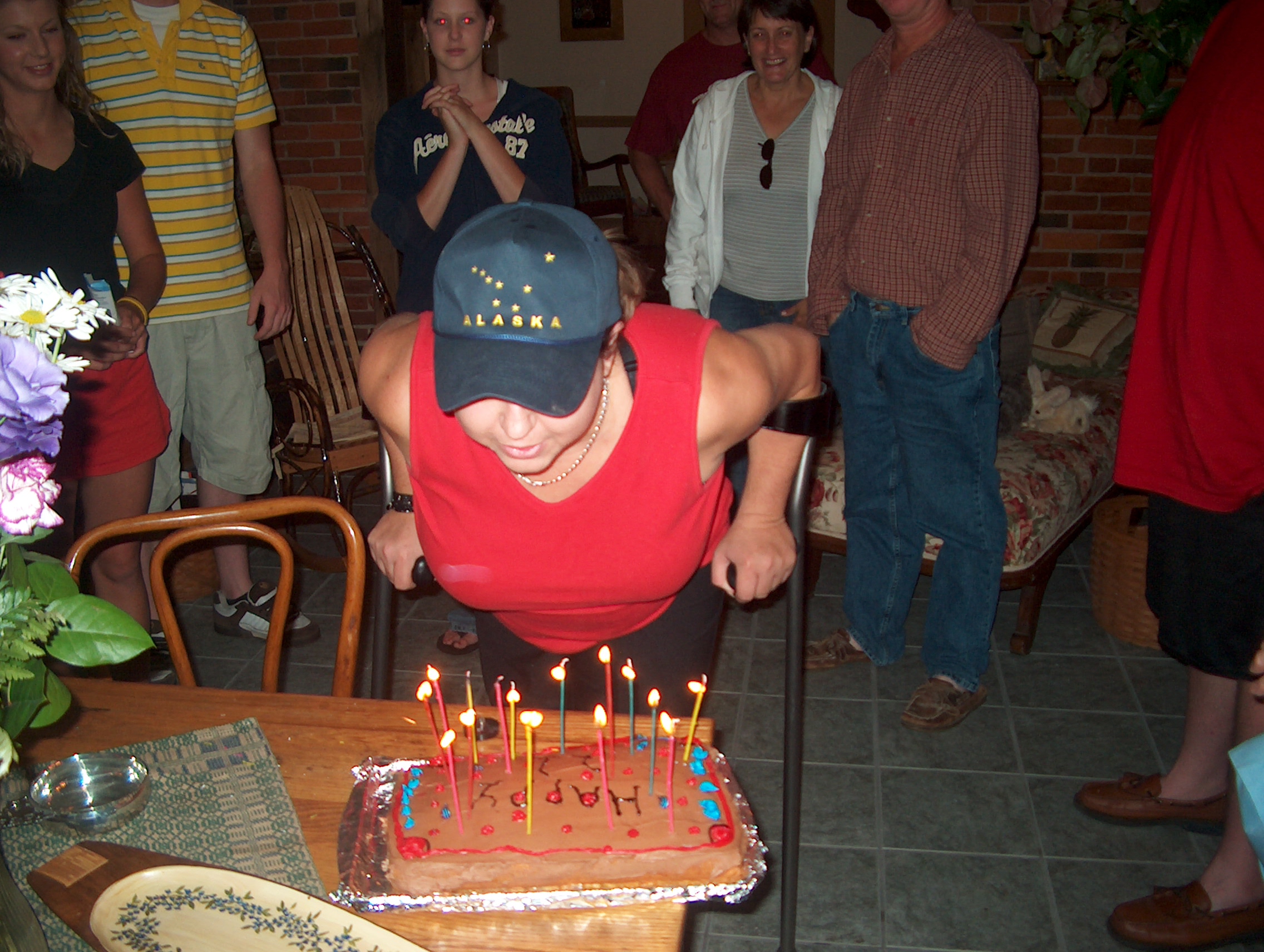
Below: 2005 a few months after receiving my crutches; 2020 pictured with the exact same pair.
Before Thomas Fetterman’s titanium forearm crutches I was discarding about one pair of aluminum crutches each month. They would snap, bend, and even break out from underneath of me. My lifestyle is active and I needed something that could take the bangs, falls, drops, heavy bags, constant movement, and accidental crunching underfoot when laid on the ground. I love the ocean, so they needed to withstand salt. I love to swim, they needed to withstand the showers at the gym and the kayaking. They have been strapped onto bikes, horses, motorcycles, go-carts, jeeps, scooters, fishing boats, and I’m sure much more – they even float! Furthermore, my doctor warned me about the breakdown in my shoulders and arms over time on crutches. These are titanium, extremely lightweight, and now when I pickup a pair of aluminum crutches I am astounded at the heaviness!
In the end, I cannot recommend these enough and would like to show you my own cost comparison of time used: 15 years x 12 months/yr = 180 months.
Thomas Fetterman Titanium Forearm Crutches: Initial one-time Cost approx. $1,145 + ($127 x 15) yrs of replacement hand grips and tips = $3,064 for 15 years or $204 per year. *Also includes 10 year guarantee.
Prescription issued Aluminum Crutches: Approx. $150 pr x 180 mos = $27,000 over 15 years or $1,800 per year. Granted, insurance would cover some of the aluminum crutches but currently my insurance will cover the amount after I pay the first $3,000/yr which means these crutches would be 100% out of pocket cost to me.
I’ll let you resolve the savings in your head on this one. If you or a loved one will be permanently using crutches, take a moment to check out Thomas Fetterman titanium crutches.
*Please remember when considering these recommendations for yourself or a loved one:
a) Ashly is an amputee at nearly the hip level of her right leg; b) Ashly is on crutches or in a scooter 100% of the time; c) Ashly has been an amputee for thirty years; d) Ashly is still young and active in her thirties; e) The crutches that Ashly uses are forearm crutches; f) What works for Ashy may not work for you; g) Ashly receives no incentives, gifts, or compensation for reviews, advice, or mention of any product or company in these features.
*Product, person, and organization endorsements and reviews are not compensated, neither are they to be interpreted or considered as professional, legal, or medical advice. Neither Crutchprints.com nor Ashly Ash has interests, holdings, political affiliations or other ties with persons, corporations, or other entities referenced. Neither Crutchprints.com nor Ashly Ash has received free product(s), sample(s), or compensation(s), or service(s) for postings unless otherwise disclosed. **All recommendations and advice that are posted on Crutchprints.com will be based strictly on personal experience and opinion and should not be taken or interpreted as legal or medical advisement under any circumstances.
Secondary traumatic stress is a risk when we support and engage wholeheartedly with a trauma survivor. More recently, secondary traumatic stress has come to the front as an issue separate from burnout, and it should be addressed.
While burnout is a state of physical, emotional, and mental exhaustion caused by long-term involvement in emotionally demanding situations, secondary trauma often occurs when there is interaction between the supporter and survivor and the supporter becomes traumatized. Secondary traumatic stress is often used interchangeably or referred to as “vicarious trauma.”
There are many indicators of secondary traumatic stress including but not limited to: anger, sadness, prolonged grief, anxiety, depression, headaches, stomachaches, fatigue, constipation, cynicism, mood swings, isolationism, avoidance and lack of motivation.
If you are supporting a survivor of severe trauma and feel a number of these symptoms, confirm your suspicion of secondary traumatic stress, we urge you to check in with your own needs and make self-care a priority.
Leaving secondary traumatic stress undealt with can bring an entourage of other problems both physically and psychologically. It is important to take care of yourself when you are supporting a survivor of trauma or trauma-based mind control. Remember the childhood song, “I’m a little Teapot”? Well, your teapot must be full before you can sing “tip me over and pour me out!”
Steps to Take….Mentally
Take time or schedule time daily to process, self-reflect, journal, read unrelated books or practice a hobby, spend time with friends/family/support network, talk to someone about the stress you are under, and find things that make you laugh.
Steps to Take….Physically
Eat healthy and regularly exercise. Don’t put your physical health on the back burner because it will impact your mental well-being and window of tolerance. If you can set aside specific time to “disconnect” and rest, check in with yourself and see what it is your body needs including but not limited to sleep and nutrition.
Steps to Take….with Your Lifestyle
Take breaks throughout the day, make quiet time to complete tasks, set limits on the number of intense emotional contacts you support, and learn to say “no” when you need to. Boundaries are not designed to keep others out of our lives, they are designed to keep us contained and not run all over like Jell-O.
I’ve stumbled across many challenges in the modern business world when searching for a job that is a good fit and utilizes my qualifications while considering my disability. In a competitive job market, education seems to be one of the immediate factors in determining the odds of consideration. With lots of applicants and the increasing workload on employees, time is of essence when considering applicants.
Aside from education, I believe a proper resume and self-presentation bears considerable persuasion on prospective employers. Resume standards are changing constantly, I have found most recently in aiding a few in their job search that the format and structure of a resume must suit the audience. As a result, we created two resumes for my each candidate. One reflecting traditional and the other reflecting modern formatting.
And let’s be honest, folks, discrimination exists still in many parts of this country. Yes, the ADA has fought hard for equal treatment when we have a disability. But yes, there are still a million ways that companies can and do work around this. I have done interviews where I was rejected only to be told later that it was because “you will make our employer’s health insurance costs increase” or “it’s just too great a liability to employ some people.” I’ve been written up for not following the proper business code of holding the handrail on stairs (which caused me quite a headache fighting this and proving I cannot use crutches and handrails at the same time, and oh yeah, why isn’t there an elevator in that building?), and written up for being scared of falling in the snow and therefore asking to leave work early. But there are things that you can do when being hired that will at least prevent some of the discrimination up front.
You control the interview process and it is always wise to submit resumes online when possible and seek for video-conference interviews to “save time” for everyone. Phone interviews work as well, but the main point here is taking the bull by the horns and insisting that your resume and qualifications be judged on just those things, not your disability. Moving on from this, I have other practical skills to share as well!
Self-identifying skills and qualifications is difficult for most people. Understanding and using the correct terminology, skill descriptions, keywords, and trends of the company or market for which you are applying is no longer an option but a necessity. If there is a specific company that you wish to apply for, research them. Pay particular attention to the values, mission, and vision statements of the company. There are keywords in these statements that will help you tailor your resume and interview process. Business size, history, age, culture, and marketing are other areas to research. Again, consider the audience when creating your resume to show you have the skills and pay attention to details. Hiring managers recognize when a candidate has researched and reflected that in their resume, and often this is valued to demonstrate commitment and work ethic.
In the interview stage the question is not, “will I receive a job offer?” (in most cases), but “will employment here enrich my life and the company’s objectives?” Enter an interview prepared with questions of your own, you are also interviewing the company! Other things that help in interviews: professionalism and disposition go a long way and real life experience is valuable. In a recent case-in-point of assisting the job search of others, the hiring manager told the candidate that they now seek out experience more than education in that particular field work after a few near-disasters where educated employees had none of the experience that was critical to safety. So be confident and highlight your experience!
I recommend seeking a friend or associate that knows a bit about the business world but not necessarily your field of expertise to consult with. A reliable person like this can go over your resume, ask you questions, and improve your list of hard and soft skills in a presentable way. If this person does not know the specifics of your expertise, the questions that they ask will highlight skills that are second-nature to you but not others. This is a way to gain valuable insight and evaluation before submitting your resume and with it the first impression.
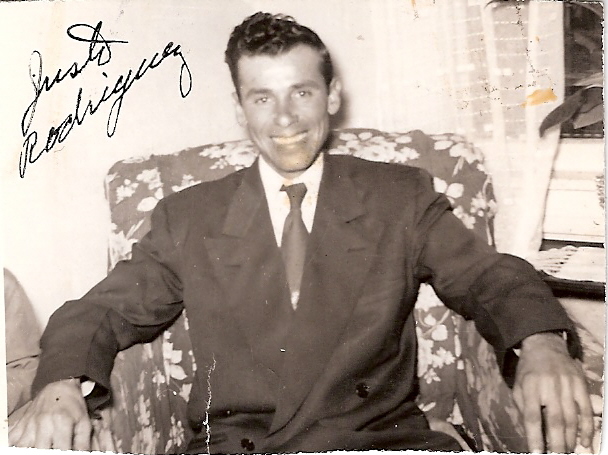
My Grandfather shortly after coming to the States
Lastly, but certainly not least, is the ability to remain flexible and willing to do what it takes. “Get your foot in the door,” so to speak, by considering a minor position from which you can display your skills and transition to the job you want the most later. My Grandfather came to the States from Puerto Rico at a time when racism ruled and no one wanted to hire him. My mom remembers him walking from shop door to shop door in the rain, doing whatever jobs people would give him for an hour or a day, determined to make his way and feed his family without assistance. Because of the look in my mom’s as she would remember this, I will always remember my Grandfather’s words, “There IS a job… but you have to get up out the chair and go try.”
In order to best serve the audience that is following Crutchprints in the Sand we have created a simple 10-question survey. This will give us a feel for what type of content you are looking for, what you currently like/dislike, and other valuable information that will help us curate content for each of you!
This brief survey should not take more than 5-8 minutes of your time. Please help us out by dedicating that small block of time to give us your feedback and help us improve.
When we went through the rigorous process to become a licensed private foster home, there was so much we didn’t know. Furthermore, there was so much we weren’t told. Things like 25% of foster homes close within the first 2.5-3.8 months. By one year another 25% close. All in all, 75% of foster homes are closed before the 2 year mark.
Why is that? Why is there an incredible amount of resources invested in the recruiting, vetting, training, and licensing process of foster homes but nearly none in retaining them? We would still be foster parents, I believe, has the system worked with us even a little bit. Instead everything was set up to fail not only the child but us as well.
This paper intends to explore that issues a little more fully and will open your eyes to what foster parents across America are saying. The document is an Adobe PDF file, viewable on most computers and phones, and under 7 (double-spaced) pages. Take a moment to explore this social issue with me…
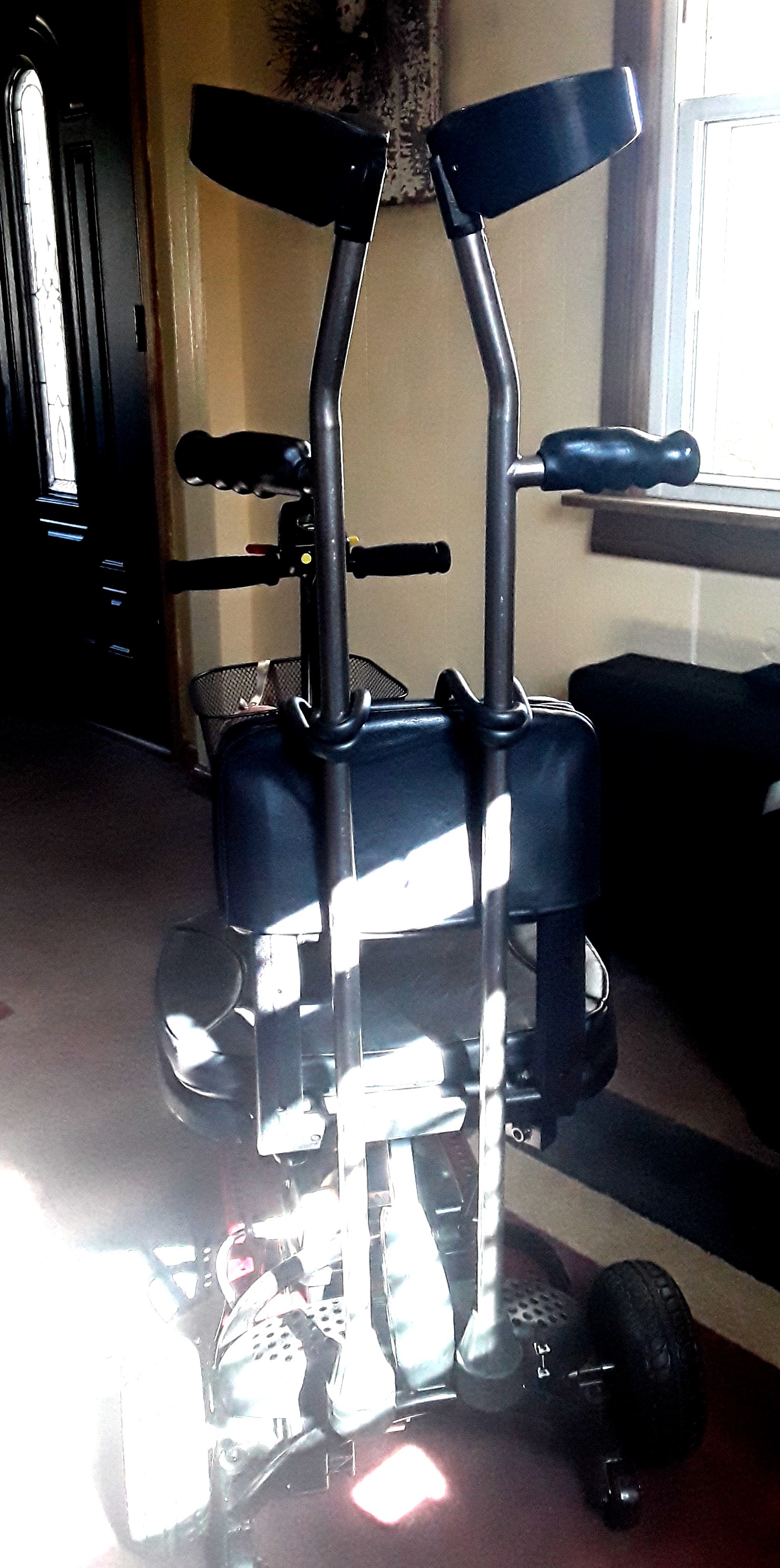
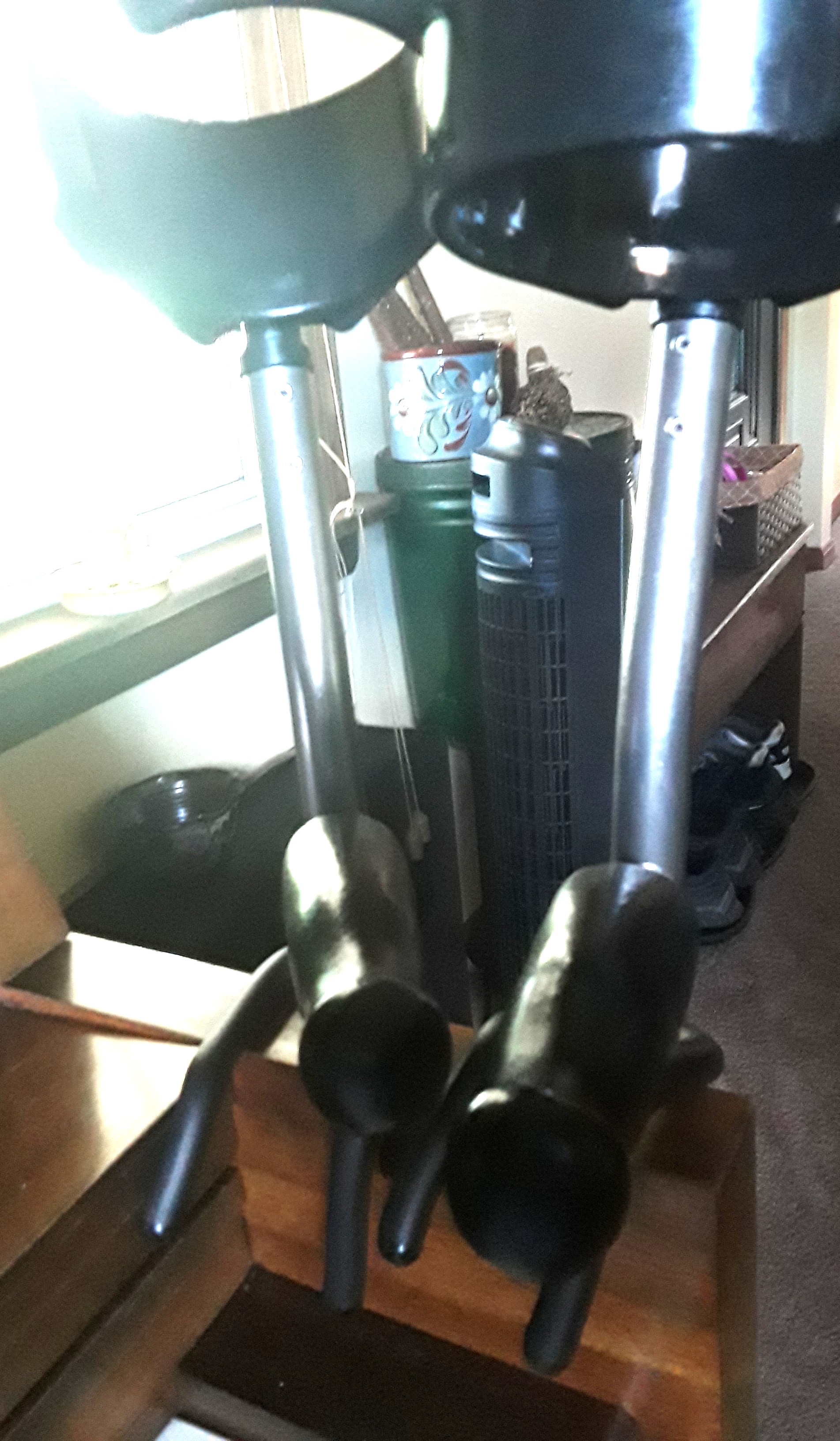
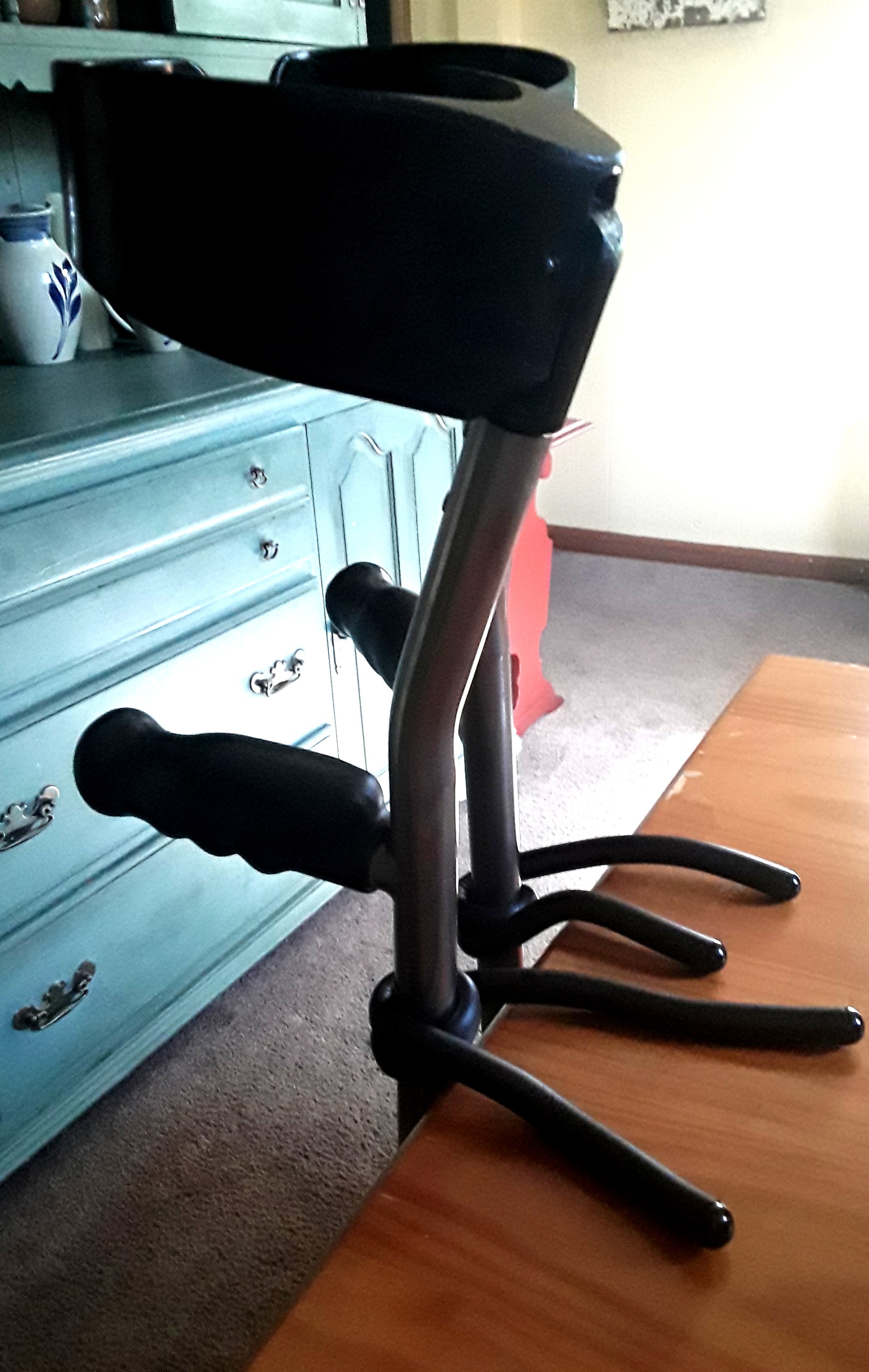
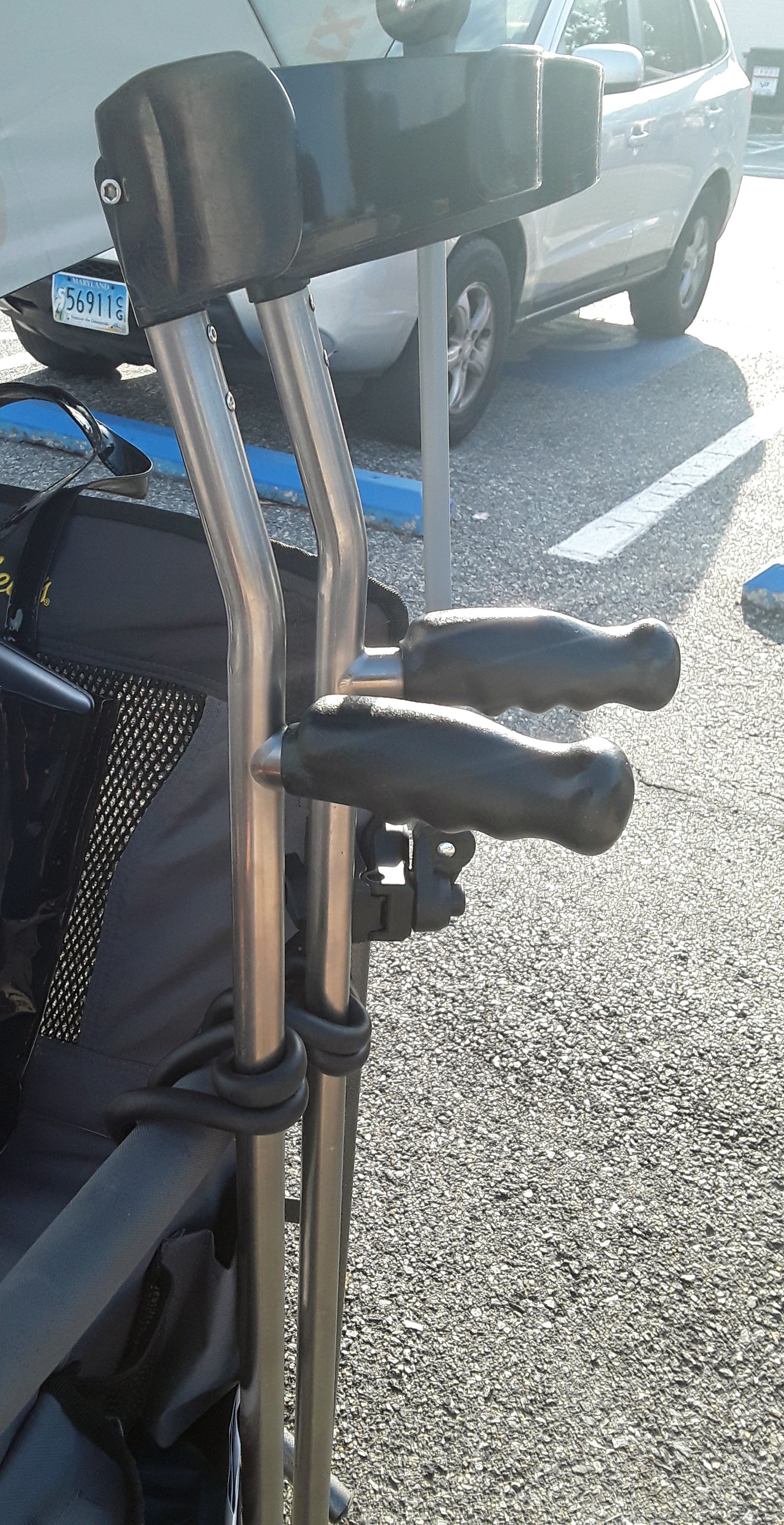
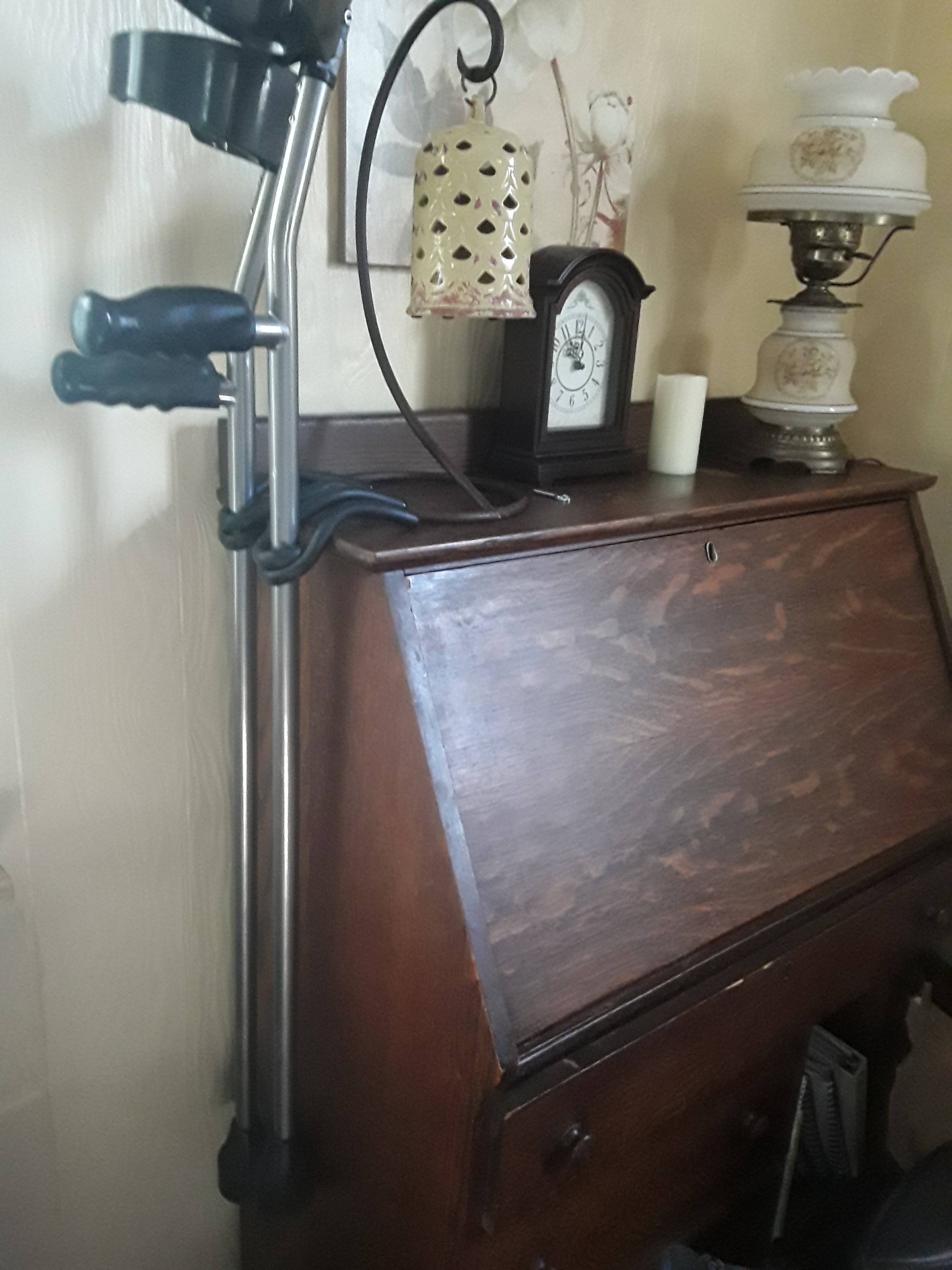
One thing that I hate more than anything is having to lay my crutches on the ground in a public place. Who wants to have their crutch handles on the dirty ground, put their hands on the dirty handles, then rub their face by accident, or eat something? Furthermore, people are constantly tripping and falling, stepping on, or knocking away my crutches because they do not see them or forget where they are laying. When I use my scooter they are one more thing in my hands as I jostle between holding my purse, driving the scooter, and managing two crutches on top of whatever else I have going on like a kid riding on my lap or needing to open/close doors.
upload via cloudHQ
upload via cloudHQ
I recently discovered these things, and while I am told they are presently in most hardware stores I found mine online. They are flexible and bendable, they are slip resistant, and they can be molded and attached to whatever length or shape required. It doesn’t matter how thick or thin of a cane or crutch, it doesn’t matter how high or low you need them to be. After hours of trying to invent some sort of portable crutch-holder my whole family was amazed to find such a simple solution under $10!
Public Restroom (Toilet paper dispenser, hook over door)
Stadium Cup Holder (To keep handles off ground)
Scooter chair
Poolside (Made ‘V’ formation to prop them handles up)
They twist and bend – there is no end to the possibilities!
*Please remember:
a) Ashly is an amputee at nearly the hip level of her right leg, b) she is on crutches or in a scooter 100% of the time, c) Ashly has been an amputee for thirty years, d) Ashly is still young and active in her thirties, e) the crutches that Ashly uses are forearm crutches, f) What works for Ashy may not work for you! g) Ashly receives no incentives, gifts, or compensation for reviews, advice, or mention of any product or company in these features.
**Product, person, and organization endorsements and reviews are not compensated, neither are they to be interpreted or considered as professional, legal, or medical advice. Neither Crutchprints.com nor Ashly Ash has interests, holdings, political affiliations or other ties with persons, corporations, or other entities referenced. Neither Crutchprints.com nor Ashly Ash has received free product(s), sample(s), or compensation(s), or service(s) for postings unless otherwise disclosed
**All recommendations and advice that are posted on crutchprints.com will be based strictly on personal experience and opinion and should not be taken or interpreted as legal or medical advisement under any circumstances.
Crutchprints receives lots of resource requests for personal well-being and counseling. Enter Dr. Sarah: a business owner with a PhD in Psychology and a heart to see improvement in the well-being of women. We all have something we try to “work on” but who needs more work, right? While I am a believer in talking therapy and root causes, there are many practical “in the moment” tools that make a real impact.
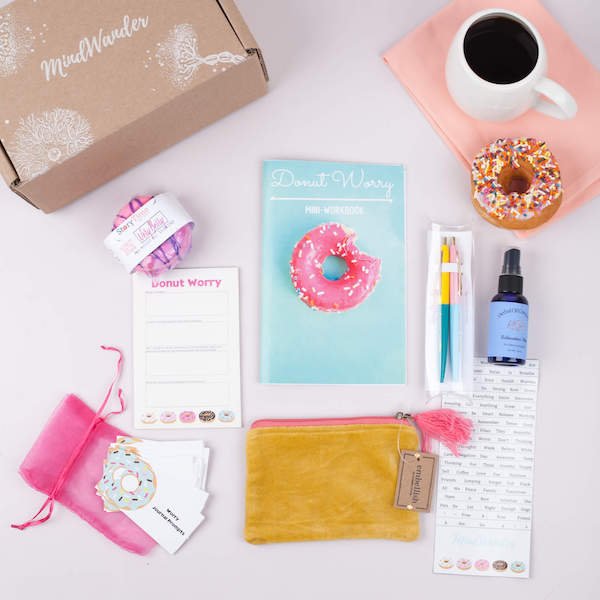
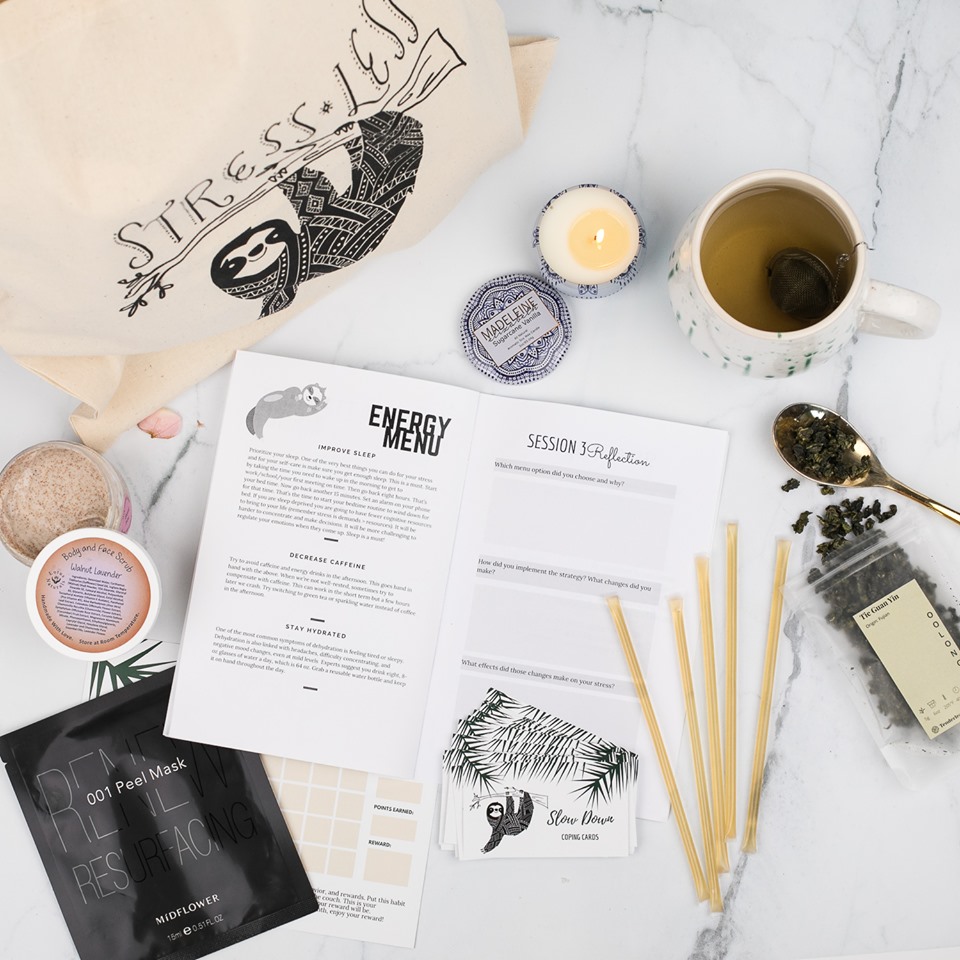
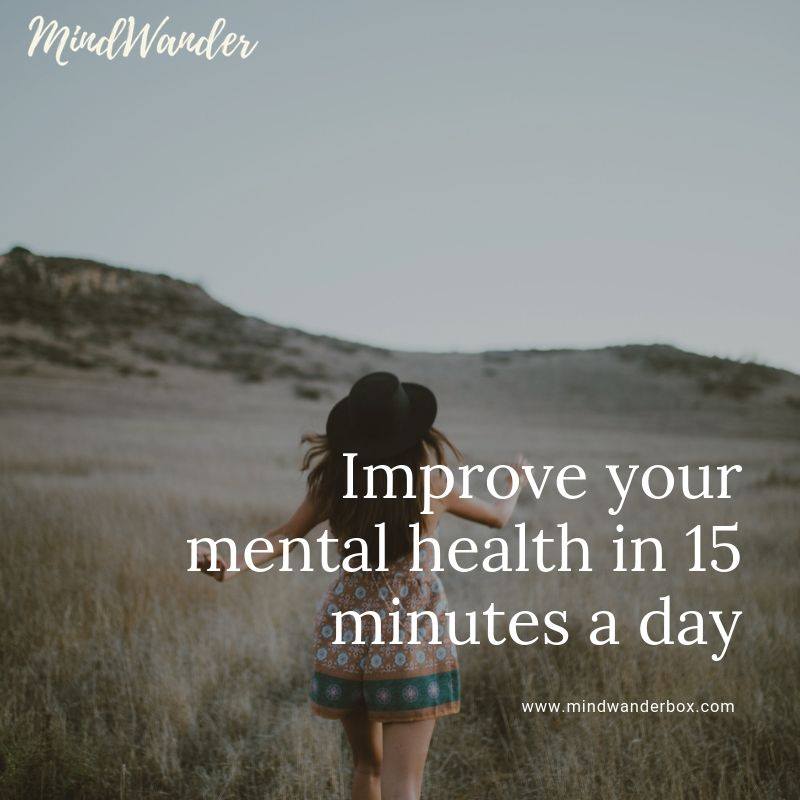
Dr. Sarah is the sole employee of MindWander, (#1 of CrateJoy’s 7 Must-Have’s for October 2019) and she addresses this need in a monthly box for women. She turns tasks of coping with stress, anxiety, and other issues into an enjoyable experience. Stumbling across her company in a Buzzfeed article, I did a search and found members raving about MindWander, expressing excitement about learned skills, and anticipating future boxes! (For some reviews click here)
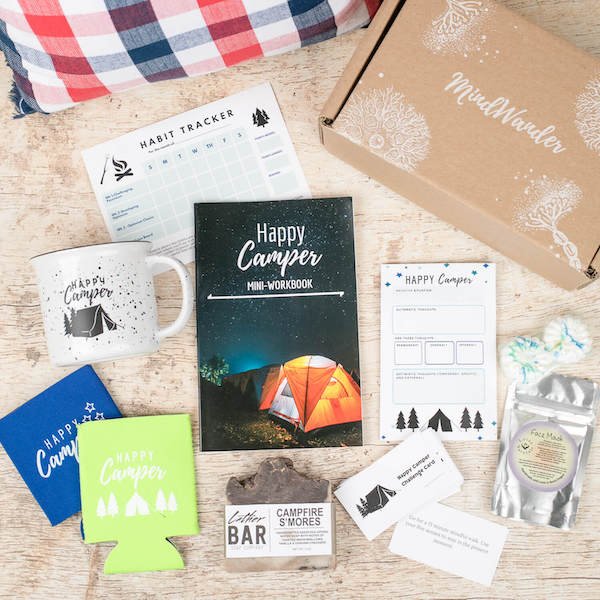
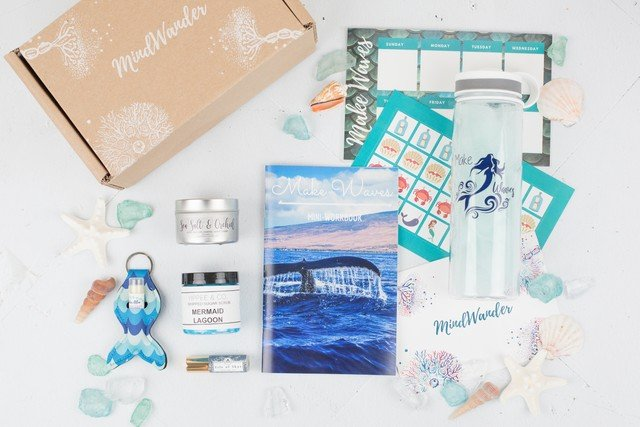
What caught my attention about MindWander was that Dr. Sarah, with her PhD in Psychology, puts this monthly cognitive behavioral therapy (CBT) tool together herself. Each box is centered on a theme and includes a personal workbook authored by Dr. Sarah, daily application techniques, 4-5 gift items reinforcing the theme (bath and body, lifestyle, novelty), and access to the member-only MindWander Facebook group with Dr. Sarah. (Where I found the discussions are uplifting, insightful, and Dr. Sarah actively engages with her members.) She offers a MindWander Mini box as well.
Some past themes include: Donut Worry; StressLess; Fearless (courage); Happy Camper (positive thinking); Growth Mindset (handling setbacks); Think Pink (mindfulness); Make Waves (self-confidence); Beat the Blues.
Halfway across the country, Dr. Sarah took time to provide an interview and answer some questions for Crutchprints!
Crutchprints: What gave you the idea to start MindWander?
Dr. Sarah: I personally love subscription boxes and subscribe to many! I started thinking about how fun it would be to have my own box and when I asked myself what I could offer that would be unique and have value to people, something CBT related was the first thing that came to mind!
Crutchprints: Where did the name MindWander come from?
Dr. Sarah: I had a colleague who talked about mindfulness practice as “taking your mind for a walk.” I’ve always liked that idea of giving your mind some space but taking an observer’s perspective on it. Let it walk around, let it wander, but don’t get caught up in it.
I also wanted a name that wouldn’t scream THIS IS A THERAPY BOX so if neighbors saw it on your front porch they wouldn’t learn anything about you that you didn’t want them to know. MindWander implies something about the mind but not necessarily something about mental health.
Crutchprints: You are passionate about Cognitive Behavioral Therapy (CBT), what sparked your interest?
Dr. Sarah: I’ve been interested in psychology since the 6th grade. The social studies textbook we were using was divided into chapter-anthropology, sociology, psychology, etc. I remember reading the psychology chapter on how we learn associations and being totally fascinated. Through high school and college I knew I wanted to be a psychologist. As I grew older I also started to see just how many friends and family, especially women, were struggling with anxiety and depression, the “common colds” of mental health. I decided these were the topics I would focus on.
10% Off Code: ASHLY
As I went through graduate school I learned how and why certain therapies work. I was especially impressed with Cognitive Behavioral Therapy (CBT). And yet when I talked to friends and family about their experiences with the mental health system, it didn’t sound like they were getting the therapies I was learning about in school. I was frustrated! I wanted my loved ones to get the best treatments for their anxiety and depression and to be empowered by learning new skills and strategies, not session after session of “How was your week?” Since them I’ve been determined to find ways to increase the availability of these therapies!
Crutchprints: Is there a resource book or podcast that you think everyone should access?
Dr. Sarah: That’s a great question! It really depends on what kind of symptoms people might want to learn more about.
One set of resources that I often suggest is the Treatments That Work series of workbooks. The set is based on research and the interventions are all supported by research so you can be sure they’re based on science. For anxiety, That Anxiety Guy has a great and informative podcast. Therapy for Real Life is also a nice podcast.
10% Code: ASHLY
Crutchprints: Is there something would-be subscribers should know?
Dr. Sarah: One thing I would love to be able to convey more effectively is my goal to create an experience and a community around MindWander. There are so many boxes out there, especially organized around self-care. If people just open the boxes and experience a bunch of stuff, I haven’t done my job. I hope that people open the boxes and experience hope about the positive changes and experiences they’ll have that month, excitement about getting started, and a sense of connection to me as a guide and the facebook group as a supportive community to provide help and encouragement along the way. It’s a work in progress!
Crutchprints: What do you foresee in the future for MindWander?
Dr. Sarah: That’s a great question! I would love to grow to a point where I could hire some help so I could focus on the most important parts of the business and reaching more people. It would also be great to have items made specifically for the boxes so that they could fit the theme exactly and I could really get what I’m looking for. I also have dreams of creating planners, calendars, and other related kits to offer as complements to the boxes. I would also, in the distant future with a ton of resources, love to develop a companion app that could link to skills from past and current boxes.
Crutchprints: Is there something that others may be surprised to know about you?
Dr. Sarah: Something I like to share as a “fun fact” is that in high school and college I worked in a murder mystery bed and breakfast. I grew up in a small, historic town with a little tourist industry and I got involved early acting in the murder mysteries. It was the BEST job for someone just starting out.
10% Off Code: ASHLY
Crutchprints: You create material for MindWander, coordinate items in the boxes, respond to each post in the member-only Facebook group on top of a career and personal life! How do you juggle all of this without becoming dysregulated?
Dr. Sarah: I use all the CBT skills that I teach in the workbooks! Honestly, it’s difficult to stay on top of everything at once and there are times when various parts of my life rise to the top or sink to bottom of the list of the priorities. I try to be deliberate about my to do list and my time while keeping in mind what’s most important. Sometimes that means skipping a work out to answer emails and other times that means emails are late because I decided to exercise instead.
Having Dr. Sarah with us here at Crutchprints has been a pleasure.
UPDATE: As of July 2020, the subscription box is no longer offered by Mindwander. Dr. Sarah has moved her courses to an online platform and base focused on the growth, development, and support of members. Check it out at: members.mindwandercbt.com
*Product, corporate, and organization reviews are not compensated, neither are they to be interpreted or considered as professional, legal, or medical advice. Neither Crutchprints.com nor Ashly Ash has interests, holdings, political affiliations or other ties with persons, corporations, or other entities referenced.
**All recommendations and advice that are posted on crutchprints.com will be based strictly on personal experience and opinion and should not be taken or interpreted as legal or medical advisement under any circumstances.

















 Crutchprints in the Sand